
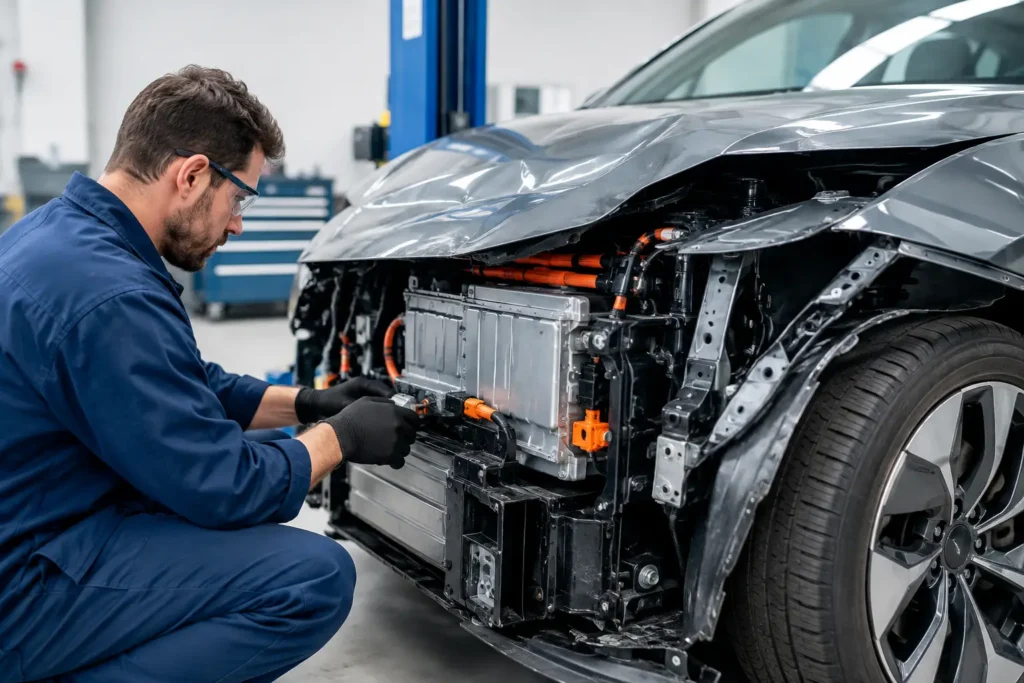
A damaged bumper, cracked headlamp, or bent fender can look like a familiar collision repair. On an electric vehicle, however, the visible damage is only part of the story. Electric vehicle repair trends are changing how shops inspect accident damage, write estimates, source parts, and verify that a vehicle is safe to return to the road.
For drivers in Cathedral City, Palm Springs, Palm Desert, Rancho Mirage, and throughout the Coachella Valley, this matters because EVs are becoming a more common sight on local roads. A proper repair requires more than matching paint or straightening a panel. It requires a careful process that protects the high-voltage system, the battery enclosure, onboard sensors, and the vehicle’s structural integrity.
Why Electric Vehicle Repairs Require a Different Process
Electric vehicles can be repaired after an accident, and many collision repairs are similar to those performed on gas-powered vehicles. Door damage, bumper damage, paint work, glass replacement, and certain suspension repairs may follow established body-shop procedures. The difference is that EVs package critical electrical components throughout the vehicle, often near areas affected by a collision.
The high-voltage battery pack is commonly mounted beneath the passenger compartment. A hard impact underneath the vehicle, damage to a rocker panel, or distortion around the floor structure can require a more detailed inspection than surface damage alone would suggest. Even when a battery is not visibly punctured, technicians need to assess whether the enclosure, mounting points, cooling connections, and electrical isolation have been affected.
That is why a reliable estimate starts with a complete damage assessment rather than a quick visual judgment. A minor-looking impact may remain a minor repair. On the other hand, a collision that shifts structural components or affects the underside of the vehicle can require additional diagnostics and manufacturer-directed repair steps.
Electric Vehicle Repair Trends Shaping Collision Work
The biggest trend is not simply that more drivers own EVs. It is that modern vehicles have become more connected, sensor-dependent, and manufacturer-specific. Repair planning is increasingly driven by documented procedures, electronic scans, and calibration requirements.
More Thorough Pre-Repair and Post-Repair Scans
Many current EVs use modules and sensors to manage battery performance, braking, driver-assistance features, cameras, lighting, and charging functions. After a collision, a diagnostic scan can identify fault codes that are not obvious from an exterior inspection.
Pre-repair scans help establish the vehicle’s condition and identify systems that may need attention. Post-repair scans help confirm that repair-related fault codes have been addressed and that affected systems are functioning as intended. This step can add time and cost, but skipping it may leave important safety concerns undiscovered.
Increased Attention to Battery and High-Voltage Safety
High-voltage safety has become a central part of EV collision repair. Before technicians begin work near affected electrical components, the vehicle may need to be powered down and secured according to manufacturer procedures. This helps prevent electrical hazards while the repair is underway.
Battery inspection is not a one-size-fits-all service. The required steps depend on the vehicle model, the location and severity of the impact, and whether diagnostic information indicates a concern. In some cases, the repair process may involve specialized evaluation or coordination with the manufacturer. The right decision is based on evidence, not assumptions about how expensive an EV repair might be.
More Calibrations for Cameras and Driver-Assistance Systems
A bumper is no longer just a bumper on many late-model vehicles. It may house radar equipment, parking sensors, cameras, wiring, or brackets positioned to precise specifications. Windshields, mirrors, grilles, and headlights can also support driver-assistance features.
When these parts are repaired or replaced, calibration may be necessary to help features such as lane assistance, forward-collision warnings, adaptive cruise control, and parking assistance operate correctly. A sensor can appear properly installed yet still require calibration after the vehicle’s alignment, ride height, windshield, bumper, or mounting position has changed.
For customers, this is a reminder that the lowest initial estimate is not always the most complete estimate. A quality collision repair should account for the procedures needed to restore both the vehicle’s appearance and its safety-related technology.
Repairability Decisions Are Becoming More Detailed
Aluminum, advanced high-strength steel, composite materials, and battery-protection structures are increasingly common in EV designs. These materials can improve efficiency and occupant protection, but they also require proper tools, dedicated repair methods, and careful measurement.
Some panels can be repaired. Others must be replaced because heating, pulling, or reshaping the material would conflict with manufacturer guidance. Similarly, a battery shield or underbody component may need replacement even if the cosmetic damage seems limited. The repair plan should follow the vehicle’s specifications, not a shortcut designed to reduce the visible line items on an estimate.
Parts Availability and Repair Timing Still Vary
EV repair timelines can be affected by parts availability, specialty components, insurer approvals, and calibration scheduling. A common exterior part may be readily available, while a sensor bracket, charging-system component, or model-specific structural part may take longer to source.
This does not mean every EV repair takes months. Many repairs move efficiently once the damage is identified and parts are available. Still, customers benefit from realistic updates rather than promises that ignore the complexity of the repair. Clear communication matters when a vehicle is needed for work, family obligations, or daily travel across the Coachella Valley.
What EV Owners Should Do After an Accident
After any collision, prioritize safety. If there is smoke, unusual heat, fluid leakage, warning messages, damaged charging equipment, or a hard underbody impact, move away from the vehicle when it is safe to do so and contact emergency services. Do not attempt to inspect high-voltage components yourself.
If the vehicle can be safely handled, document the damage, exchange insurance information, and arrange professional towing when needed. Towing instructions can vary by manufacturer, especially if the vehicle has battery damage, wheel damage, or cannot be placed in a transport mode. Improper towing can create additional damage, so it is worth confirming the correct method before the vehicle is moved.
When you request an estimate, share the vehicle’s year, make, model, and a clear description of the impact. Mention any warning lights, charging concerns, changes in driving behavior, or damage underneath the vehicle. Those details help the repair team plan an appropriate inspection from the beginning.
How to Choose the Right Collision Repair Shop for an EV
The best choice is a shop that treats an EV repair as a safety process, not just a cosmetic job. Ask whether the team follows manufacturer repair procedures, performs necessary diagnostic scans, and explains when calibrations or additional inspections are required. You should also receive a detailed, understandable estimate and honest communication if hidden damage or parts delays affect the schedule.
Certification and ongoing training matter because EV technology continues to change. I-CAR and ASE-trained professionals bring valuable collision knowledge, while proper equipment and repair documentation help support accurate structural, electrical, and refinishing work. Experience with foreign and domestic vehicles is equally useful in a market where each manufacturer may specify different procedures.
Insurance coordination is another practical consideration. Collision claims can involve supplements when teardown reveals damage that was not visible during the initial estimate. A repair shop that communicates clearly with both the customer and insurer can reduce confusion and help keep the process moving without sacrificing necessary repair steps.
At CatCity Auto Body, the goal is to make that process easier for local drivers through detailed estimates, certified repair practices, insurance assistance, rental support, and regular repair updates. Every vehicle deserves the same careful attention, whether the damage is a small parking-lot impact or a major collision.
An EV may bring new technology to the repair process, but the standard should remain simple: your vehicle should be repaired with the care, information, and safety checks needed to help you drive away with confidence. If your electric vehicle has been involved in an accident, request a professional estimate before making decisions based only on what the damage looks like from the outside.