
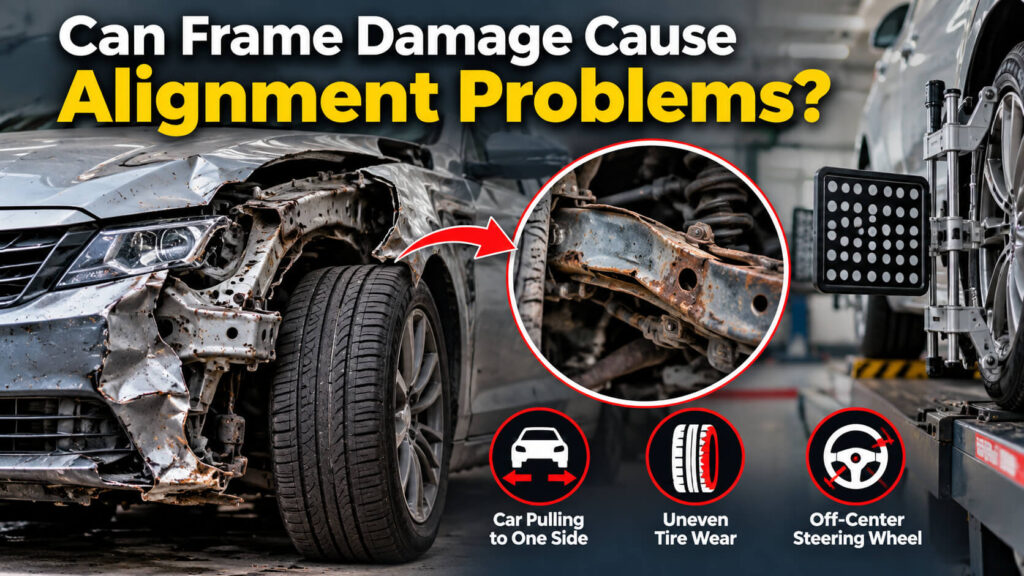
Have you noticed your car pulling to one side, uneven tire wear, or a steering wheel that doesn’t stay centered? These issues often indicate wheel alignment problems. However, sometimes the underlying cause is more serious than a simple alignment adjustment.
Yes, frame damage can cause alignment problems. When a vehicle’s frame or structural components become bent, twisted, or displaced, the wheels may no longer sit in their intended positions. Even a professional wheel alignment may not fully correct the issue until the structural damage is repaired.
Frame damage commonly occurs after collisions, but it can also result from hitting deep potholes, curbs, or road debris. Understanding how structural damage affects wheel alignment can help drivers recognize warning signs, avoid unnecessary repairs, and maintain vehicle safety.
In this guide, we’ll explain the relationship between frame damage and alignment problems, the symptoms to watch for, and what drivers should do if they suspect their vehicle has structural damage.
Can Frame Damage Cause Alignment Problems?
Yes. Frame damage can directly affect wheel alignment by changing the position of the suspension mounting points and other structural components.
Your vehicle’s wheels are designed to operate at specific angles to maintain stability, steering accuracy, and consistent tire contact with the road. These angles are generally measured through three main alignment settings:
- Camber: The inward or outward tilt of the wheel when viewed from the front.
- Caster: The forward or backward tilt of the steering axis when viewed from the side.
- Toe: The direction the wheels point relative to each other when viewed from above.
When a vehicle’s frame or unibody structure becomes damaged, these angles can shift outside the manufacturer’s specifications.
For example, if a collision moves a suspension mounting point, one wheel may sit farther backward or inward than intended. This can cause the vehicle to pull to one side, create uneven tire wear, or make steering less predictable.
A standard alignment service adjusts the wheel angles within the vehicle’s available adjustment range. However, if structural damage has displaced the suspension mounting points, alignment adjustments alone may not restore the correct geometry.
How Does Frame Damage Affect Wheel Alignment?
Frame damage can interfere with several parts of the vehicle’s steering and suspension system.
1. Changes Suspension Mounting Points
Suspension components attach to specific points on the vehicle’s frame or body structure.
When these mounting points move due to collision damage, the suspension geometry changes. As a result, technicians may find it difficult or impossible to bring the wheel alignment back within factory specifications.
2. Causes Uneven Wheel Positioning
A bent or twisted vehicle structure can affect the position of individual wheels.
For instance, one wheel may sit slightly farther forward or backward than the opposite wheel. This difference can affect vehicle tracking and steering behavior.
3. Creates Persistent Steering Problems
Structural damage can cause the steering wheel to remain off-center or the vehicle to pull in one direction.
While similar symptoms can result from tire or suspension problems, persistent issues after a proper alignment may indicate damage that requires further inspection.
4. Accelerates Uneven Tire Wear
When wheels are incorrectly positioned, tires may contact the road at improper angles.
This can cause excessive wear along the inner or outer tire edges, shortening tire life and increasing replacement costs.
5. Prevents Proper Alignment Adjustments
Some alignment problems cannot be corrected through standard adjustments because the suspension mounting points are no longer in their intended locations.
In these cases, structural measurement and repairs may be necessary before the alignment can be completed successfully.
Common Signs of Frame Damage and Alignment Problems
Frame damage is not always visible from outside the vehicle. Even minor-looking collisions can sometimes affect structural components.
Here are several warning signs drivers should recognize.
| Warning Sign | Possible Explanation |
| Car pulls to one side | Incorrect wheel alignment, tire problems, or displaced suspension mounting points |
| Steering wheel is off-center | Wheel alignment or steering geometry issues |
| Uneven tire wear | Incorrect camber, toe, or suspension geometry |
| Vehicle appears to drive sideways | Possible thrust-angle or structural alignment problem |
| Unusual steering behavior | Damaged suspension, steering components, or structural issues |
| Uneven gaps between body panels | Possible collision-related body or structural displacement |
| Alignment cannot be corrected | Bent suspension components or structural mounting-point damage |
These symptoms do not automatically mean your vehicle has frame damage. Tire pressure differences, worn suspension components, and ordinary wheel misalignment can produce similar problems.
A professional inspection is necessary to identify the actual cause.
Can a Bent Car Frame Be Aligned?
A vehicle with a bent frame may still undergo a wheel alignment, but the results depend on the severity and location of the damage.
If the damage is minor and does not affect suspension mounting points, technicians may be able to adjust the wheel angles to the manufacturer’s specifications.
However, when structural damage changes the position of important mounting points, a standard alignment may not be enough.
In such situations, a collision repair technician may need to measure the vehicle’s structure using specialized equipment.
Depending on the manufacturer’s repair procedures and the extent of the damage, the repair may involve structural straightening, replacement of damaged components, or other approved collision repairs.
Important: Not every damaged structural component can or should be straightened. Some vehicles require replacement of specific parts to restore structural integrity and meet manufacturer repair requirements.
After the necessary repairs are completed, a wheel alignment can help confirm that the suspension geometry is within specification.
What Causes Vehicle Frame Damage?
Frame damage can occur in several situations, including accidents that initially appear minor.
Car Accidents and Collisions
Front-end, rear-end, and side-impact collisions can transfer significant force through a vehicle’s structure.
Depending on the impact location and severity, these forces may bend structural components or move suspension mounting points.
Hitting Potholes or Curbs
Driving into a deep pothole or striking a curb at speed can damage wheels, control arms, tie rods, and other suspension components.
Severe impacts may also damage structural mounting areas, although suspension or wheel damage is more common.
Road Debris and Undercarriage Impacts
Large road debris can strike components underneath a vehicle. Depending on the impact, this may damage suspension supports, crossmembers, or structural sections.
Previous Improper Collision Repairs
Vehicles that have undergone incomplete or incorrect collision repairs may have unresolved structural or suspension geometry problems.
These issues can become noticeable when drivers experience repeated alignment problems or unusual tire wear.
Frame Damage vs. Wheel Alignment Problems: What’s the Difference?
Although frame damage and wheel alignment problems are related, they are not the same issue.
| Factor | Wheel Alignment Problem | Frame Damage |
| Main issue | Wheels are positioned at incorrect angles | Vehicle structure is bent, twisted, or displaced |
| Common causes | Potholes, worn suspension parts, impacts | Collisions or severe impacts |
| Typical symptoms | Pulling, uneven tire wear, off-center steering | Similar symptoms, sometimes with visible body damage |
| Diagnosis | Wheel alignment measurements | Structural measurements and collision inspection |
| Repair | Alignment adjustment or suspension repair | Manufacturer-approved structural repair or replacement |
| Severity | Often relatively straightforward | Can involve significant safety concerns |
A vehicle can have incorrect wheel alignment without any frame damage. However, structural damage that affects suspension mounting points can make proper wheel alignment difficult or impossible until the underlying issue is repaired.
Can Wheel Alignment Fix Frame Damage?
No. Wheel alignment cannot repair a bent or damaged vehicle frame.
A wheel alignment adjusts suspension and steering angles to help the wheels track correctly.
Frame repair addresses damage to the vehicle’s structural components.
For example, suppose your vehicle was involved in a front-end collision, and the impact moved a suspension mounting point.
An alignment technician might attempt to correct the wheel angles. However, if the mounting point remains displaced, the available adjustments may not be sufficient.
The correct repair process generally involves identifying and repairing the underlying damage before performing the final alignment.
Attempting to compensate for structural damage through alignment adjustments alone may leave the vehicle with unresolved handling or safety problems.
How Do Professionals Diagnose Frame-Related Alignment Problems?
Diagnosing frame damage requires more than visually checking whether the wheels appear straight.
Professional technicians may use several inspection methods.
Step 1: Visual Inspection
Technicians examine the vehicle for visible collision damage, uneven body gaps, damaged suspension components, and other irregularities.
Step 2: Wheel Alignment Measurement
An alignment machine measures camber, caster, toe, and other relevant angles.
Measurements outside manufacturer specifications can help identify possible suspension or structural issues.
Step 3: Suspension and Steering Inspection
Technicians inspect control arms, tie rods, ball joints, struts, bushings, and mounting points.
This step helps distinguish structural damage from ordinary suspension problems.
Step 4: Structural Measurement
When structural damage is suspected, a qualified collision repair facility may use electronic measuring systems or other approved equipment to compare the vehicle’s dimensions with manufacturer specifications.
Step 5: Repair Planning
Based on the findings, technicians determine whether the vehicle needs suspension component replacement, structural repair, or both.
Manufacturer repair procedures should guide the repair process, particularly for modern unibody vehicles and vehicles with advanced driver assistance systems.
How Much Does It Cost to Fix Frame Damage and Alignment Problems?
Repair costs vary significantly depending on the vehicle, location, severity of damage, and required parts.
A standard wheel alignment is generally much less expensive than a structural collision repair.
Structural repairs can become costly because they may require specialized equipment, replacement components, labor-intensive procedures, and additional safety system inspections.
The final cost depends on factors such as:
- The type and extent of structural damage.
- Whether suspension or steering components need replacement.
- The manufacturer’s required repair procedures.
- Whether structural measuring and calibration are necessary.
- The vehicle’s make, model, and construction.
Drivers should request a detailed inspection and written repair estimate before authorizing significant repairs.
Is It Safe to Drive a Car With Frame Damage?
Driving a vehicle with suspected structural damage can be unsafe, particularly when the damage affects steering, suspension, or crash protection.
Potential risks include unpredictable handling, reduced stability, abnormal tire wear, and compromised structural performance during another collision.
The severity of these risks depends on the specific damage.
If your vehicle pulls strongly to one side, has loose or unpredictable steering, makes unusual suspension noises, or shows visible structural damage after a collision, avoid driving it until a qualified professional evaluates it.
Towing may be the safer option when steering, suspension, or structural integrity is in doubt.
Even if a damaged vehicle appears to drive normally, that does not guarantee its structure or safety systems are functioning as designed.
How to Prevent Frame Damage and Alignment Issues
Not all vehicle damage is preventable, but several driving and maintenance habits can reduce the risk.
- Avoid potholes when safe: Slow down around damaged road surfaces without making sudden, dangerous steering movements.
- Drive carefully near curbs: Avoid striking curbs when parking or turning.
- Inspect your vehicle after an impact: Have the suspension and steering checked following significant pothole strikes or collisions.
- Monitor tire wear: Uneven tire wear may provide an early indication of alignment or suspension problems.
- Schedule alignment inspections when needed: Have alignment checked when you notice handling changes, after relevant repairs, or as recommended by your vehicle manufacturer.
- Choose qualified collision repair professionals: Proper structural measurement and manufacturer-approved repairs help restore vehicle geometry and safety.
When Should You Visit an Auto Repair Shop?
You should arrange a professional inspection if your vehicle develops persistent alignment problems, especially after an accident.
Some situations deserve particular attention:
- Your car continues pulling to one side after an alignment.
- The steering wheel remains off-center despite proper adjustments.
- Tires develop repeated or unusual wear patterns.
- A technician cannot bring the alignment angles within factory specifications.
- Your vehicle was involved in a collision and has not received a complete structural inspection.
If the vehicle has severe handling problems or suspected structural damage, a collision repair facility equipped for structural measurement may be more appropriate than a routine alignment service alone.
Early diagnosis can help prevent unnecessary tire replacements, repeated alignment expenses, and additional suspension damage.
Frequently Asked Questions
Yes. Even relatively small structural displacement can affect alignment if it changes the location of suspension mounting points. However, not every minor frame dent or deformation will affect wheel alignment.
Absolutely. Incorrect tire pressure, worn suspension components, bent wheels, damaged tie rods, and normal suspension wear can all contribute to alignment-related symptoms without structural frame damage.
It depends on the cause. If the wheels are simply out of alignment and the suspension and structure are undamaged, an alignment may resolve the issue. If components are bent or mounting points have shifted, repairs may be necessary first.
Possible signs include unusual body panel gaps, persistent alignment problems, irregular wheel positioning, and abnormal steering behavior. A professional structural measurement is the most reliable way to determine whether the vehicle’s dimensions meet manufacturer specifications.
Yes. Structural damage can change suspension geometry and wheel positioning, leading to uneven tire contact with the road. However, uneven tire wear can also result from incorrect tire pressure, worn suspension components, or ordinary alignment issues.
No. Repairability depends on the damage, vehicle construction, manufacturer repair guidelines, and economic considerations. Some structural components must be replaced rather than straightened, and severe damage may make a vehicle impractical or unsafe to repair.
Final Thoughts
Frame damage can cause wheel alignment problems, particularly when collisions or severe impacts change the position of suspension mounting points.
While standard wheel alignment services can correct many common steering and tire wear issues, they cannot repair damaged structural components.
If your vehicle continues to pull to one side, experiences uneven tire wear, or cannot maintain proper alignment after an accident, a professional inspection can help identify the underlying cause.
For CatCity readers, the key takeaway is simple: don’t assume every alignment problem can be fixed with an alignment adjustment. Identifying and addressing the actual cause is essential for safe, reliable vehicle handling.