
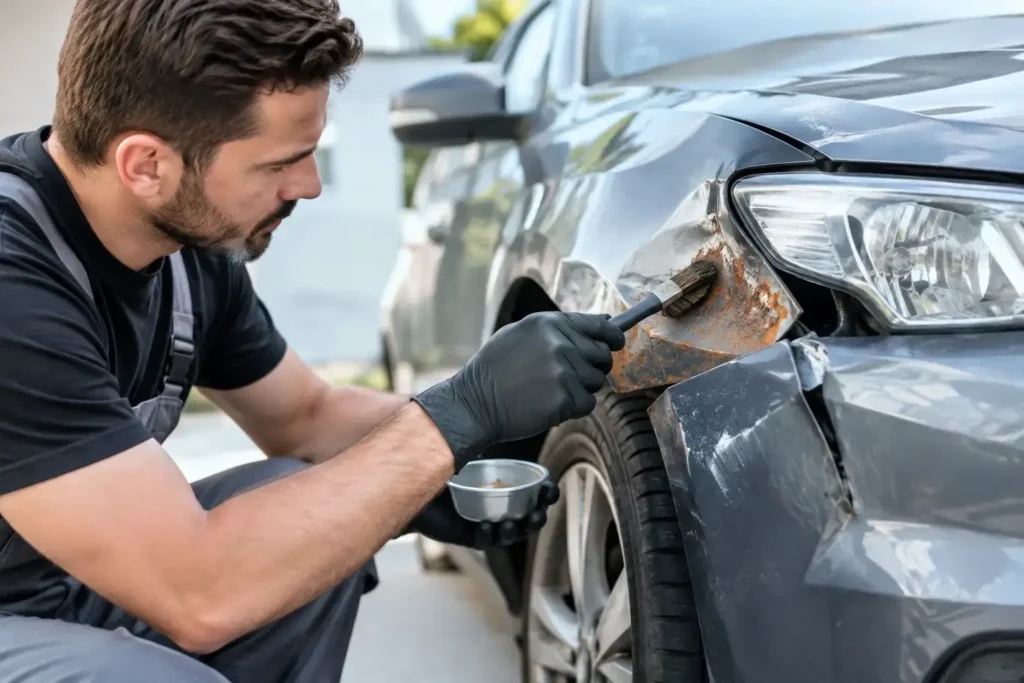
A dented fender or scraped bumper can look like a cosmetic problem, but a collision can expose metal, crack paint, and trap moisture where you cannot see it. Knowing how to prevent rust after collision damage protects more than your vehicle’s appearance. It helps preserve structural components, resale value, and the quality of your repair.
For drivers in Cathedral City and across the Coachella Valley, dry weather may make rust seem unlikely. Yet rust can begin wherever paint, seam sealer, undercoating, or corrosion protection has been damaged. A prompt, professional inspection is the most reliable way to keep a manageable repair from becoming a larger problem.
Why rust can start after an accident
Your vehicle’s painted surfaces are a protective system, not simply a layer of color. Primer, paint, clear coat, seam sealer, and underbody coatings work together to separate steel from air and moisture. When a collision chips paint, bends a panel, cracks a bumper attachment area, or damages the underside of the vehicle, that protection can be interrupted.
Rust needs exposed metal, oxygen, and moisture. Rainwater, car washes, morning dew, road spray, and moisture carried into seams can be enough to start corrosion. Small impacts are especially easy to overlook because the damage may be hidden behind a wheel liner, bumper cover, rocker panel, or trunk trim.
Modern vehicles also use a mix of materials. Aluminum does not rust like steel, but it can corrode. Steel components behind aluminum or plastic exterior panels can still develop corrosion when coatings are disturbed. That is why a visual check from the driveway is not always enough after an accident.
How to prevent rust after collision damage
The best prevention is to address collision damage before exposed metal remains exposed for weeks or months. Even if the vehicle is safe to drive, do not assume a scrape or bent panel can wait indefinitely.
Get a complete damage inspection promptly
A qualified collision repair facility can inspect both the visible damage and the areas behind it. This may include checking the fender, bumper reinforcement, wheel opening, rocker panel, trunk area, underbody shields, and panel seams. The goal is not to sell unnecessary work. It is to identify damaged coatings, distorted panels, and moisture-trapping areas before corrosion gains a foothold.
A free, detailed estimate should explain what is damaged, what needs repair or replacement, and how the vehicle will be protected during refinishing. If insurance is involved, an experienced shop can also document the damage and coordinate directly with the insurer, reducing delays that leave the vehicle exposed.
Wash away dirt and road residue
Until repairs are completed, keep the damaged area reasonably clean. Gently rinse away dust, mud, road grime, and other residue, especially after driving through wet conditions. Avoid aggressively scrubbing chipped paint or sharp edges, which can remove more loose coating.
Pay attention to the lower body and wheel wells. These areas collect sand, dirt, and moisture, and damage there may not be visible from standing beside the vehicle. In the Coachella Valley, windblown grit can also work into cracked paint edges and damaged seams.
Keep the damaged area dry when possible
Parking under cover can reduce repeated exposure to dew, rain, and sprinkler overspray. If water is getting into the trunk, cabin, or a damaged door seal, that should be addressed quickly. Damp carpet, a musty odor, fogging windows, or water in a spare-tire well may indicate a collision-related leak.
A temporary cover may help protect a broken window or opening while you arrange repairs, but it is not a long-term corrosion solution. Tape, plastic, and temporary patches can trap moisture against damaged paint if left in place too long. Let a repair professional recommend the safest short-term protection for the specific damage.
Do not rely on touch-up paint for significant damage
Small stone chips and shallow scratches can sometimes be protected with properly applied touch-up paint. However, collision damage often involves stretched metal, cracked paint beyond the visible scratch, damaged seam sealer, or bent mounting points. Applying touch-up paint over these problems may hide the issue without stopping water from reaching the metal underneath.
Touch-up products are best reserved for very minor, clean damage where the panel is intact and there is no sign of denting, cracking, or corrosion. If bare metal is visible, the paint is lifting, or the panel edge is bent, schedule an inspection instead of treating it as a cosmetic project.
Ask how corrosion protection will be restored
A proper repair does more than straighten a panel and apply fresh paint. It should restore the protective layers affected by the collision. Depending on the location and repair method, that may include corrosion-resistant primer, seam sealer, cavity wax, undercoating, and refinishing materials matched to the vehicle’s original protection.
This step is particularly important in wheel wells, rocker panels, lower doors, quarter panels, and underbody areas. These locations face more moisture and debris than the center of a door or hood. The exact approach depends on the vehicle manufacturer’s repair procedures, the materials involved, and whether the panel is repaired or replaced.
Repair hidden damage, not just the visible dent
A bumper cover may look like the main problem, while the impact has also damaged brackets, liners, absorbers, or metal components behind it. Likewise, a fender impact can disrupt seam sealer inside the wheel opening even if the outer panel seems minor.
Skipping hidden repairs may save money in the moment, but it can create a larger expense later. Loose liners allow road debris into areas designed to stay protected, while unsealed seams can let moisture reach bare edges. A transparent repair plan should account for both the visible finish and the protection behind it.
Warning signs that corrosion may already be developing
Rust does not always begin as an obvious orange patch. Watch for bubbling paint, brown staining at panel edges, flaking undercoating, paint that lifts around a scratch, or a rough texture near a dent. Check around wheel arches, door bottoms, trunk seams, hood edges, and the underside of damaged panels.
If you notice rust after a recent collision, do not simply paint over it. The affected area needs to be cleaned, assessed, and repaired correctly so corrosion does not continue beneath the new finish. The sooner this is handled, the more likely the repair can remain limited to the damaged area.
Choosing a repair shop that protects the finish
The quality of collision repair has a direct effect on long-term corrosion resistance. Look for a shop that explains its repair process, follows safety-focused procedures, and uses trained technicians and appropriate refinishing equipment. Ask whether the estimate includes necessary preparation, refinishing, seam sealing, and corrosion protection rather than focusing only on the visible panel.
At CatCity Auto Body, certified technicians provide clear estimates and collision repairs for foreign and domestic vehicles throughout Cathedral City, Palm Springs, Palm Desert, Rancho Mirage, and the surrounding Coachella Valley. Whether the damage is a scraped fender or a more involved accident repair, every vehicle deserves careful attention to the details that help preserve its condition after it leaves the shop.
After the repair: simple habits that help
Once repairs are complete, regular washing helps remove grit and residue from the lower body, wheel wells, and repaired areas. If you notice a new chip, loose trim, water leak, or paint issue, have it inspected rather than waiting for the next service visit. Prompt attention is usually less costly than allowing moisture to work beneath a protective coating.
After an accident, the most helpful next step is often the simplest one: request a professional estimate early. A careful inspection can give you a clear repair plan, protect your vehicle from avoidable corrosion, and help you get back on the road with confidence.