
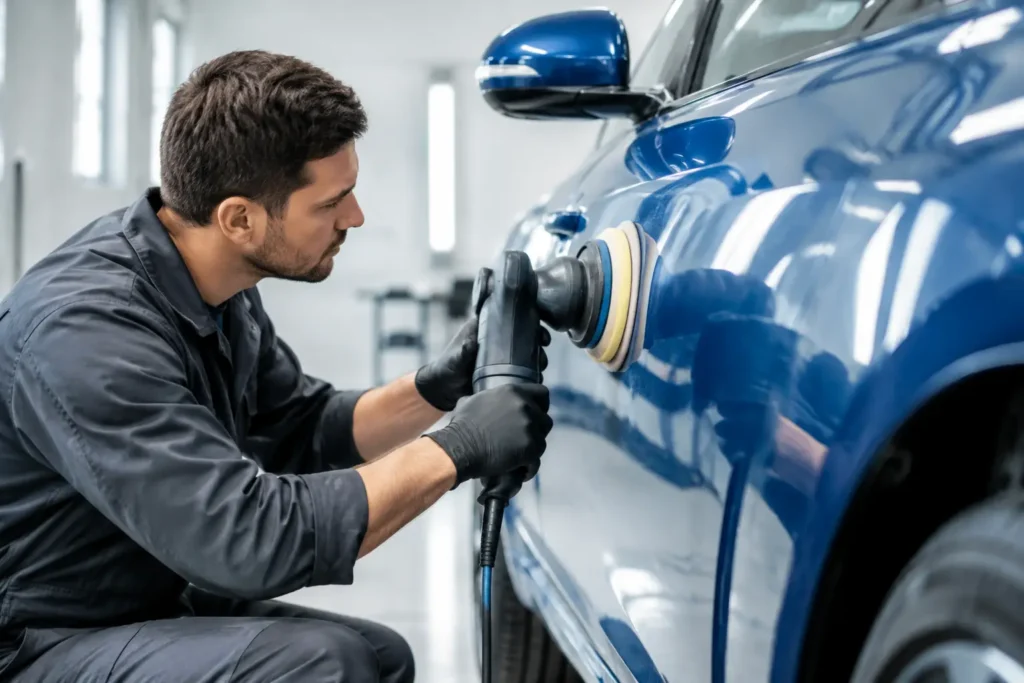
A bumper can look fine from the curb and still show a dull, mismatched patch in the Coachella Valley sun. That is why professional auto refinishing is about much more than applying fresh paint. After an accident, a quality refinishing process restores the vehicle’s appearance while protecting exposed metal, supporting long-term value, and helping the repaired area blend naturally with the rest of the vehicle.
For drivers in Cathedral City, Palm Springs, Palm Desert, Rancho Mirage, and nearby communities, the heat, sunlight, and dust make paint quality especially visible. A quick cosmetic cover-up may cost less upfront, but it can fade early, peel, or reveal poor repair work later. The right repair begins beneath the color coat.
What Auto Refinishing Actually Includes
Auto refinishing is the controlled process of preparing, sealing, painting, and protecting a repaired vehicle panel. It may be needed after collision damage, dent repair, bumper repair, rust correction, or replacement of a fender, door, hood, or other body component.
The visible color is only one layer of a complete finish. Before paint is applied, a technician must inspect the repair area, remove damaged material, correct the panel surface, and apply the appropriate primers and sealers. This foundation matters because paint cannot hide waves in a panel, unstable filler, old peeling clear coat, or corrosion underneath.
A professional repair also considers the material being refinished. Steel, aluminum, plastic bumpers, and composite parts do not all require the same preparation. Using the wrong products or skipping a required step can lead to cracking, adhesion problems, or premature paint failure.
Why a Good Paint Match Is More Complex Than It Looks
Every vehicle has a factory paint code, but that code is not a guarantee that one formula will match perfectly. Age, sun exposure, previous repairs, and normal production variations can all change how a color appears. White, silver, pearl, metallic, red, and dark colors can be particularly challenging because even a small variation in tone or metallic placement may stand out.
A trained refinishing technician uses the factory color information as a starting point, then evaluates the vehicle itself. The goal is to match not only the shade, but also the brightness, metallic effect, and gloss level. In many cases, color is blended into an adjacent panel so the transition is gradual and natural rather than creating an obvious line between old and new paint.
Blending can increase the scope of repair, but it is often the right choice for a finish that looks consistent in direct sunlight, shade, and under parking-lot lighting. A proper estimate should explain why adjacent panels may need refinishing even when they were not directly damaged.
The Clear Coat Makes a Difference
The clear coat is the protective top layer that gives modern automotive paint its depth and shine. It helps defend the color coat against ultraviolet exposure, moisture, road debris, and everyday washing. A poor clear-coat application can leave a repair looking flat, overly textured, or unevenly glossy.
In desert conditions, clear-coat quality has real practical value. Intense sun can make a weak or compromised finish deteriorate faster, especially if the vehicle spends long hours outdoors. While no paint system is immune to time and weather, correct materials and application improve the repair’s durability.
The Professional Auto Refinishing Process
The exact process depends on the vehicle and the damage, but quality refinishing generally follows a careful sequence. It starts with a detailed inspection. A shop should identify both visible damage and underlying issues that could affect the repair, such as cracked bumper material, bent mounting points, exposed metal, or previous bodywork.
Next comes surface preparation. The damaged finish is sanded, the panel is repaired and shaped as needed, and the area is cleaned thoroughly. Contamination from wax, silicone, oil, dust, or road grime can interfere with paint adhesion, so preparation is not a step to rush.
Primer is then used to create a stable, uniform surface. Depending on the repair, a technician may use products designed for corrosion resistance, filling minor surface imperfections, or promoting adhesion on plastic components. After the primer cures and is sanded, a sealer may be applied to create a consistent base before color.
The color and clear coat are applied in a controlled paint environment. This reduces dust and helps technicians manage temperature, airflow, and drying conditions. After curing, the finish is inspected for color consistency, gloss, texture, and coverage. Final polishing may be used when appropriate to refine the appearance of the repaired area.
A quality-control check should also confirm that trim, lights, sensors, moldings, and panels removed for repair have been properly reinstalled. On newer vehicles, bumper covers and mirrors may house cameras, parking sensors, or driver-assistance components. A clean paint finish does not replace the need for correct reassembly and required calibration.
When Refinishing Is Better Than Paintless Dent Repair
Not every dent needs paint. Paintless dent repair can be an excellent option when the paint surface is intact and the dent can be safely massaged back into shape from behind the panel. It may preserve the original factory finish and reduce repair time.
However, auto refinishing is typically necessary when the paint is chipped, cracked, scraped to the substrate, stretched beyond recovery, or affected by body filler and panel repair. It is also needed when a bumper has deep gouges, a fender is creased, or corrosion has begun beneath damaged paint.
The best option depends on the damage, panel material, location, and condition of the surrounding finish. An honest inspection should explain whether a repair can preserve the original paint or whether refinishing is needed for a lasting result.
Warning Signs of a Poor Paint Repair
Some finish problems appear immediately, while others develop months after the repair. Watch for a noticeable difference in color from one panel to the next, especially in sunlight. Other concerns include rough texture, sanding marks, paint on nearby trim, uneven panel edges, peeling clear coat, bubbling, or small pinholes in the finish.
Poor preparation can also show up as corrosion around a repaired area. If metal was exposed and not properly protected, moisture can work beneath the finish even if the panel initially looks acceptable. This is one reason the lowest estimate is not always the most cost-effective choice. A repaint that fails early can require additional labor and materials to correct.
Ask whether the estimate includes the necessary preparation, blending, materials, and refinishing steps. Clear answers help you compare quotes on the actual work being performed rather than on a single bottom-line number.
Protecting a Newly Refinished Vehicle
A newly refinished surface needs reasonable care, especially during the early curing period. Your repair facility can provide specific instructions based on the paint system used and the type of work completed. In general, avoid harsh chemicals, abrasive brushes, and unnecessary rubbing on the repaired area.
Hand washing with clean water and a gentle automotive soap is usually the safest approach once the shop advises that washing is appropriate. Keep bird droppings, tree sap, and fuel spills from sitting on the finish, as they can damage paint over time. Parking in covered shade when possible also reduces long-term exposure to intense desert sunlight.
Wax and paint-protection products can be useful later, but timing matters. Applying products too early can interfere with the final curing process, so follow the shop’s recommendation instead of relying on a one-size-fits-all timeline.
Repair Quality Should Support Safety and Value
A collision repair is not complete simply because the vehicle looks better. The refinished panels should complement correct structural repairs, proper panel alignment, functioning lights and sensors, and manufacturer-informed repair procedures. Appearance and safety are connected: a well-finished exterior is often the final visible result of careful work done throughout the repair.
At CatCity Auto Body, certified technicians approach every repair with attention to the details that protect your vehicle’s appearance, value, and safety. Whether the damage is a scraped bumper or part of a larger collision repair, a detailed estimate can help you understand the work before it begins.
If your vehicle has chipped paint, collision damage, or a repair that no longer matches the rest of the car, do not wait for sun and moisture to make the problem worse. A professional inspection can give you a clear path forward and help return your vehicle to the condition you can feel confident driving.