A cracked windshield, a bumper impact, or a repair near a side mirror can affect more than the panels you see. ADAS calibration trends are changing what a complete collision repair looks like because many vehicles now rely on cameras, radar, sensors, and software to support safe driving.
Features such as automatic emergency braking, lane departure warning, adaptive cruise control, blind-spot monitoring, and parking assistance depend on those systems seeing the road correctly. After an accident, restoring a vehicle to pre-accident condition may require both careful body repair and verification that its driver-assistance technology is operating as intended.
For drivers in Cathedral City and across the Coachella Valley, this matters because a vehicle can look repaired while a safety sensor remains out of position. A proper repair process looks beyond the visible damage and follows the vehicle manufacturer’s requirements for inspection, calibration, and documentation.
Why ADAS Calibration Has Become Part of Collision Repair
Advanced Driver Assistance Systems, commonly called ADAS, use sensors placed throughout a vehicle. A forward-facing camera may sit behind the windshield. Radar units may be mounted behind the front bumper or grille. Cameras can also be found in mirrors, liftgates, and around the vehicle for surround-view systems.
These components are precisely positioned at the factory. Even a small change in mounting angle, ride height, wheel alignment, bumper fitment, or windshield placement can affect how the system interprets distance, lane markings, or surrounding traffic. That is why an impact does not have to be severe to create a calibration need.
A front-end collision is an obvious example. Repairing or replacing a bumper cover, grille, radar bracket, headlamp, or suspension component can affect systems located at the front of the vehicle. But ADAS-related work can also be needed after windshield replacement, wheel alignment, mirror repair, rear-end damage, or frame and structural repairs.
The key point is simple: no warning light does not automatically mean no calibration is needed. Many manufacturer procedures call for inspections or calibrations based on the type of repair performed, not only on whether a dashboard message appears.
ADAS Calibration Trends Repair Customers Should Know
The biggest change is not one new sensor or feature. It is the growing connection between body work, mechanical repair, diagnostics, software, and manufacturer repair information. A modern collision repair plan must account for all of them.
More Sensors Are Hidden Behind Everyday Parts
Vehicle designs are integrating ADAS components into places that once involved straightforward cosmetic repairs. A painted bumper may conceal radar equipment. A windshield may hold a critical camera. A side mirror can contain cameras and blind-spot sensors.
This creates a practical trade-off. A lower-cost replacement part or an incorrect repair method may appear to fit, but it may not support the sensor’s required position or performance. Quality repair decisions should consider fit, materials, sensor mounting, and manufacturer specifications, not appearance alone.
Pre- and Post-Repair Scans Are More Common
Diagnostic scans are increasingly used before repairs begin and after they are completed. A pre-repair scan can identify existing fault codes, communication issues, or sensor concerns that may not be visible during a walk-around inspection. It also creates a clearer picture of accident-related damage.
A post-repair scan helps confirm that the vehicle’s electronic systems have been checked after repairs. It is not a substitute for calibration when calibration is required, but it is an essential part of understanding the vehicle’s condition. The results should be reviewed alongside the repair plan and manufacturer procedures.
Static and Dynamic Calibration Both Have a Place
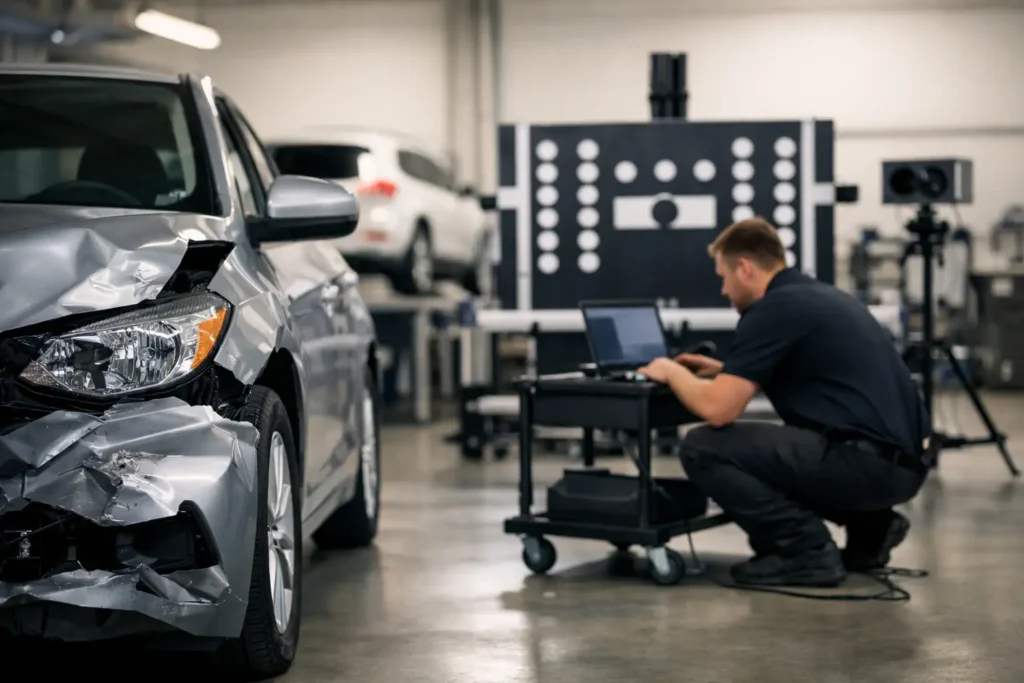
Some vehicles require static calibration, which is performed in a controlled setting using specific targets, measurements, lighting conditions, and equipment. Others require dynamic calibration, where the vehicle is driven under defined road and traffic conditions. Some models need both.
Neither method is automatically better. The correct method depends on the vehicle make, model, year, installed equipment, and repair performed. This is why technicians cannot safely rely on a one-size-fits-all approach or assume that a short road test handles every system.
Manufacturer Procedures Matter More Than Ever
As technology becomes more model-specific, repair procedures have become more detailed. The correct process may identify required scans, calibrations, alignment checks, aiming procedures, replacement restrictions, or special inspection steps.
Following those procedures can take additional time, especially when damage involves multiple systems. It can also affect the estimate. That does not mean the work is optional. It means accurate estimates need to reflect the full scope of a safe, documented repair rather than only the parts visible after an accident.
Calibration Documentation Is Becoming Standard Practice
Customers and insurers increasingly expect proof that required diagnostic and calibration work was completed. Documentation may include scan reports, calibration results, repair procedures, measurements, and invoices from specialized calibration services when applicable.
This record supports transparency. It helps explain why certain operations were necessary and provides useful repair information for the vehicle owner. If questions arise later, clear documentation is far more helpful than a verbal assurance alone.
What Can Trigger ADAS Calibration?
The need for calibration depends on the vehicle and the repair. It is often triggered by replacement or removal of a sensor, camera, windshield, bumper, grille, mirror, suspension component, steering component, or wheel alignment adjustment. Structural repairs can also alter the reference points that sensors depend on.
Even a minor parking-lot impact can deserve a closer look if it involves a sensor area. A bumper cover may rebound after contact, but the bracket behind it could be damaged or shifted. A windshield chip repair may be simple, while a windshield replacement on a camera-equipped vehicle may involve additional steps.
Drivers should also mention any unusual messages, warning lights, or changes in how driver-assistance features behave after an accident. A lane warning that activates inconsistently, a blind-spot alert that no longer appears, or a cruise-control feature that disables itself can all help guide the inspection. Still, the absence of these symptoms should not replace the manufacturer’s repair requirements.
Why Wheel Alignment and Structural Accuracy Matter
ADAS technology does not operate separately from the rest of the vehicle. Cameras and radar sensors are calibrated in relation to the vehicle’s centerline, height, and geometry. If the vehicle is out of alignment or has unresolved structural damage, a sensor may be calibrated around an inaccurate foundation.
That is why a quality repair process begins with assessing the complete damage, including hidden damage. Frame measuring, structural repair, suspension inspection, and alignment checks may all be necessary before final calibration. Trying to calibrate first and correct the underlying geometry later can lead to wasted work and unreliable results.
For example, a vehicle may need front-end repairs after a collision. If a radar sensor is calibrated before the bumper support, suspension, or alignment issues are addressed, the result may not meet the vehicle manufacturer’s standard. The correct sequence protects both repair quality and the driver’s confidence on the road.
What This Means for Insurance Repairs
Insurance estimates are often written from the visible damage present at the first inspection. Once repairs begin, technicians may find damaged brackets, mounting points, wiring, fault codes, or manufacturer-required operations that were not apparent initially. This can lead to a supplement, which is an update to the estimate for necessary additional repairs.
ADAS-related operations should be explained clearly, including why they are needed and how they relate to the accident damage. A trusted repair facility can coordinate with the insurer while keeping the vehicle owner informed. The goal is not to add unnecessary work. It is to avoid skipping required safety procedures simply because the technology is not visible from the outside.
At CatCity Auto Body, the repair process is built around detailed estimates, certified expertise, and clear communication so customers understand what their vehicle needs and why. For vehicles that require calibration, that attention helps connect the body repair, electronic systems, and final safety checks.
Questions to Ask After an Accident
When choosing a collision repair shop, ask whether the vehicle will receive pre- and post-repair diagnostic scans when appropriate, how manufacturer repair procedures are identified, and whether required ADAS calibration will be completed and documented. It is also reasonable to ask whether alignment, structural measurements, or related mechanical work must be addressed before calibration.
A good shop should be able to explain the answer in plain language. You do not need to become an ADAS expert after an accident. You do deserve to know whether your vehicle’s safety systems were considered as part of the repair.
A Safer Standard for Modern Repairs
The direction of collision repair is clear: vehicles are becoming more sophisticated, and a proper repair must account for the systems that help drivers avoid a second accident. Calibration is not an extra reserved for luxury vehicles. It is often a manufacturer-required step for everyday cars, trucks, and SUVs.
If your vehicle has been damaged in Cathedral City, Palm Springs, Palm Desert, Rancho Mirage, or elsewhere in the Coachella Valley, request a detailed estimate and ask about ADAS inspection and calibration requirements. The right repair is one that restores more than the vehicle’s appearance. It gives you a clearer path back to the road with confidence.