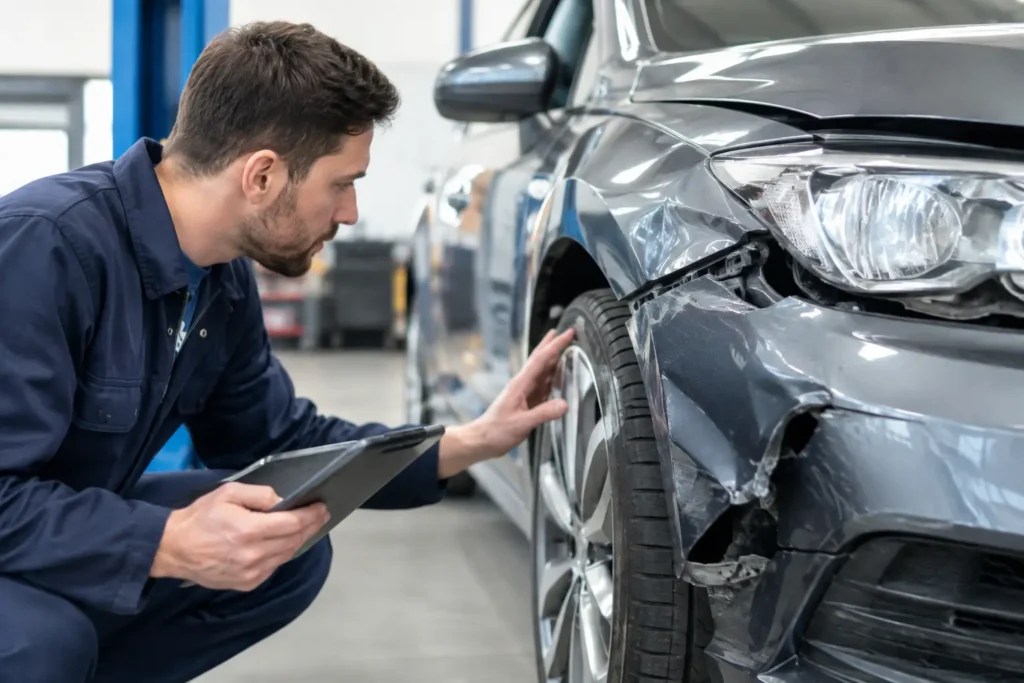
A curb strike, a low-speed parking-lot impact, or a more serious crash can leave a vehicle looking mostly normal while changing the way it travels down the road. Does collision damage affect alignment? Yes, it can. Even damage that appears limited to a bumper, wheel, fender, or suspension corner may alter the angles that keep your tires pointed and rolling correctly.
For drivers in Cathedral City and throughout the Coachella Valley, that matters for more than a smooth ride. Poor alignment can cause uneven tire wear, reduced steering control, and added stress on suspension components. After an accident, an alignment inspection helps confirm that the vehicle is safe to drive and is being restored to its pre-accident condition.
How Collision Damage Affects Wheel Alignment
Wheel alignment refers to the precise position of each wheel in relation to the vehicle and the road. Technicians measure angles commonly known as camber, caster, and toe. Those measurements determine whether the tires sit straight, turn predictably, and maintain proper contact with the pavement.
A collision can change those measurements in several ways. A direct hit to a wheel or tire may bend a steering or suspension component. An impact to the front or rear of the vehicle can shift a subframe, control arm mounting point, or suspension cradle. A side impact may affect the suspension on one corner even when the wheel itself does not look damaged.
Not every accident causes an alignment problem. A light scrape to a bumper cover, for example, may be strictly cosmetic. However, it is difficult to judge underlying damage by appearance alone. Modern vehicles are designed with carefully engineered crumple zones, sensors, suspension geometry, and structural components. A qualified collision inspection is the reliable way to determine what was affected.
Signs Your Vehicle May Be Out of Alignment After a Crash
The clearest symptom is a vehicle that pulls or drifts to one side on a level road. You may also notice that the steering wheel is off-center when driving straight, or that the vehicle requires constant small corrections to stay in its lane.
Uneven tire wear is another common warning sign, although it may not show up immediately. If the inner or outer edge of one tire is wearing faster than the rest, an alignment issue could be contributing. Squealing tires during ordinary turns, a steering wheel that feels loose, or a change in handling can also point to collision-related suspension damage.
Pay attention to new vibrations as well. Vibration can come from an unbalanced tire, a damaged wheel, or a bent component, so it does not automatically mean the alignment is off. Still, it deserves inspection after an impact. The same is true if your vehicle feels different over bumps or brakes unevenly following a collision.
Some alignment problems have no obvious symptom at first. That is one reason a post-collision inspection is valuable, particularly after contact with a curb, pothole, median, another vehicle, or road debris. Catching a small issue early can prevent premature tire replacement and more extensive repairs later.
Why an Alignment Is Not Always a Simple Adjustment
An alignment machine can measure wheel angles with exceptional precision, but measurements alone do not repair damaged parts. If a control arm, tie rod, strut, knuckle, wheel, or suspension mounting point is bent, simply adjusting the angles may not be the right or safe solution.
The repair process should begin with an inspection of the affected area. A technician may check the wheels and tires, steering linkage, suspension components, subframe, unibody structure, and mounting locations. If collision damage is found, the damaged component or structural area must be repaired correctly before final alignment measurements are set.
This distinction is especially important after a significant impact. A vehicle can sometimes be adjusted close to specification while still having compromised parts or geometry. Quality collision repair focuses on identifying the cause of the misalignment, not just making a steering wheel appear straight.
At CatCity Auto Body, Inc., certified technicians use modern collision repair equipment to inspect damage beyond the visible exterior. That approach helps ensure frame, suspension, and body repairs support the vehicle’s safety systems and proper road handling.
The Safety and Cost Reasons to Check Alignment
Driving with collision-related alignment damage can make a vehicle less predictable. During a quick lane change, emergency stop, or wet-road turn, poor alignment and damaged suspension parts may affect how the vehicle responds. It can also place uneven loads on tires, reducing their usable life.
Tires are a major expense, particularly on SUVs, trucks, and luxury vehicles commonly driven across Palm Springs, Palm Desert, Rancho Mirage, and Cathedral City. Replacing tires early because of uneven wear is frustrating when the underlying problem could have been corrected after the accident.
Alignment damage may also complicate other repairs. For example, a vehicle with a shifted suspension component could show abnormal readings for advanced driver assistance systems. Many newer vehicles use cameras, radar, sensors, and steering-angle data to support features such as lane assistance, adaptive cruise control, and automatic emergency braking. Depending on the vehicle and repairs performed, calibration may be needed in addition to alignment.
The right steps depend on the make, model, point of impact, and extent of the damage. Foreign and domestic vehicles have different repair procedures, which is why following manufacturer-informed repair practices is essential.
What Happens During a Post-Collision Alignment Check
A thorough check starts with the vehicle’s condition, not just the alignment rack. The technician looks for visible signs of impact damage, checks tire condition and pressure, and inspects steering and suspension parts for bending, looseness, or wear. Wheel and tire damage must be addressed because a bent wheel or damaged tire can affect measurements and driving behavior.
Next, alignment equipment measures the vehicle against manufacturer specifications. The readings show whether camber, caster, toe, and related angles are within range. If the readings are outside specification, the repair team determines whether the condition can be adjusted or whether a damaged component, subframe, or structural area is responsible.
Once necessary repairs are completed, the vehicle receives a final alignment check. When appropriate, the shop may also confirm steering-wheel centering and complete required safety-system calibrations. Documentation of measurements and repairs provides useful clarity for the owner and, when applicable, the insurance claim.
Should Insurance Cover Alignment After an Accident?
If an accident caused the alignment issue, alignment inspection and related repairs are often part of a collision claim. Coverage depends on your policy, deductible, the circumstances of the loss, and the insurance company’s assessment. An experienced body shop can prepare a detailed estimate, document accident-related damage, and communicate directly with the insurer to help keep the process moving.
Do not assume that a repair estimate covering visible body damage automatically includes every necessary mechanical or structural item. Some issues become clear only after disassembly or measurement. Supplemental damage is a normal part of many collision repairs, especially when an impact affects areas behind a bumper, fender, or wheel.
If you notice pulling, vibration, an off-center steering wheel, or uneven tire wear after a crash, mention it when you request your estimate. Clear communication gives the repair team a better starting point and helps ensure the inspection addresses your concerns.
A vehicle should feel stable, steer straight, and inspire confidence every time you head across the Coachella Valley. After a collision, a professional alignment and damage inspection is a practical step toward getting that confidence back.