
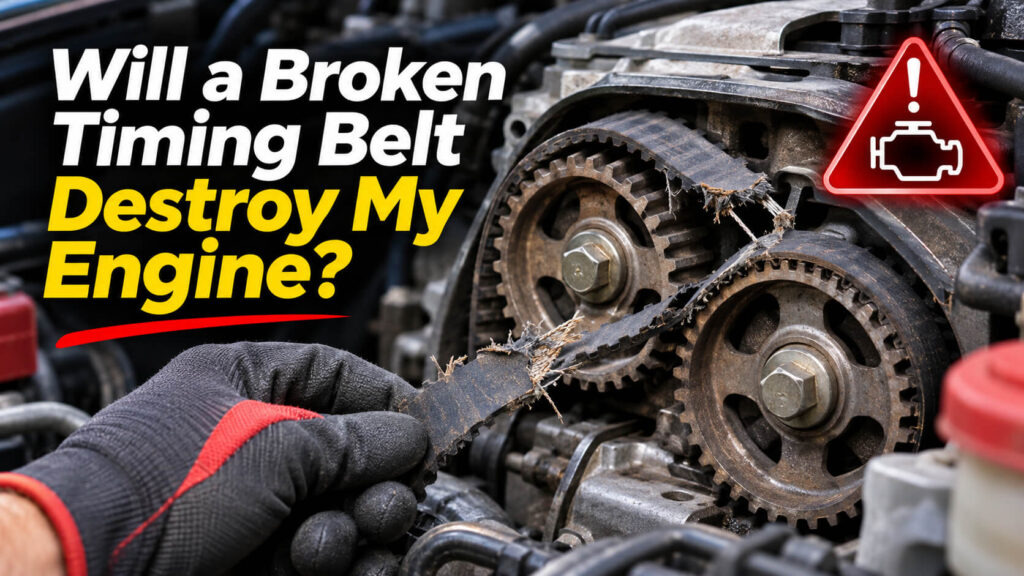
Yes, a broken timing belt can destroy your engine, but the extent of the damage depends on your vehicle’s engine design. If your car has an interference engine, a broken timing belt can cause the pistons to strike open valves, resulting in bent valves, damaged pistons, cylinder head damage, and potentially complete engine failure. However, if your vehicle has a non-interference engine, the belt may break without causing internal engine damage, although the engine will stop running.
A timing belt is a critical engine component that keeps the crankshaft and camshaft synchronized. This synchronization ensures that the engine’s intake and exhaust valves open and close at precisely the right moments as the pistons move inside the cylinders. When the belt breaks or slips, this timing can be disrupted, creating a risk of serious mechanical damage.
For drivers in Cathedral City and throughout the Coachella Valley, understanding the warning signs of timing belt failure and following the manufacturer’s maintenance schedule can help prevent unexpected breakdowns and expensive engine repairs.
What Happens When a Timing Belt Breaks?
When a timing belt breaks, the camshaft and crankshaft lose their synchronized movement. The camshaft controls the engine valves, while the crankshaft controls the pistons. Without the timing belt connecting their movements, the engine can no longer maintain the correct combustion sequence.
In many interference engines, the crankshaft and pistons may continue moving briefly due to momentum even after the camshaft stops. If a piston rises while a valve remains open, the two components can collide.
This collision can cause several types of internal engine damage:
- Bent valves: Pistons can strike open valves and bend their stems, preventing them from sealing properly.
- Damaged pistons: Direct contact can leave cracks, dents, or broken sections in the piston crowns.
- Cylinder head damage: Severe impacts may damage valve seats, combustion chambers, and other cylinder head components.
- Damaged connecting rods: In extreme situations, the force of internal component contact can damage connecting rods.
- Complete engine failure: Extensive internal damage may make rebuilding or replacing the engine more practical than repairing individual components.
Not every broken timing belt causes catastrophic damage. The engine’s design, operating speed when the belt fails, and the extent of the mechanical failure all influence the outcome.
The important point is that a broken timing belt should always be treated as a serious mechanical problem, even if the engine appears undamaged.
Interference Engine vs. Non-Interference Engine: Why Does It Matter?
The most important factor in determining whether a broken timing belt will destroy your engine is whether your vehicle has an interference or non-interference engine.
Both engine designs use synchronized piston and valve movements, but they differ in how much physical clearance exists between these components.
What Is an Interference Engine?
An interference engine is designed so that the pistons and open valves occupy overlapping areas inside the combustion chamber at different points in the engine cycle. Proper valve timing prevents them from occupying that space simultaneously.
If the timing belt breaks, this synchronization disappears. A piston can rise into an open valve, potentially bending or breaking it. Depending on the impact, the damage may extend to the pistons, cylinder head, and other internal engine components.
Interference engines allow manufacturers to achieve higher compression ratios and efficient engine performance. However, their tighter internal clearances make timing belt maintenance particularly important.
What Is a Non-Interference Engine?
A non-interference engine has enough clearance between the pistons and fully open valves to prevent them from colliding if the timing belt breaks.
When the belt fails, the engine will typically stop running, but the pistons and valves are designed not to strike each other. In many cases, replacing the timing belt and correcting the engine timing can restore normal operation, provided no additional components have failed.
However, this does not mean every non-interference engine is immune to mechanical problems. The complete timing system should still be inspected before the vehicle is returned to service.
Comparison of the Two Engine Types
| Feature | Interference Engine | Non-Interference Engine |
| Piston and valve clearance | Overlapping travel areas | Sufficient clearance |
| Broken timing belt | Can cause internal engine damage | Usually stops the engine without piston-valve contact |
| Bent valve risk | High when contact occurs | Generally very low |
| Piston damage | Possible | Unlikely from timing belt failure alone |
| Repair requirements | May require extensive engine repairs | Often requires timing system replacement |
| Engine replacement | Possible in severe cases | Usually unnecessary from belt failure alone |
If you are unsure which engine design your vehicle uses, check the owner’s manual, manufacturer service information, or ask a qualified automotive technician to identify the exact engine.
7 Warning Signs of a Failing Timing Belt
One of the biggest problems with timing belt failure is that the belt may break without providing obvious warning. Unlike some other engine components, a timing belt does not always produce noticeable symptoms before it fails.
However, certain signs may indicate that the belt or related timing components need professional inspection.
1. Unusual Ticking or Clicking Sounds
A worn or damaged timing belt may produce ticking or clicking sounds from the engine area. These noises can also come from loose tensioners, worn pulleys, or other engine components, so the sound alone cannot confirm timing belt failure.
2. Engine Misfires
When a timing belt stretches or skips teeth, the camshaft and crankshaft may lose their correct synchronization. This can affect valve timing and combustion, resulting in engine misfires, rough operation, or reduced performance.
3. Difficulty Starting the Engine
A severely worn belt or incorrect engine timing can prevent the engine from starting properly. If the timing belt has completely broken, the engine may crank without starting, depending on the vehicle’s design.
4. Rough Idling
Incorrect valve timing can interfere with the engine’s normal combustion process. You may notice unusual vibrations, inconsistent engine speed, or rough idling while the vehicle is stationary.
5. Oil Leaks Around the Timing Cover
Oil contamination can damage certain timing belt materials and contribute to premature wear. Oil around the timing cover may indicate a leaking seal or gasket that requires attention.
6. Visible Cracks or Fraying
During an appropriate inspection, a technician may identify cracks, missing teeth, fraying, or other signs of belt deterioration. However, some timing belt problems cannot be identified through a basic external inspection.
7. The Timing Belt Has Reached Its Replacement Interval
A timing belt can deteriorate over time even if the vehicle has relatively low mileage. If the belt has reached the manufacturer’s recommended replacement interval, delaying maintenance increases the risk of unexpected failure.
It is important to remember that these symptoms are not exclusive to timing belt problems. A professional diagnosis is necessary to identify the actual cause.
What Should You Do If Your Timing Belt Breaks While Driving?
A broken timing belt can cause the engine to stop suddenly while the vehicle is moving. If this happens, your immediate priority should be vehicle safety rather than trying to restart the engine.
Follow these steps:
- Stay calm and maintain control: Keep a firm grip on the steering wheel and avoid sudden movements if the engine stops.
- Move to a safe location: Use your remaining vehicle momentum to reach a safe shoulder or another suitable stopping area, if possible.
- Turn on your hazard lights: Alert other drivers that your vehicle has experienced a breakdown.
- Do not repeatedly restart the engine: Attempting to crank an engine after timing belt failure can create additional risks, particularly if the vehicle has an interference engine.
- Arrange professional towing: Have the vehicle transported to a qualified repair facility for inspection.
- Request an engine damage assessment: A technician should inspect the timing system and determine whether the pistons, valves, and cylinder head have sustained damage.
Avoid assuming that replacing the broken belt alone will solve the problem. Internal engine damage may already have occurred, even if the vehicle’s exterior appears completely normal.
Can You Drive a Car With a Broken Timing Belt?
No. A car with a broken timing belt should not be driven. The timing belt is essential for maintaining the correct relationship between the engine’s pistons and valves. Once it breaks, the engine will generally stop running and cannot operate normally.
Trying to restart or drive the vehicle can create additional mechanical risks, especially in an interference engine. If the belt has only slipped rather than completely broken, the engine may still run, but incorrect valve timing can cause serious internal damage.
The safest option is to stop operating the vehicle and arrange professional towing. A technician can determine whether the timing belt, tensioner, pulleys, water pump, or internal engine components need attention.
How Much Damage Can a Broken Timing Belt Cause?
The repair cost following timing belt failure depends on the engine design and the extent of the damage.
If the vehicle has a non-interference engine and no additional components have failed, replacing the timing belt and related worn parts may be sufficient.
However, an interference engine can require significantly more extensive repairs.
| Type of Damage | Possible Repair |
| Broken timing belt without internal damage | Timing belt replacement and timing adjustment |
| Damaged tensioner or pulley | Replacement of affected timing components |
| Bent engine valves | Cylinder head removal and valve repair or replacement |
| Damaged pistons | Internal engine repair or replacement |
| Cylinder head damage | Cylinder head machining, rebuilding, or replacement |
| Severe internal engine damage | Complete engine rebuild or engine replacement |
There is no single repair price that applies to every vehicle. Labor requirements, engine accessibility, replacement part availability, and the number of damaged components all influence the final estimate.
Before approving major repairs, ask the repair facility for a written estimate explaining which components failed, how the damage was confirmed, and whether rebuilding or replacing the engine is the more practical option.
How Can You Prevent Timing Belt Failure?
Preventive maintenance is the most effective way to reduce the risk of timing belt failure. Unlike some vehicle components, timing belts have manufacturer-defined service intervals and should not be treated as lifetime parts.
Here are several practical ways to protect your engine.
Follow the Manufacturer’s Replacement Schedule
Check your owner’s manual for the recommended timing belt replacement interval. Depending on the vehicle, engine, and operating conditions, replacement schedules can vary considerably.
Some manufacturers specify mileage intervals, time-based intervals, or both. Follow the requirements for your exact engine rather than relying on a general mileage estimate.
Replace Related Timing Components
A timing belt works alongside other components, including tensioners, idler pulleys, and sometimes a water pump. A worn pulley or failing tensioner can contribute to belt damage or timing system failure.
When replacing the belt, ask whether the manufacturer’s recommended service procedure calls for replacing these components at the same time.
Address Oil and Coolant Leaks
Oil or coolant contamination can affect timing belt condition and may indicate problems with nearby seals, gaskets, or the water pump.
Have leaks inspected and repaired rather than allowing fluids to contaminate the timing system.
Keep Maintenance Records
Maintain records of previous timing belt replacements, inspections, and related repairs. If you purchase a used vehicle without reliable service records, ask a qualified technician to assess whether the belt needs replacement.
For additional vehicle maintenance advice, read our Pre-Trip Auto Maintenance Guide.
Frequently Asked Questions
No. A broken timing belt does not always destroy the engine. Interference engines can experience serious internal damage when pistons strike open valves. Non-interference engines generally have enough clearance to prevent this collision. The actual outcome depends on the engine design and the circumstances surrounding the failure.
A completely broken timing belt often causes the engine to stop suddenly. You may notice that the engine cranks without starting or that it stopped running while driving. Before complete failure, possible warning signs include rough idling, engine misfires, unusual ticking sounds, and difficulty starting. However, many timing belts fail without noticeable warning.
Generally, no. A broken timing belt prevents the camshaft and crankshaft from maintaining their required synchronization. The engine will typically stop running and will not start normally until the timing system is repaired. Repeated starting attempts should be avoided.
The most reliable way is to identify your vehicle’s exact year, make, model, and engine configuration, then consult manufacturer service information or ask a qualified technician. Do not rely only on the vehicle model name because different engine options within the same model range may have different designs.
It depends on whether the engine sustained internal damage. If a non-interference engine has no additional mechanical problems, replacing the belt and related components may restore normal operation. If an interference engine has bent valves or damaged pistons, additional engine repairs may be necessary before it can run safely.
Timing belt replacement intervals vary by manufacturer and engine. Some vehicles require replacement at approximately 60,000 miles, while others have intervals of 90,000 miles, 100,000 miles, or more. Some manufacturers also specify a maximum age for the belt. Always follow the maintenance schedule for your specific vehicle.
No. A timing belt synchronizes the crankshaft and camshaft to control engine valve timing. A serpentine belt drives external accessories such as the alternator, air conditioning compressor, and sometimes the power steering pump or water pump. These belts perform different functions, and a broken serpentine belt does not cause the same piston-to-valve timing problem.
It depends on the engine design and manufacturer recommendations. On some vehicles, the water pump is driven by the timing belt and is difficult to access separately. Replacing it during timing belt service may reduce the need for additional labor later. Check the manufacturer’s service procedure before making this decision.
Protect Your Vehicle With Proper Maintenance
A broken timing belt can turn a manageable maintenance issue into a major engine repair, particularly when the vehicle has an interference engine. Understanding your engine type, recognizing possible warning signs, and following the manufacturer’s replacement schedule can help reduce the risk of unexpected failure.
Vehicle maintenance also extends beyond the engine. After an accident or impact, hidden structural and body damage may affect your vehicle’s safety and long-term condition. Cat City Auto Body provides collision repair and auto body services for drivers in Cathedral City and the surrounding Coachella Valley.
If your vehicle has sustained collision damage, visit our Collision Repair service page to learn more about professional repair options, or contact Cat City Auto Body for assistance.