
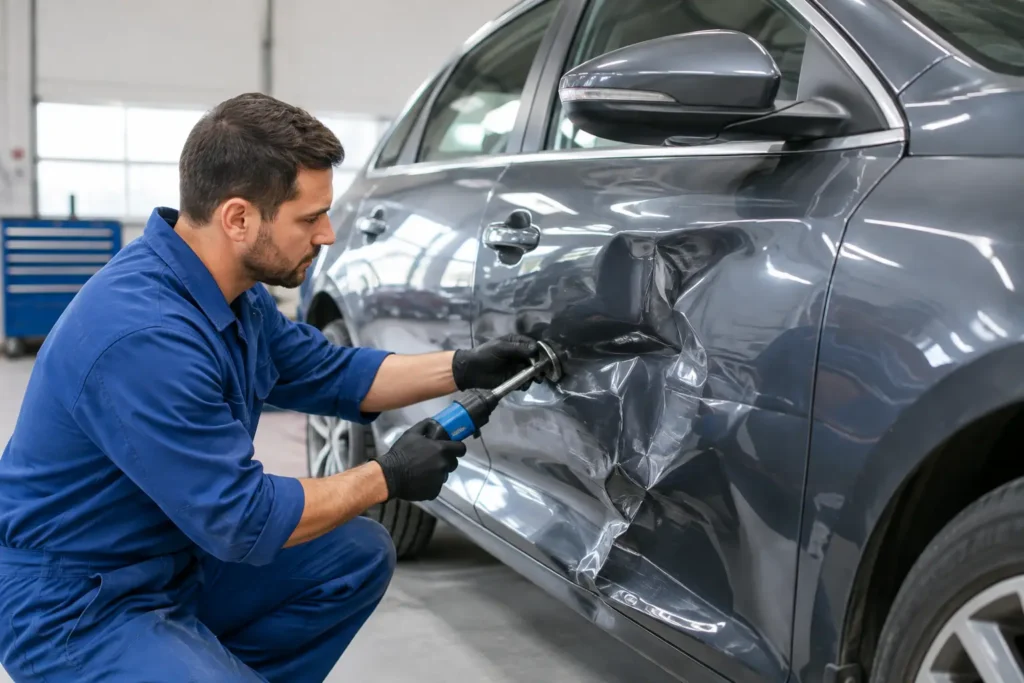
A side impact collision can leave damage that looks limited to one door but reaches far beyond it. This side impact damage repair example follows a common Coachella Valley scenario: a sedan is struck at low-to-moderate speed in a parking-lot intersection, with the impact centered on the driver’s front door and front fender. The door is dented, the window no longer moves properly, and the vehicle pulls slightly after the accident.
For the owner, the first concern is often appearance. For a qualified collision repair shop, the first concern is whether the vehicle’s safety structure, restraint systems, and wheel alignment have been affected. A proper repair starts with a complete inspection, not a quick estimate based only on what can be seen from the outside.
The Damage You Can See and the Damage You Cannot
In this example, the visible damage includes a crushed front door skin, a scraped rear door edge, a bent front fender, and chipped paint. The side mirror is broken, and the gap between the front door and rear door is uneven. Those are clear signs that parts will need repair or replacement.
The more serious questions are behind the exterior panels. A side hit can transfer force into the hinges, door opening, rocker panel, B-pillar, floor pan, suspension, and unibody structure. Modern vehicles also place wiring, sensors, side-impact airbags, and seat-belt components in or near the doors and pillars. A door that will not latch correctly may be more than a door problem.
A technician begins by documenting the condition of the vehicle, checking panel gaps, opening and closing the doors, and looking for warning lights. The vehicle is then measured against manufacturer specifications. This step determines whether the impact moved structural mounting points or distorted the passenger compartment.
Side Impact Damage Repair Example: The Repair Plan
After disassembly in this example, the shop finds that the outer front door panel is heavily damaged and cannot be restored reliably. The door shell needs replacement. The fender can be repaired, but the lower rocker area has a shallow buckle that requires controlled pulling and measurement. The front suspension alignment is also outside specification after the impact.
The repair plan may include four connected areas:
- Replacement of the damaged front door shell, mirror, molding, and related hardware
- Repair and refinishing of the front fender and rocker panel
- Structural measuring and straightening of the affected side of the unibody
- A wheel alignment and inspection of suspension components, plus required electronic system scans
Each operation has a purpose. Replacing a door is not simply a matter of bolting on a new panel. The replacement door must match the vehicle, fit correctly at the hinges and latch, protect the side-impact area as designed, and allow the glass, lock, mirror, wiring, weatherstrips, and trim to operate properly.
Whether a part is repaired or replaced depends on the extent and location of the damage, the vehicle manufacturer’s repair procedures, part availability, and the condition needed to restore pre-accident safety and appearance. A small cosmetic dent may be repaired. A crushed door intrusion beam or damaged hinge area usually calls for replacement rather than a cosmetic fix.
Why Structural Measurement Comes First
A side impact can shift a vehicle by millimeters, which is enough to affect how a door closes, how panels line up, and how the vehicle tracks down the road. This is why frame and unibody measuring equipment matters. It gives technicians objective measurements instead of relying on appearance alone.
In our example, the measurement confirms a minor inward movement near the lower rocker area. Certified technicians use approved pulling methods to return that area to specification, checking the measurements throughout the process. Heat, improper pulling, or hurried repairs can weaken metal or create fit problems later, so the repair method must follow the vehicle’s requirements.
Once the structure is restored, the replacement door and repaired fender can be test-fitted. Gaps around the hood, front door, rear door, and rocker panel are checked before paint work begins. This is the stage where careful collision repair prevents common frustrations such as wind noise, water leaks, a door that needs extra force to close, or paint lines that do not match the rest of the vehicle.
Airbags, Sensors, and Safety Systems
Side impacts require special attention to safety equipment. Depending on the vehicle and the collision, the shop may inspect or replace side airbags, curtain airbags, impact sensors, seat-belt pretensioners, door wiring harnesses, and related components. Diagnostic scans before, during, and after repairs help identify trouble codes that are not visible on a dashboard at first glance.
An airbag that did not deploy is not automatic proof that no safety component was affected. The severity, impact location, sensor readings, and manufacturer procedures all matter. A trusted repair facility will explain what was found, what needs replacement, and why those repairs are part of safely returning the vehicle to service.
Preparing the Vehicle for Paint
After metal repairs and part installation are approved, refinishing begins. The repaired fender, rocker panel, and replacement door need more than a coat of paint. Surfaces are prepared carefully, primed where needed, sealed, color matched, and refinished using the appropriate materials and process.
Because paint fades gradually from sun exposure, especially in the desert climate, a direct panel-only match may not always produce the best result. In many cases, color is blended into an adjacent panel so the repair looks consistent in daylight, shade, and at night. The scope depends on the color, the condition of the existing finish, and manufacturer or insurer guidelines.
Fresh paint is then allowed to cure before final reassembly. Moldings, handles, glass, weatherstrips, mirrors, lights, and interior trim are installed with attention to fit and function. The goal is not to make the repaired area merely less noticeable. It is to restore a clean, durable finish that belongs on the vehicle.
The Final Checks Before Delivery
The last stage of this side impact damage repair example is quality control. The team verifies that doors open, close, and latch correctly; windows and locks work; mirrors adjust; warning lights are addressed; and the repaired panels align consistently. A final alignment confirms that the vehicle drives correctly and that tires are not wearing unevenly because of accident-related suspension changes.
The vehicle is also road-tested when appropriate. Technicians listen for wind noise and rattles, check steering response, and confirm that the repairs have not created new concerns. These final details matter because an accident repair affects the way a vehicle feels every day, not just how it looks when it leaves the shop.
At CatCity Auto Body, Inc., customers in Cathedral City and the surrounding Coachella Valley can expect a detailed estimate, clear updates, and support coordinating the repair process with their insurance company. The exact timeline varies with parts availability, hidden damage, insurer approvals, and the extent of structural or safety-system work. A minor side scrape may take only a few days, while a repair involving a door replacement, paint blending, calibration, and structural correction can take longer.
What to Do After a Side Impact
If your vehicle has been struck on the side, avoid assuming it is safe to drive just because the tires hold air and the doors still move. If a door will not latch, an airbag warning light is on, steering feels different, a wheel rubs, or you see fluid leaking, arrange towing rather than driving it. Save photos from the scene, exchange insurance information, and request a professional estimate as soon as possible.
You do not need to know the names of every damaged part before speaking with a repair shop. A careful inspection should give you a straightforward explanation of the damage, the recommended repairs, and the expected next steps. Request a free estimate and give your vehicle the careful attention it needs before the next trip across Cathedral City, Palm Springs, Palm Desert, or beyond.