
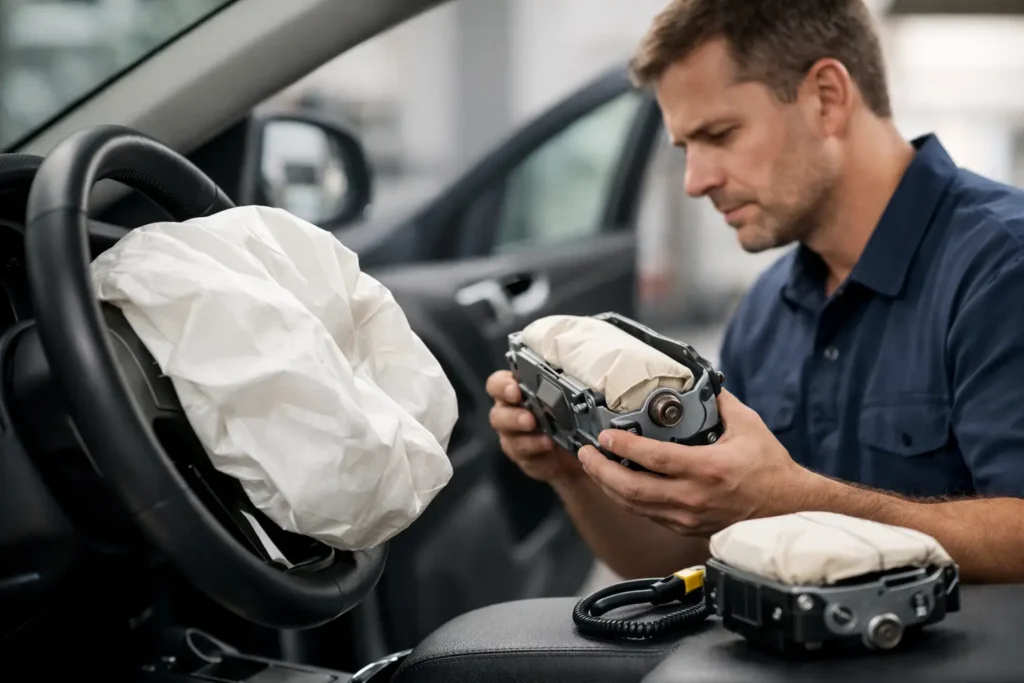
A deployed airbag can turn a crash that looked manageable into a repair that feels uncertain fast. The steering wheel may be torn, the dashboard may be split, and the airbag warning light may remain on even after visible body damage is repaired. These airbag replacement questions matter because the system is designed to protect occupants in a fraction of a second, and it must be restored with the same level of care.
For drivers in Cathedral City and across the Coachella Valley, the best next step is not guessing which parts need to be replaced. A qualified collision repair facility should inspect the vehicle, identify every affected safety component, explain the repair plan, and coordinate with the insurance carrier when a claim is involved.
Airbag Replacement Questions After a Collision
Does a deployed airbag always need to be replaced?
Yes. Once an airbag deploys, it cannot be reset or reused. The deployed airbag module must be replaced with the correct part for that specific vehicle and location, whether it is in the steering wheel, dashboard, seat, door, roof rail, or lower knee-bolster area.
However, the airbag itself may not be the only item involved. The Supplemental Restraint System, often called the SRS, is a connected safety system. A proper inspection may show a need for related parts such as seat belt pretensioners, impact sensors, wiring connectors, trim panels, or the restraint control module. What needs replacement depends on the vehicle, the crash direction, the severity of impact, and the manufacturer’s repair procedures.
A non-deployed airbag is not automatically safe or unsafe just because another airbag activated. It must be evaluated according to vehicle-specific diagnostic information and repair instructions. That is why a visual inspection alone is not enough.
Can an airbag be repaired instead of replaced?
The airbag module itself should be replaced, not repaired. Attempts to sew an airbag cover back together, install a simulated cover, or use improvised components can leave a vehicle with an unsafe restraint system. It may also create serious problems in a future collision, during a vehicle inspection, or when selling the car.
Other SRS-related components require judgment based on manufacturer procedures. In some vehicles, certain wiring or brackets may be inspected and retained if they meet specifications. In others, a deployed restraint system calls for replacement of additional parts that may not look damaged. The repair plan should follow the vehicle maker’s published guidance, not a one-size-fits-all shortcut.
Why is the airbag warning light still on after repairs?
An illuminated airbag or SRS warning light means the system has detected a fault or has not completed required verification. It does not necessarily mean an airbag will deploy unexpectedly, but it does mean the system may not work as intended in another crash.
The cause could be a stored crash code, a disconnected connector, a damaged sensor, a seat belt pretensioner issue, low system voltage, or a component that requires programming. A professional scan tool can identify fault codes, but clearing codes without completing the required repair is not a solution. The warning light should be addressed only after the root cause is identified and corrected.
What a Safe Airbag Repair Process Should Include
Airbag replacement is part of collision repair, not a stand-alone cosmetic fix. The repair should begin with a complete damage assessment. This includes examining visible impact damage as well as the areas behind bumpers, within the steering column, under seats, around the dashboard, and near the vehicle’s structural components.
The shop should then use vehicle-appropriate diagnostic equipment to check the SRS and related electronic systems. Modern vehicles rely on sensors, modules, cameras, radar equipment, and wiring that may be affected by an impact even when the exterior damage appears minor. Some repairs also require calibration or aiming procedures after components are installed.
Before delivery, the vehicle should receive final quality-control checks. The goal is not simply to make the airbag light disappear. The goal is to confirm that the repaired vehicle meets applicable safety procedures and that its restraint system is ready to perform properly if it is ever needed again.
At CatCity Auto Body, certified technicians approach safety-system damage as part of the complete repair, with clear estimates and communication throughout the process. That helps customers understand what is being repaired, why it is necessary, and how the work affects the final timeline.
Will Insurance Pay for Airbag Replacement?
If the accident is covered under your collision coverage or another applicable claim, insurance commonly pays for necessary airbag and restraint-system repairs, subject to your deductible and policy terms. Because airbag components can be costly, the total repair estimate may rise significantly after the vehicle is disassembled and diagnosed.
This does not automatically mean the insurer will total the vehicle. A total-loss decision generally depends on the vehicle’s value, the extent of structural and mechanical damage, local requirements, and the projected cost of proper repairs. Airbag deployment is one factor, but it is not the only one.
A thorough estimate should account for more than the visible steering-wheel or dashboard damage. If additional damage is found during repair, the shop can document it and submit a supplement to the insurer for review. This is a normal part of collision repair, especially after an impact that triggers occupant-restraint systems.
If another driver caused the crash, their liability coverage may be responsible. If fault is disputed or coverage is uncertain, your own insurer can explain the options available under your policy. A repair facility can assist with documentation and insurer communication, but it cannot determine coverage or waive a deductible.
Are Used Airbags a Good Way to Save Money?
This is one of the most common airbag replacement questions because the price difference can be tempting. The concern is that a used airbag or restraint component may have an unknown history. It could have been exposed to moisture, improperly stored, removed from a previously damaged vehicle, or incompatible with the exact options and configuration of your car.
Safety components are not the place to rely on appearances. The correct replacement decision depends on the part, vehicle manufacturer requirements, availability, warranty considerations, and the repair plan approved for the vehicle. A trusted shop should be transparent about the parts being used and explain any options that affect cost, timing, or warranty coverage.
Be especially cautious of vehicles advertised after a crash with a freshly repaired dashboard or steering-wheel cover but no clear documentation of restraint-system repairs. A pre-purchase inspection and diagnostic scan can provide valuable information before you buy.
How Long Does Airbag Replacement Take?
There is no reliable single-day answer. Replacing one accessible component may be relatively straightforward, but an airbag repair often involves parts ordering, dashboard or interior disassembly, diagnostics, module programming, seat belt repairs, paint and body work, and final calibrations.
Parts availability is often the biggest variable. Some original equipment parts arrive quickly, while others may be delayed because of supply conditions or vehicle age. Additional hidden damage can also extend the schedule. A reputable shop should provide an initial timeline, update you when parts or repair conditions change, and avoid promising a completion date before the full scope of work is known.
Rental vehicle assistance can reduce the disruption while your vehicle is in the shop. For working families, commuters, and retirees who depend on their vehicle for daily life in the desert communities, that support can be as valuable as the repair itself.
Questions to Ask Before Authorizing the Repair
Ask the repair facility whether it will perform a complete pre-repair and post-repair diagnostic scan, follow manufacturer repair procedures, inspect related seat belt and sensor components, and address required programming or calibrations. You can also ask for a written estimate that distinguishes visible damage from potential supplements discovered after disassembly.
It is reasonable to ask about parts sourcing, warranty coverage, expected timing, insurance coordination, and how you will receive repair updates. Clear answers are a sign that the shop recognizes the seriousness of the work and respects your need to plan around transportation, work, and family obligations.
If an airbag has deployed or the SRS light is on, avoid treating it as a cosmetic issue or delaying an inspection. Arrange for a qualified collision repair assessment, keep your claim information and accident photos available, and ask for a detailed explanation before repairs begin. A properly repaired restraint system gives you something more valuable than a clean-looking vehicle: confidence when you get back on the road.