
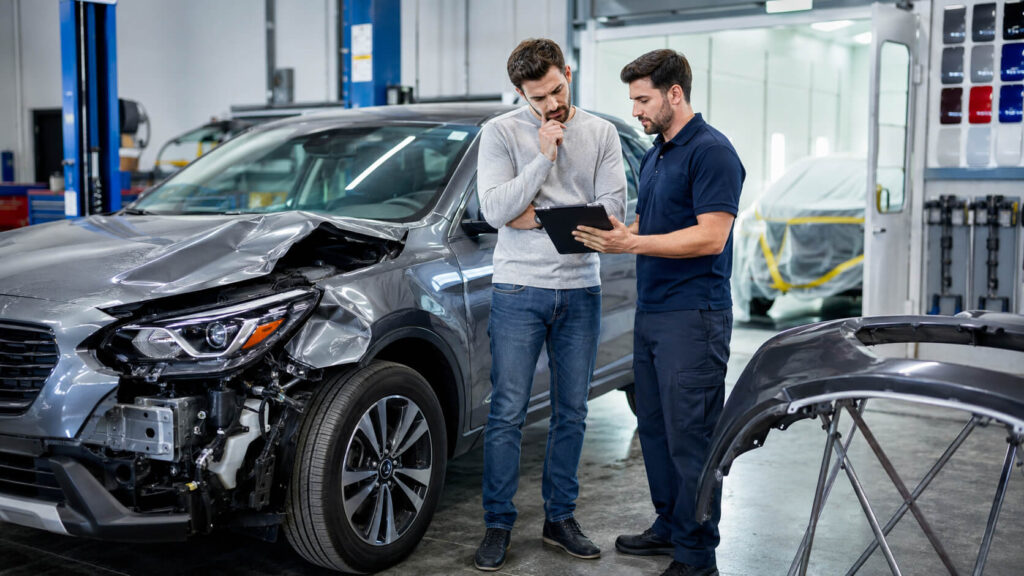
Collision repair cost can range from a relatively small amount for minor cosmetic damage to several thousand dollars for repairs involving multiple panels, structural damage, sensors, paintwork, or major parts replacement.
There is no single average price that accurately applies to every accident because the final repair cost depends on the vehicle, the location of the damage, the number of affected components, the type of replacement parts, labor time, refinishing work, hidden damage, and insurance requirements.
For example, a scratched bumper may require only cosmetic repair and refinishing, while a front-end collision that looks similar from outside may also involve:
- Bumper reinforcement damage
- Broken brackets
- Headlight damage
- Fender repair
- Radiator-support damage
- Parking sensors
- Radar equipment
- Structural measurement
- Paint blending
- Wheel alignment
That is why a professional collision estimate should be based on the complete repair plan, not only the visible damage.
If your vehicle has been involved in an accident, CatCity Auto Body provides collision repair in Cathedral City and can evaluate related bumper, dent, paint, and structural damage.
What Determines the Cost of Collision Repair?
The biggest factors affecting collision repair cost are:
- Severity of the impact
- Number of damaged panels
- Repair versus replacement decisions
- Vehicle make and model
- Replacement-part prices
- Body and mechanical labor
- Paint and refinishing
- Structural damage
- Hidden damage discovered after disassembly
- Sensors and ADAS calibration
- Insurance estimate differences
Two vehicles with similar-looking damage can therefore have very different repair bills.
A useful way to understand collision repair pricing is to look at the repair one component at a time.
1. The Severity of the Accident
The force of the collision is one of the main cost drivers.
A low-speed parking accident may leave a shallow dent or bumper scuff. A higher-speed accident can transfer force beyond the visible panel and affect the structure, suspension, cooling system, electronics, or safety components.
Minor collision damage may include:
- Small bumper scratches
- Paint transfer
- Small dents
- Door dings
- Minor fender damage
- Light panel misalignment
Moderate collision damage may involve:
- Cracked bumpers
- Multiple body panels
- Headlight or taillight damage
- Door or fender replacement
- Paint blending
- Broken brackets
Major collision damage may involve:
- Frame or unibody damage
- Suspension damage
- Airbag deployment
- Multiple replacement panels
- Structural welding
- Electronic modules
- ADAS sensors
- Mechanical repairs
The more systems affected by the impact, the more labor, parts, diagnostics, and repair planning are usually required.
2. Repairing a Part Versus Replacing It
A collision technician must determine whether a damaged component can be restored safely and economically.
Repair may be practical when:
- The dent is shallow
- The panel is not torn
- Mounting points remain intact
- The metal is not severely stretched
- The component is allowed to be repaired
Replacement may be recommended when:
- The panel is badly folded
- The part is cracked beyond repair
- Mounting tabs are broken
- The component is structurally compromised
- Manufacturer repair restrictions require replacement
- Repair labor would exceed the practical cost of a new part
For example, a mildly dented fender may be repaired and refinished. A fender with a heavily damaged flange and torn metal may be more practical to replace.
The same principle applies to bumpers, doors, hoods, quarter panels, and structural components.
3. Replacement-Part Prices
Parts prices can make up a large portion of the final collision estimate.
Replacement parts may include:
- Bumper covers
- Fenders
- Hoods
- Doors
- Headlights
- Taillights
- Grilles
- Mirrors
- Reinforcement bars
- Trim
- Brackets
- Sensors
The price depends on the vehicle and the type of replacement part used.
Possible categories include:
- New OEM parts
- Aftermarket parts
- Recycled or used parts
- Reconditioned components
A headlight for a basic older vehicle may cost far less than a modern LED or adaptive headlamp that contains advanced electronics.
Likewise, a bumper cover with several sensor openings and specialized trim can cost significantly more than a simple bumper.
A professional repair estimate should identify the proposed parts clearly.
4. Labor Costs
Collision repair involves several different types of labor.
These can include:
- Body labor
- Frame labor
- Refinishing labor
- Mechanical labor
- Structural repair
- Diagnostic labor
The total labor cost depends on how many hours are required and which operations must be completed.
A bumper repair might require:
- Removing the bumper
- Inspecting hidden damage
- Repairing the plastic
- Preparing the surface
- Painting
- Reinstalling sensors and trim
- Reassembling the bumper
- Performing quality checks
A more complicated collision might involve dozens of individual repair operations.
The final price should therefore be evaluated by the work included, not only by the hourly rate.
5. Paint and Refinishing Costs
Automotive painting is a major part of many collision repairs.
Refinishing may be required after:
- Dent repair
- Fender repair
- Bumper replacement
- Door repair
- Quarter-panel repair
- Hood replacement
- Structural panel repair
A professional paint process can include:
- Sanding
- Surface preparation
- Primer
- Sealer
- Color matching
- Base coat
- Clear coat
- Paint blending
- Polishing
CatCity’s auto-painting service uses professional refinishing and color-matching processes for repaired body panels.
Why Paint Blending Can Increase the Cost
The damaged panel may not be the only area that receives paint.
When a repaired fender sits directly beside a door, the new color may need to be blended into the door so there is no visible difference between the two panels.
Blending is more likely with:
- Metallic colors
- Pearl colors
- Tri-coat finishes
- Older faded paint
- Colors with several factory variants
This can add labor and materials even though the adjacent panel was not physically damaged.
6. Hidden Damage After Disassembly
One of the biggest reasons an initial collision estimate can increase is hidden damage.
A vehicle can look relatively undamaged from outside while concealing problems behind:
- Bumper covers
- Fenders
- Door trim
- Grilles
- Headlights
- Interior panels
For example, removing a rear bumper may reveal:
- Crushed energy absorber
- Bent reinforcement
- Broken brackets
- Wiring damage
- Sensor damage
- Rear body-panel distortion
These items may not have been visible during the first inspection.
When additional accident-related damage is found, the body shop may create a supplemental repair estimate.
The shop documents the new damage and submits it to the insurer for review when an insurance claim is involved.
7. Frame and Structural Repair
Structural damage can significantly increase the cost of collision repair.
Modern vehicles commonly use unibody construction, where the structure and body are integrated.
An accident may affect:
- Frame rails
- Aprons
- Strut towers
- Rocker panels
- Floor sections
- Suspension mounting points
- Rear body structure
Structural repair may require:
- Computerized measurement
- Vehicle anchoring
- Controlled pulling
- Panel replacement
- Welding
- Corrosion protection
- Final measurement
CatCity’s frame-straightening service is relevant when an accident causes vehicle pulling, abnormal tire wear, panel misalignment, or other signs of structural movement.
Structural repair should not be skipped simply to reduce the estimate.
The vehicle’s suspension and body components depend on correct mounting-point geometry.
8. Sensors, Cameras, and ADAS Calibration
Modern collision repair often involves electronic systems that older vehicles did not have.
A front or rear bumper may contain or affect:
- Parking sensors
- Blind-spot radar
- Adaptive-cruise radar
- Forward collision sensors
- Cameras
- Rear cross-traffic systems
Even a small bumper impact may:
- Damage a sensor
- Break its mounting bracket
- Shift the component
- Damage wiring
- Affect calibration
The repair may therefore require:
- Diagnostic scanning
- Sensor replacement
- Wiring repair
- Calibration
- Post-repair verification
These operations add to the cost but may be necessary for the vehicle’s systems to function correctly.
CatCity’s bumper and fender repair service is the most relevant service when impact damage affects a bumper, adjacent panels, or sensor-equipped areas.
9. Vehicle Make, Model, and Age
The vehicle itself has a major effect on collision repair pricing.
A newer luxury vehicle may have:
- More expensive parts
- More advanced lighting
- Aluminum body panels
- Complex paint finishes
- More ADAS equipment
- Manufacturer-specific repair requirements
An older vehicle may have:
- Cheaper parts
- Fewer electronic systems
- Harder-to-find replacement components
- More existing wear
A common vehicle with widely available parts may be less expensive to repair than a less common model with backordered or specialized components.
This is why online “average repair cost” numbers should be treated only as rough references.
The vehicle identification number and exact damage should be reviewed before a reliable estimate is prepared.
10. Insurance Claim Differences
When insurance is involved, the first estimate may not match the body shop estimate.
This can happen because the insurer’s initial estimate may be based on:
- Photos
- Visible exterior damage
- Preliminary parts prices
- Limited disassembly
The collision shop may later identify:
- Hidden damage
- Additional parts
- More labor
- Paint blending
- Structural procedures
- Scanning
- Calibration
The shop can submit a supplement when additional covered repairs are needed.
The vehicle owner should ask:
- Which repairs are approved?
- Which items are under review?
- What is my deductible?
- Could I owe any additional amount?
- Has hidden damage been documented?
A higher body shop estimate does not automatically mean the customer must pay the difference.
What Does a Collision Repair Estimate Usually Include?
A detailed estimate may contain:
- Customer and vehicle information
- Damaged parts
- Repair operations
- Replacement parts
- Labor hours
- Paint labor
- Paint materials
- Frame labor
- Mechanical operations
- Diagnostic scanning
- Calibration
- Sublet services
- Taxes and fees
The estimate may change once the vehicle is disassembled.
That is normal when the newly discovered work relates to hidden accident damage.
Why the Cheapest Collision Estimate Is Not Always the Best
A lower price may appear attractive immediately after an accident, but estimates should be compared line by line.
One estimate may leave out:
- Hidden-damage inspection
- Paint blending
- Sensor calibration
- Structural measurement
- Replacement hardware
- Additional trim removal
- Necessary refinishing
The question should not be:
“Which shop gave me the lowest number?”
The better question is:
“Which estimate represents the complete repair my vehicle actually needs?”
A complete repair plan can prevent problems such as:
- Poor panel fit
- Visible color mismatch
- Uneven tire wear
- Sensor warnings
- Loose bumper components
- Persistent alignment problems
How Much Does Bumper Repair Cost?
Bumper repair cost depends on whether the damage is cosmetic or extends behind the cover.
A minor repair may involve:
- Scratch repair
- Plastic repair
- Paint preparation
- Refinishing
A more expensive bumper repair may involve:
- Replacement bumper cover
- Reinforcement
- Mounting brackets
- Parking sensors
- Radar
- Trim
- Calibration
A photograph can help identify the general damage, but a full estimate may require bumper removal.
How Much Does Dent Repair Cost?
Dent repair pricing depends on:
- Dent size
- Dent depth
- Location
- Paint condition
- Panel material
- Access behind the dent
Paintless dent repair is often simpler when the paint remains intact.
A dent with cracked paint may require:
- Metal repair
- Sanding
- Primer
- Color matching
- Clear coat
CatCity’s dent repair service can help determine whether a dent is suitable for PDR or conventional body repair.
How Much Does Car Paint Repair Cost?
Paint repair can range from localized refinishing to multi-panel repainting.
Cost is influenced by:
- Size of the damaged area
- Paint color
- Metallic or pearl finish
- Number of panels
- Clear-coat condition
- Paint blending
- Surface preparation
A small scratch repair is very different from repainting a sun-damaged hood or repairing clear-coat failure across several panels.
How Much Does Frame Repair Cost?
Frame or structural repair is difficult to price without measurement.
Cost depends on:
- Severity of structural movement
- Number of affected points
- Parts replacement
- Welding
- Pulling time
- Suspension damage
- Final alignment
- Required calibrations
A vehicle that merely needs minor structural correction will cost less than one requiring major rail or panel replacement.
Can Collision Repair Cost More Than the Car Is Worth?
Yes.
When the estimated repair cost becomes high compared with the vehicle’s value, the insurance company may evaluate the vehicle as a possible total loss.
This can happen when:
- Structural damage is extensive
- Airbags deployed
- Major electronics are damaged
- Several expensive panels need replacement
- Parts and labor costs are high
- Hidden damage significantly increases the estimate
A vehicle may initially appear repairable but be reevaluated after teardown reveals additional damage.
How Long Does Collision Repair Take?
Repair time depends on:
- Damage severity
- Parts availability
- Insurance approval
- Hidden damage
- Structural work
- Painting
- Calibration
Minor repairs may take a few working days, while major collision repairs can take several weeks.
A more accurate timeline is usually possible after:
- The vehicle is inspected.
- The damaged area is disassembled.
- All major damage is documented.
- Required parts are identified.
- Insurance approval is clarified.
How Can You Avoid Unexpected Collision Repair Costs?
You cannot prevent every supplement, but you can reduce surprises by asking the right questions.
Before authorizing repairs, ask:
- Is this estimate based only on visible damage?
- Will the vehicle be disassembled?
- Could hidden damage change the total?
- Which parts are being used?
- Is paint blending included?
- Are scanning or calibrations required?
- Has structural damage been ruled out?
- Will I be contacted before additional work?
- What costs may be my responsibility?
The shop should be able to explain the repair clearly.
Collision Repair Estimates in Cathedral City, CA
If you are looking for collision repair in Cathedral City, the most useful estimate is one that reflects the complete repair—not just the first visible damage.
CatCity Auto Body can evaluate accident-related damage and coordinate related services such as:
A thorough inspection can determine whether the vehicle needs a localized cosmetic repair or a larger collision repair involving hidden, structural, or electronic damage.
For a collision repair estimate in Cathedral City, contact CatCity Auto Body at 760-324-7117.
Frequently Asked Questions
The shop may have discovered hidden accident damage after removing exterior panels. Additional parts and labor are commonly documented through a supplemental estimate.
Not always. The insurance estimate may be preliminary. A body shop can identify hidden damage or additional required procedures during repair planning and submit a supplement.
The insurer may approve additional covered accident-related repairs when the body shop provides proper documentation. Coverage depends on the policy and claim circumstances.
Repair is often less expensive when the damage is minor and the bumper remains structurally usable. Replacement may be necessary when the cover is badly cracked, mounting points are broken, or sensor-related repair restrictions apply.
Paint and refinishing can be a significant part of the estimate because the process may require preparation, primer, color matching, base coat, clear coat, blending, and polishing.
Yes. A damaged bumper may require sensor inspection, replacement, diagnostic scanning, or calibration in addition to the physical repair.