
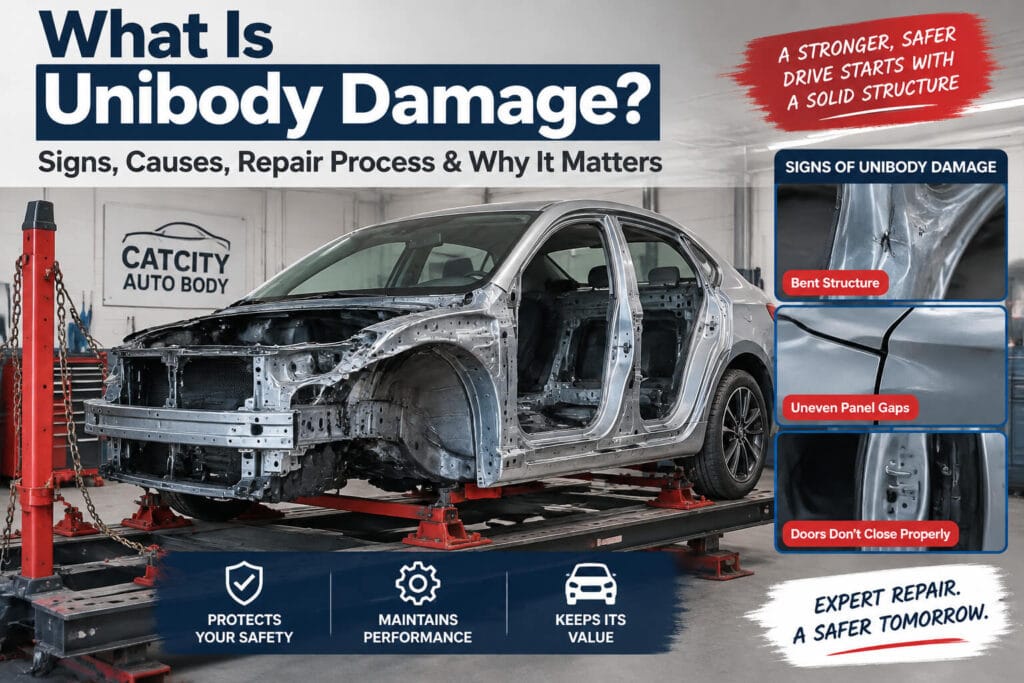
Unibody damage refers to damage that affects the structural body frame of a vehicle where the body and frame are built together as one integrated structure.
Unlike older vehicles that use a separate frame underneath the body, most modern cars, SUVs, and crossover vehicles use unibody construction. This design helps reduce weight, improve fuel efficiency, and provide better crash protection.
When a collision affects the unibody structure, the damage can go beyond visible dents or scratches. It may affect important structural areas responsible for maintaining vehicle strength, alignment, and safety.
For drivers in Cathedral City, what unibody damage is can help determine whether a vehicle needs simple cosmetic repairs or more advanced structural repair.
How Does a Unibody Vehicle Work?
In a traditional body-on-frame vehicle, the vehicle body sits on a separate metal frame. The frame supports the engine, suspension, and passenger compartment.
A unibody vehicle combines these components into one connected structure.
The vehicle’s:
- Floor panels
- Side rails
- Roof pillars
- Rocker panels
- Front rails
- Rear rails
- Wheel housings
- Engine compartment structure
all work together as part of the vehicle’s safety system.
Because these parts are connected, damage in one area can affect the alignment and strength of other areas.
What Causes Unibody Damage?
Unibody damage usually happens because of a significant impact or collision.
Common causes include:
1. Front-End Collisions
A strong front impact can damage:
- Front frame rails
- Engine compartment structure
- Suspension mounting areas
- Radiator support areas
Even if the bumper and hood are replaced, hidden structural damage may remain underneath.
2. Side Impact Accidents
Side collisions can affect:
- Door openings
- Rocker panels
- B-pillars
- Side rails
- Floor structure
Because these areas help protect occupants during another collision, proper repair is important.
3. Rear-End Collisions
Rear impacts may damage:
- Rear rails
- Trunk floor
- Quarter panel structure
- Rear body sections
A vehicle may still drive after a rear collision while having hidden structural issues.
4. Major Hail or Heavy Impact Damage
Although less common, severe impacts from falling objects or other forces can affect structural components if enough force is applied.
What Are the Signs of Unibody Damage?
Unibody damage is not always obvious. Some signs may appear immediately after an accident, while others develop later.
1. Uneven Panel Gaps
One of the most common signs is inconsistent spacing between body panels.
Look for:
- Uneven door gaps
- Hood not lining up correctly
- Trunk gaps that look different from one side to another
- Panels that appear shifted
These may indicate that the vehicle structure has moved.
2. Doors or Windows Do Not Close Properly
A damaged unibody structure can change the shape of the vehicle openings.
Possible warning signs:
- Door requires extra force to close
- Door does not latch correctly
- Window operation feels unusual
- Wind noise increases while driving
These problems may indicate alignment issues caused by structural movement.
3. Vehicle Pulls to One Side
If the vehicle pulls after an accident, possible causes include:
- Suspension damage
- Wheel alignment issues
- Structural misalignment
A normal alignment adjustment may not solve the problem if the underlying structure is damaged.
4. Abnormal Tire Wear
Uneven tire wear after a collision can indicate that suspension mounting points or structural areas may not be correctly aligned.
Signs include:
- One tire wearing faster than others
- Uneven tread wear
- Steering changes after impact
5. Strange Noises While Driving
Structural damage may create:
- New rattling sounds
- Squeaking noises
- Wind noise
- Vibrations
These noises may happen because vehicle components no longer fit together as designed.
6. Visible Creases or Wrinkles in Metal
Some unibody damage creates visible signs such as:
- Folded metal
- Wrinkles near pillars
- Distorted floor areas
- Cracks in seams
These areas should be inspected after an accident.
Is Unibody Damage the Same as Frame Damage?
Many people use the terms “frame damage” and “unibody damage” interchangeably, but they are slightly different.
Frame Damage
Traditional frame damage usually refers to vehicles with a separate frame underneath the body.
Examples:
- Trucks
- Some SUVs
- Older vehicles
Unibody Damage
Unibody damage affects the integrated structural body of modern vehicles.
Examples:
- Sedans
- Hatchbacks
- Crossovers
- Many modern SUVs
However, both involve structural damage that can affect vehicle safety and handling.
Can Unibody Damage Be Repaired?
Yes, unibody damage can often be repaired when handled by experienced technicians using proper equipment.
The repair process may include:
1. Structural Inspection
Technicians inspect the vehicle to determine:
- Where damage occurred
- How far the structure moved
- Whether repairs are possible
2. Measuring the Vehicle Structure
Modern collision repair facilities use measuring systems to compare the vehicle against manufacturer specifications.
This helps identify:
- Misaligned structural points
- Bent rails
- Incorrect mounting locations
3. Structural Straightening
If repairable, specialized equipment may be used to carefully return damaged areas to their correct position.
The goal is not simply to make the vehicle look normal.
The goal is restoring the structure according to safety specifications.
4. Replacement of Damaged Components
Some structural parts cannot always be repaired.
Depending on the manufacturer’s guidelines, technicians may replace damaged sections such as:
- Rails
- Panels
- Structural reinforcements
- Supporting components
Can You Drive a Car With Unibody Damage?
It depends on the severity of the damage.
A vehicle with minor structural issues may still move, but that does not mean it is safe.
Driving with unibody damage can potentially affect:
- Crash protection
- Vehicle handling
- Alignment
- Suspension performance
- Safety system operation
After a serious accident, it is better to have the vehicle inspected before continuing normal driving.
Does Unibody Damage Lower Vehicle Value?
Yes, structural damage can affect resale value.
Buyers and dealerships often consider:
- Accident history
- Repair quality
- Structural repairs
- Vehicle condition
A professionally repaired vehicle with proper documentation may maintain more value than one with incomplete or poor-quality repairs.
How Is Unibody Damage Different From Cosmetic Damage?
This is an important difference.
Cosmetic Damage:
Examples:
- Paint scratches
- Minor dents
- Surface damage
- Clear coat problems
Cosmetic damage affects appearance.
Unibody Damage:
Examples:
- Bent structural rails
- Damaged pillars
- Shifted mounting points
- Distorted body structure
Unibody damage affects the vehicle’s foundation.
A vehicle can have minor-looking exterior damage but serious hidden structural problems.
Why Professional Inspection Matters After a Collision
Modern vehicles are designed with complex safety structures.
A collision can affect areas that are not visible from the outside.
A professional inspection can identify:
- Hidden structural damage
- Alignment problems
- Safety concerns
- Repair requirements
This helps vehicle owners understand the actual condition of their car before deciding on repairs.
Unibody Damage Repair in Cathedral City
If your vehicle has been involved in a collision, identifying whether the damage is cosmetic or structural is an important step.
CatCity Auto Body in Cathedral City provides collision repair services to inspect accident damage, identify structural concerns, and restore vehicles according to proper repair standards.
Whether the vehicle has visible damage or possible hidden structural issues, a detailed inspection can help determine the right repair approach.
Frequently Asked Questions About Unibody Damage
Unibody damage means the integrated structural body of a vehicle has been affected by a collision or impact.
It can be serious because it may affect vehicle strength, alignment, and crash safety.
Yes. Many vehicles with unibody damage can be repaired if the damage is properly measured and restored.
Common signs include uneven panel gaps, doors not closing properly, alignment problems, unusual noises, and visible structural distortion.
Not always. A vehicle is considered totaled based on repair cost, vehicle value, and insurance guidelines.
The cost depends on the location and severity of damage. Structural repairs usually require more specialized equipment and expertise than cosmetic repairs.
Final Thoughts
Unibody damage affects the foundation of a modern vehicle. While dents and scratches are easy to see, structural problems may remain hidden after a collision.
Understanding what unibody damage is, recognizing warning signs, and getting a professional inspection can help protect your vehicle’s safety, performance, and long-term value.
For Cathedral City drivers, addressing possible structural damage early is one of the most important steps after a serious accident.
Related reading: