
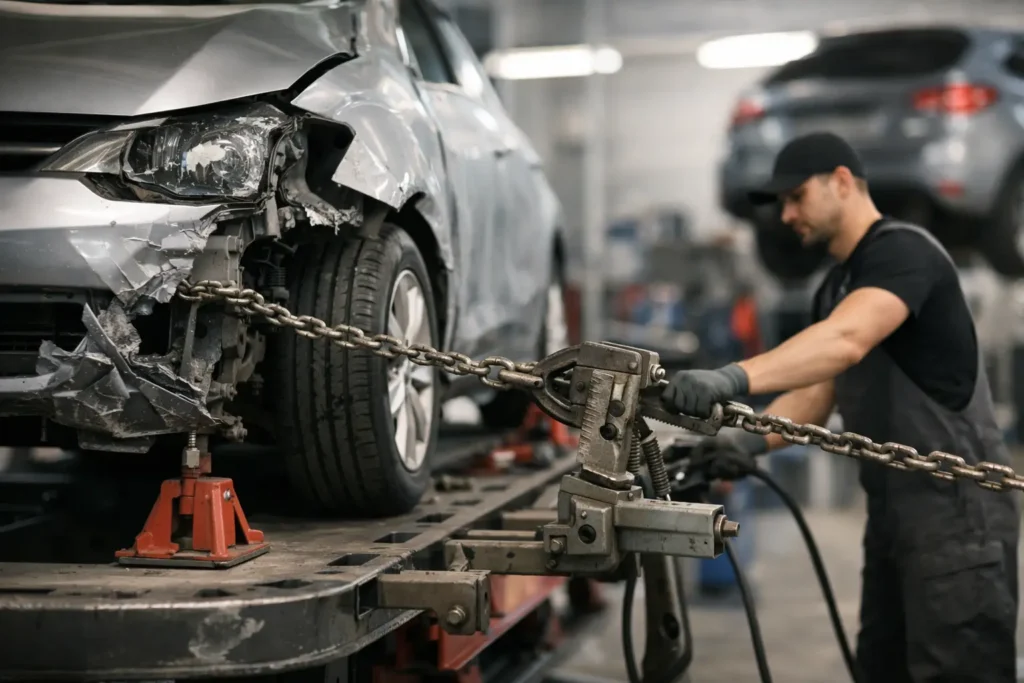
A bumper can look almost untouched after a collision while the structure behind it has shifted just enough to affect how the vehicle drives, protects occupants, or wears its tires. So, when does a car need frame straightening? The answer depends on where the impact landed, how force traveled through the vehicle, and what precise measurements reveal after the damaged panels come off.
Frame straightening is not a cosmetic repair. It is a structural correction performed to return critical vehicle mounting points and body dimensions as close as possible to factory specifications. For drivers in Cathedral City and across the Coachella Valley, understanding the signs can help prevent a small-looking accident from becoming a larger safety or handling concern.
When Does a Car Need Frame Straightening?
A car may need frame straightening when an accident bends, twists, crushes, or shifts its underlying structure. On older body-on-frame vehicles, that can mean the separate steel frame beneath the body. Most modern passenger cars, SUVs, and crossovers use unibody construction, where the body and structural frame are integrated. In those vehicles, technicians inspect areas such as the frame rails, aprons, pillars, floor pan, radiator support, suspension mounting points, and crumple zones.
Structural damage can occur in a major collision, but it is not limited to high-speed crashes. A curb strike, deep pothole impact, parking-lot collision, side impact, or rear-end accident can transfer force into areas that are not easy to see. The visible damage may be limited to a fender, wheel, bumper, or trunk lid, yet the underlying geometry may no longer be correct.
The deciding factor is not whether a vehicle looks badly damaged. It is whether computerized measuring equipment finds dimensions outside the manufacturer’s allowable tolerances. A qualified collision repair facility measures first, then determines whether controlled pulling and straightening are necessary.
Warning Signs of Structural Damage After a Collision
A driver cannot confirm frame damage by sight alone, but certain changes after an accident deserve prompt professional inspection. Do not assume a vehicle is safe simply because it starts, stops, and appears to drive normally on a short trip.
Common warning signs include:
- The car pulls to one side, wanders, or needs constant steering correction.
- The steering wheel sits off-center when driving straight.
- Doors, the hood, or the trunk no longer open, close, or line up properly.
- Tires wear unevenly, the vehicle vibrates, or alignment will not hold after adjustment.
- Gaps between body panels look uneven, especially around the hood, fenders, headlights, or doors.
- New noises come from the suspension, wheel area, or body when turning or driving over bumps.
Any one of these signs can have another cause. For example, a steering pull may come from tire damage, a bent wheel, or a suspension issue rather than a shifted frame rail. That is why an accurate inspection matters. Replacing parts without checking the structure can leave the real problem unresolved.
Damage May Be Hidden Behind the Panels
Modern vehicles are designed to manage crash energy through specific structural areas. Those engineered crumple zones help protect the passenger compartment, but they can also hide damage behind a bumper cover or beneath exterior panels. A bumper reinforcement may be bent, a rail may be pushed inward, or a suspension mounting point may be slightly displaced without obvious exterior clues.
Airbag deployment is another reason to schedule a thorough collision inspection. Deployed airbags do not automatically mean frame straightening is required, and a vehicle can have structural damage without airbags deploying. Still, airbag deployment often signals that the crash force was significant enough to warrant careful measurement of the vehicle’s structure and safety systems.
Why Precise Measurement Comes Before Straightening
Frame straightening is not a process of pulling metal until the vehicle looks straight. Certified technicians use vehicle-specific measuring systems to compare key points on the damaged vehicle with factory specifications. These measurements identify where the structure moved, how far it moved, and whether repair is appropriate.
The repair plan may include anchoring the vehicle to a frame machine, applying controlled hydraulic pulls, and repeatedly measuring progress. Depending on the impact, technicians may also repair or replace structural components, suspension parts, bumper reinforcements, and damaged body panels. Modern vehicles can require additional calibrations after repairs, particularly when they have cameras, radar sensors, parking sensors, or advanced driver-assistance features.
This process protects more than appearance. Proper structural dimensions help ensure that suspension alignment can be set correctly, doors and panels fit as designed, and crash-management components are positioned to function as intended in a future collision. A vehicle that is merely made to look presentable may still have compromised handling or safety performance.
Straightening Versus Replacing Structural Parts
Not every damaged structural component should be straightened. Some damage can be safely corrected with controlled pulling, while other components must be replaced according to manufacturer repair procedures. High-strength steels, aluminum structures, and specifically engineered crumple zones all have different repair requirements.
There is a practical trade-off here. Repairing a suitable component can be more cost-effective and may preserve surrounding factory assembly. Replacing a component may be the safer choice when the metal is kinked, torn, excessively stretched, or located in an area the manufacturer specifies as non-repairable. The right decision should come from measurements, manufacturer information, and a complete damage assessment, not from a quick visual estimate.
Is It Safe to Drive With Possible Frame Damage?
If the vehicle pulls sharply, has a rubbing tire, leaks fluid, makes loud mechanical noises, has a loose bumper or panel, or has a damaged wheel or suspension, it should not be driven. Arrange towing instead. Continuing to drive can worsen the damage, create a tire failure risk, or make the vehicle harder to control.
Even if it feels drivable, schedule an inspection soon after the accident. Minor structural misalignment can put stress on tires, suspension components, and body panels over time. It can also complicate the repair if the vehicle continues to be driven with damaged parts.
In the Coachella Valley, high temperatures add another consideration. A vehicle with a damaged cooling support, radiator area, or underbody panel can be more vulnerable to overheating or further mechanical trouble in desert conditions. A post-accident check provides clearer direction before relying on the vehicle for commuting, errands, or longer drives.
What to Expect During a Structural Repair Estimate
A trustworthy estimate begins with listening to what happened and inspecting both visible and likely hidden damage. The shop may document the exterior damage, check wheel and suspension areas, measure the structure, and identify parts that need removal before all damage can be confirmed. It is common for a collision estimate to change after disassembly because hidden damage cannot always be seen at the first walk-around.
The estimate should explain the planned repairs in clear terms. Ask whether structural measurements were taken, whether the shop follows manufacturer repair procedures, and whether any required wheel alignment or safety-system calibrations are included. If an insurance claim is involved, a repair facility can also help document supplemental damage and communicate with the insurer as additional repairs are identified.
At CatCity Auto Body, certified technicians use the proper equipment and repair practices to evaluate accident damage on foreign and domestic vehicles. Customers receive a detailed estimate and practical support with insurance coordination, towing, rental assistance, and repair updates, helping make an already disruptive situation more manageable.
Do Not Judge Structural Damage by the Dent Alone
A scraped bumper after a low-speed impact may need only refinishing, while a seemingly modest front-corner hit can shift a rail or suspension mounting point. On the other hand, substantial exterior damage does not always mean the underlying structure is bent. Every collision is different, which is why a measured inspection is more reliable than assumptions based on the size of the dent.
If your vehicle was recently hit and anything about the way it drives, steers, aligns, or fits together seems different, request a professional collision estimate before putting off repairs. Clear measurements and a repair plan give you the confidence to move forward safely, rather than wondering what may be hidden beneath the surface.