
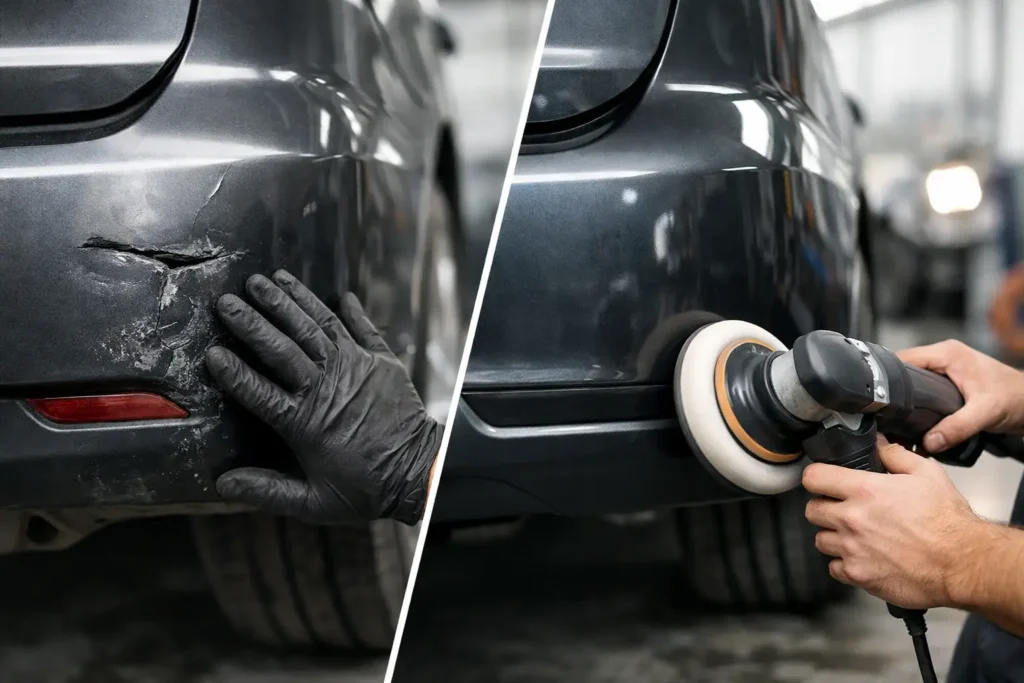
A low-speed parking lot impact can leave a bumper looking far worse than the accident felt. A scrape across the paint, a deep dent near a corner, or a loose panel can immediately raise the question: can a bumper be repaired, or does it need to be replaced? The answer depends on more than what is visible from the outside.
Modern bumpers are designed to absorb minor impacts while helping protect critical parts behind them. That makes professional inspection especially valuable after any collision, even when the damage seems cosmetic. For drivers in Cathedral City and throughout the Coachella Valley, a clear estimate can take the guesswork out of an already disruptive situation.
Can a bumper be repaired after an accident?
In many cases, yes. Plastic bumper covers can often be repaired when the damage is limited to surface scratches, paint scuffs, shallow dents, small cracks, or minor punctures. A qualified collision technician can reshape the plastic, repair damaged sections with approved materials, prepare the surface, and refinish the panel so the repair blends with the vehicle’s original color.
Repair is often the most cost-conscious option when the bumper can be restored without compromising fit, appearance, or safety. It also avoids replacing a usable part simply because it has cosmetic damage. However, a bumper repair should never be based on appearance alone. The cover is only one piece of the bumper system.
Behind it may be energy absorbers, reinforcement bars, mounting brackets, wiring, parking sensors, cameras, radar components, or active safety equipment. Damage to any of these parts can change the repair plan.
Damage that is commonly repairable
Light scratches and paint transfer are usually straightforward to address, particularly when they have not cut deeply into the plastic. Small dents may be carefully reshaped with heat and specialized tools, then refinished. Minor cracks or splits can also be repairable when they are in a stable area and the surrounding material remains sound.
A repair may be a good option when the bumper cover still fits correctly, its mounting points are intact, and there is no evidence of damage behind the cover. The final decision should account for the vehicle manufacturer’s repair procedures, not simply whether the damaged spot can be made to look better.
When bumper replacement is the safer choice
Replacement is often recommended when a bumper has large tears, extensive cracking, missing pieces, distorted mounting tabs, or damage that prevents it from fitting securely. It may also be necessary if the plastic has been stretched or weakened enough that a lasting repair is unlikely.
More importantly, replacement may be needed when an impact has affected the internal bumper structure or its safety-related components. A cracked reinforcement bar, damaged absorber, broken brackets, or malfunctioning sensor system should not be treated as a cosmetic concern. These parts help the vehicle perform as intended in a future impact.
For newer vehicles, even a minor collision can involve calibration requirements. If a bumper contains parking sensors, blind-spot monitoring hardware, cameras, or radar, the shop must inspect the system and follow proper procedures after repair or replacement. Saving money on the visible panel is not worthwhile if safety features are not operating correctly.
What happens during a professional bumper repair?
A quality bumper repair begins with an inspection, not a quick guess from a photo. The technician checks panel alignment, gaps around the headlights and fenders, damaged clips or brackets, and signs that the impact reached components behind the cover. This is also the time to look for hidden damage that may affect the estimate.
If repair is appropriate, the bumper is typically removed or accessed as needed to complete the work correctly. The damaged area is cleaned and prepared, reshaped where possible, and repaired using materials designed for automotive plastic. The surface is then sanded, primed, and painted to match the vehicle.
Paint matching matters in the bright desert sun. Metallic, pearl, and tri-coat finishes can look noticeably different if the color is not properly matched and blended. A professional auto body shop evaluates the finish carefully so the repaired area does not stand out when you pull into your driveway or park outside at work.
Once refinishing is complete, the bumper is reinstalled, aligned, and inspected. If the vehicle has sensors or other driver-assistance features, the shop confirms that any required calibration or diagnostic work is addressed as part of the repair plan.
Repair versus replacement: what affects the cost?
The price of bumper work varies because the visible scratch or dent is only one part of the job. Labor time, paint materials, the size and location of the damage, vehicle make and model, sensor equipment, and hidden damage all influence the final estimate.
A small repair on a basic bumper cover may cost considerably less than replacement. On the other hand, a luxury vehicle or late-model vehicle with cameras, radar, trim pieces, and specialized paint may require more labor whether the bumper is repaired or replaced. Replacement also involves the cost of the new part, paint, installation, and potentially calibration.
Insurance may cover bumper damage when it resulted from a covered collision or comprehensive claim, subject to your policy and deductible. Before authorizing work, it helps to understand the estimate, your deductible, and whether the insurer requires an inspection. A collision repair shop can document the damage and coordinate directly with the insurance company, reducing some of the administrative pressure after an accident.
Do not ignore a bumper that looks mostly fine
A bumper can appear intact while hiding damage behind the cover. If you notice a bumper that is loose, uneven, rubbing against a tire, separating near a fender, or triggering a warning light, schedule an inspection promptly. The same applies if parking sensors stop working or a camera view becomes unreliable after an impact.
Even when there are no warning signs, it is wise to have a bumper checked after a meaningful collision. This is particularly true if the impact involved another vehicle, a curb, a pole, or a trailer hitch. The force can transfer to brackets, absorbers, lights, wheel-well liners, or structural mounting areas.
Waiting can create additional problems. A loose bumper may allow water and road debris into areas that should remain protected, while broken clips and misalignment can worsen over time. Addressing the issue early may keep a manageable repair from becoming a larger one.
Choosing the right repair shop in the Coachella Valley
Look for a shop that explains whether it recommends repair or replacement and why. You should receive a detailed estimate rather than a vague promise that the bumper will be “fixed.” Ask how the shop will address paint matching, hidden damage, and any sensors or driver-assistance technology in the affected area.
Certification, training, and proper equipment matter because bumper work is no longer limited to sanding and paint. A shop should follow safety-focused repair procedures and use trained technicians who understand both the cosmetic and functional sides of collision repair. At CatCity Auto Body, customers can request a free estimate and receive straightforward guidance on the condition of their vehicle, whether the damage is minor or more involved.
If your bumper has been damaged, avoid deciding on replacement based solely on its appearance or assuming every scrape requires a new part. Bring the vehicle in for a professional inspection, review the options, and choose the repair that restores both the look of your vehicle and the protection you rely on every time you drive.