A repaired door, bumper, or fender can be structurally sound yet still look wrong if the color does not flow naturally into the surrounding panels. After an accident, customers often ask, “how is car paint matched after repair?” The answer is more involved than finding a paint code and spraying one panel. A quality repair combines vehicle information, computerized color tools, test panels, technician experience, and careful blending to make the repair difficult to spot in normal light.
For drivers in Cathedral City and across the Coachella Valley, that extra care matters. Bright desert sun can reveal a slight shade difference that might go unnoticed in a dim garage. The goal is not simply to apply the paint listed on the vehicle’s label. It is to restore a finish that looks consistent from different angles, in different lighting, and beside the vehicle’s original paint.
How Is Car Paint Matched After Repair?
The process usually begins with the manufacturer paint code. This code is often found on a label in the driver-side door jamb, under the hood, in the trunk area, or in the owner’s documentation. It identifies the original factory color formula used when the vehicle was built.
That code is a starting point, not a guarantee of a perfect match. The same factory color can have several approved variants. Paint batches vary slightly, and a vehicle’s finish changes over time because of sunlight, weather, washing, road debris, and prior repairs. A white vehicle may develop a warmer tone over several years. Metallic silver can look lighter or darker depending on how the metallic particles were applied. Even black paint can show noticeable differences in depth or gloss.
A certified repair technician compares the paint code with the actual vehicle rather than relying on the code alone. At CatCity Auto Body, this kind of attention helps ensure that a minor bumper repair receives the same careful finish evaluation as larger collision work.
Reading the vehicle’s current color
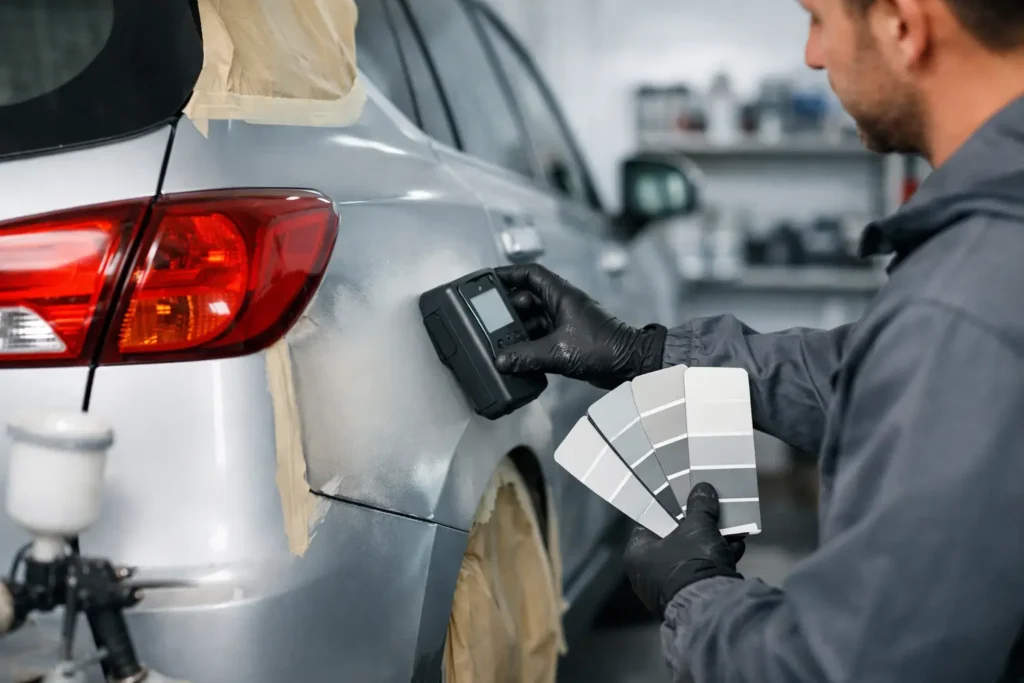
Modern body shops use a digital spectrophotometer to measure the color on the vehicle’s painted surface. This handheld device reads the finish from several angles and analyzes details the eye may not immediately separate, including hue, brightness, metallic content, and pearl effect.
The device then compares its readings with a paint manufacturer’s database and produces possible formula options. This is especially valuable for colors with metallic flakes, tinted clear coats, pearls, tri-coat finishes, and newer factory colors that shift slightly in sunlight. The equipment supports the technician’s judgment, but it does not replace it.
Before scanning, the area must be clean. Dirt, oxidation, wax residue, or surface contamination can affect a reading. Technicians also avoid measuring too close to damaged paint, fresh repairs, deep scratches, or edges where the color may not represent the vehicle’s overall finish.
Choosing a formula and making a spray-out card
After selecting the most promising formula, the painter mixes a small test amount and sprays it onto a sample panel called a spray-out card. The card is then held next to the vehicle in natural light and shop lighting.
This step is where technical skill becomes visible. The painter evaluates whether the sample is too light, too dark, too warm, too cool, too coarse, or too fine in its metallic appearance. A formula may match well straight on but look different when viewed from an angle. With pearl and metallic colors, the spray technique itself can change the final appearance.
If needed, the painter adjusts the formula and produces another test panel. That can take additional time, but it is far better to make corrections before paint is applied to the repaired vehicle. A trustworthy estimate and repair timeline should account for the fact that color matching is a process, not a shortcut.
Why Blending Is Often Part of a Better Paint Match
Many customers expect paint to be applied only to the repaired area. Sometimes that is possible, particularly with small damage on a simple solid-color panel. In many cases, however, the best way to create a natural-looking repair is to blend color into the adjacent panel or panels.
Blending means gradually fading the new base color into the existing color beyond the repair area. The panel is then cleared and polished as needed to create an even finish. For example, paint applied to a repaired front fender may be blended into the front door or hood, depending on the damage location, body lines, paint color, and vehicle design.
This does not mean a shop is painting extra panels without reason. It is a professional method for reducing the visible transition between newer paint and aged factory paint. Blending is particularly common on reds, silvers, whites, blues, and metallic colors, where even a small difference can stand out.
There are trade-offs. Blending can require more materials and labor than spraying a single isolated panel, and it may affect repair time. But avoiding a visible color edge is often worth that investment. A qualified estimator should explain which panels need blending and why, so there are no surprises in the repair plan.
Paint Application Affects the Final Color
A correct formula can still look wrong if it is applied poorly. Paint is mixed and sprayed according to the coating manufacturer’s specifications, but the technician must also control several variables during application.
Spray-gun pressure, distance from the panel, overlap pattern, booth temperature, humidity, and flash time between coats can influence color and appearance. This is most noticeable with metallic paint. If the metallic particles do not lay evenly, one section may appear patchy or darker when viewed from the side.
The repaired panel is prepared carefully before any color is applied. That includes sanding, cleaning, masking, primer work when necessary, and making sure the surface is smooth and properly cured. Paint cannot hide poor bodywork. A panel with uneven filler, sanding marks, or an incorrect contour may reflect light differently even if the color formula is accurate.
After the color coat, the technician applies clear coat to provide gloss, depth, and protection. Once cured, the finish may be refined through denibbing, polishing, and final detailing. The goal is a finish that looks consistent with the rest of the vehicle while meeting the repair plan’s quality and safety standards.
Checking the Match Before Delivery
Quality control is the final safeguard. The vehicle should be inspected under more than one type of light, including direct outdoor light when possible. Desert daylight is useful because it can expose differences in metallic orientation, pearl effect, or color tone that indoor lighting can soften.
The technician checks the repaired area from several positions rather than standing directly in front of it. They look across panel edges, body lines, and blended areas for a difference in color, gloss, texture, or clear-coat finish. They also confirm that trim, emblems, sensors, moldings, and adjacent panels were reinstalled correctly after the work.
Customers can take part in this final review, too. At pickup, walk around the vehicle with the repair advisor and view the repaired section outdoors if conditions allow. Ask questions if something does not look right to you. A professional shop should welcome the conversation and explain the work completed.
What Can Affect Paint Matching Results?
Some conditions make a perfect isolated match more challenging. Older vehicles with faded paint, previously repainted panels, heavily oxidized finishes, and colors with multiple layers may require more testing and broader blending. Insurance-approved procedures, the extent of collision damage, and the availability of replacement parts can also influence the final repair approach.
A clean, well-maintained original finish gives the painter a better reference. Still, age alone does not prevent excellent results. Skilled technicians can account for normal fading and finish variation by selecting the right variant, creating spray-out cards, and blending where it provides the best appearance.
If your vehicle has been damaged, do not judge a repair plan solely by whether it includes paint on one panel or several. Ask how the shop will identify the correct color, whether it will test the formula, and whether adjacent-panel blending is recommended. Clear answers are a sign that the repair is being planned for long-term appearance, not just a quick handoff.
After the stress of an accident, you deserve a vehicle that feels like your vehicle again. Request a free estimate from a trusted local collision repair team and let an experienced technician explain the paint-matching plan before work begins.