A collision can leave damage you can see – a bent bumper, cracked headlight, or scraped door – and damage you cannot. Modern vehicles use high-strength materials, sensors, cameras, and safety systems that must work together after a repair. So, what is I-CAR certified repair? It generally refers to collision repair performed by technicians and shops that invest in I-CAR training and follow current repair procedures designed to restore the vehicle correctly.
For drivers in Cathedral City and across the Coachella Valley, that distinction matters. A vehicle can look repaired while still having issues with alignment, sensor calibration, corrosion protection, or structural integrity. Choosing a qualified collision repair facility is about more than a clean paint finish. It is about confidence when you get back behind the wheel.
What Does I-CAR Certified Repair Mean?
I-CAR is a nonprofit organization that provides education and training for the collision repair industry. Its programs help technicians, estimators, repair planners, and managers stay current as vehicle construction and manufacturer repair requirements change.
The phrase “I-CAR certified repair” is common, but it can mean different things depending on the shop. I-CAR does not simply place a one-time stamp on every repaired vehicle. Instead, it offers role-specific training and recognition programs for collision professionals and shops. A technician may complete courses and earn credentials in areas such as non-structural repair, refinishing, steel structural repair, aluminum repair, or estimating. A repair facility may also participate in the I-CAR Gold Class program, which reflects an ongoing commitment to training across key repair roles.
That ongoing element is significant. Today’s vehicles are not repaired exactly like the cars of 10 or even five years ago. New materials, advanced driver-assistance systems, and manufacturer procedures require repair professionals to keep learning. Training helps a shop recognize when a procedure requires specialized equipment, replacement rather than repair, or additional calibration after the body work is complete.
Why I-CAR Training Matters After an Accident
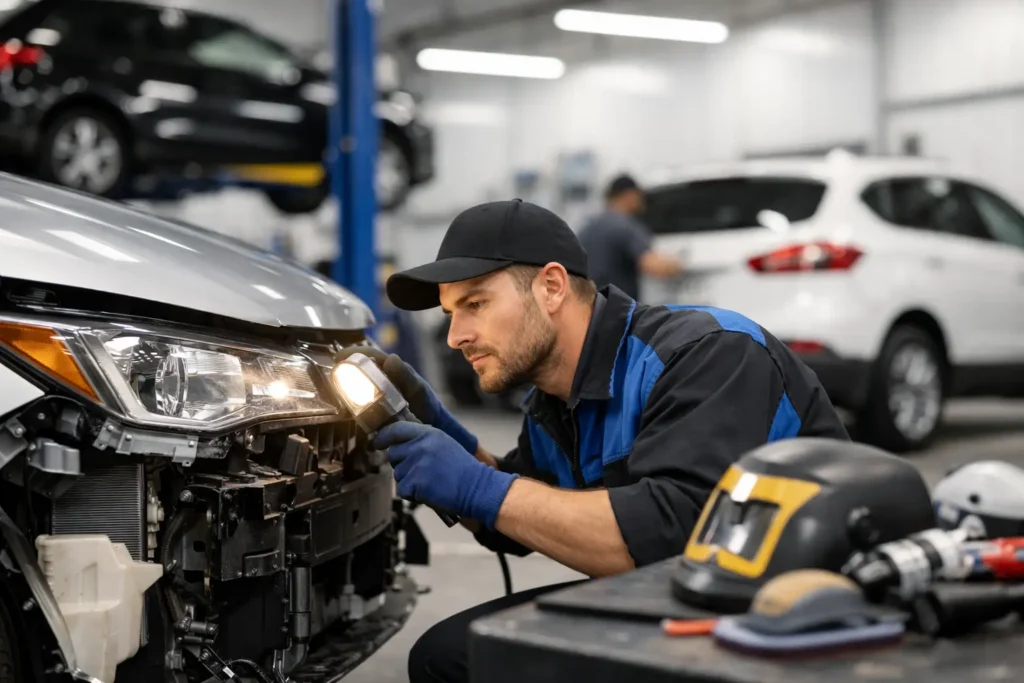
Collision damage is rarely limited to the visible impact area. A low-speed hit can affect bumper reinforcements, brackets, wiring, parking sensors, radar units, or panel gaps. A more serious collision can affect the vehicle’s structure, suspension mounting points, and airbag-related components.
I-CAR education supports a disciplined repair process. Technicians are trained to inspect damage thoroughly, understand the role of vehicle materials, and use appropriate repair methods. The goal is not to make a vehicle look acceptable from the outside. The goal is to return it as closely as possible to its pre-accident condition while following applicable safety and manufacturer repair standards.
For example, a dent in a door panel may be repairable on one vehicle but require replacement on another because of the panel’s construction, damage location, or nearby safety equipment. Likewise, a bumper cover may appear to need only paint, but the impact may call for inspection of absorbers, brackets, sensors, and calibration requirements. Proper training helps the repair team make those decisions based on the vehicle and the damage, not on assumptions.
Modern Materials Require Modern Repair Methods
Many newer vehicles combine conventional steel with high-strength steel, aluminum, plastics, composites, and adhesives. These materials cannot always be repaired with the same tools or techniques. Applying excessive heat to certain high-strength steels, for instance, can change their properties. Aluminum repairs may require separate work areas and dedicated tools to avoid contamination.
An I-CAR-trained repair professional understands why these details matter and when additional procedures are needed. That knowledge can protect the vehicle’s fit, finish, corrosion resistance, and collision performance.
Safety Systems Must Be Considered
Cameras, blind-spot monitoring, adaptive cruise control, lane-assist features, and parking sensors are valuable conveniences, but they are also safety-related systems. After a collision, certain repairs may require scanning, aiming, programming, or calibration. Not every accident requires every procedure, and requirements vary by make, model, and damage severity.
A reputable shop should explain what is necessary for your vehicle. If a scan or calibration is recommended, ask why it is needed and whether it is based on manufacturer information. Clear answers are a sign that the repair process is being managed carefully.
I-CAR Certification Is One Part of a Quality Repair
I-CAR training is a meaningful qualification, but no single credential tells the entire story. The quality of a collision repair also depends on the shop’s repair planning, equipment, technician experience, access to manufacturer procedures, quality-control process, and communication with the customer and insurer.
A shop should begin with a detailed estimate and inspection, then document the repair plan as more damage is uncovered. This is especially important because hidden damage often becomes visible only after panels are removed. Supplements are not automatically a red flag. They can be a normal part of repairing collision damage properly when newly discovered damage or required procedures must be added to the estimate.
The best repair facilities communicate those changes. You should not be left wondering why the estimate changed, why a part is being replaced, or why the completion date moved. Honest communication reduces surprises and helps you make informed decisions during an already stressful time.
Questions to Ask a Collision Repair Shop
You do not need to be an automotive expert to choose a repair shop. A few direct questions can reveal whether the facility takes training, safety, and customer care seriously:
- Are your technicians currently trained through I-CAR, ASE, or manufacturer programs?
- Does the shop use manufacturer repair procedures for my specific vehicle?
- Will you inspect for hidden damage and explain any needed estimate supplements?
- Do you perform or arrange required pre-repair and post-repair scans and calibrations?
- How do you handle insurance communication, rental coordination, and repair-status updates?
Listen for specific, understandable answers. A trustworthy shop will explain the process without burying you in jargon or promising a repair before the vehicle has been properly inspected.
What I-CAR Gold Class Can Tell You
If you see that a facility is recognized as an I-CAR Gold Class shop, it generally means the business has made a company-wide commitment to keeping employees trained in their roles. Gold Class recognition is not a guarantee that every repair will be identical or that no additional work will be needed. Every vehicle, impact, and insurance claim is different.
It does, however, show that training is treated as a continuing responsibility rather than a one-time achievement. That is valuable in an industry where repair procedures evolve quickly. A shop that invests in education is better positioned to identify changing requirements and use the right approach for the vehicle in front of it.
At CatCity Auto Body, I-CAR and ASE-certified technicians combine that technical focus with practical support for drivers throughout Cathedral City, Palm Springs, Palm Desert, Rancho Mirage, and nearby communities. From a free estimate through insurance coordination, rental assistance, online repair updates, and final delivery, the process should feel clear and manageable.
The Right Repair Is Not Always the Fastest or Cheapest
After an accident, it is understandable to want your vehicle back immediately and to keep costs under control. A qualified shop respects both concerns. Still, a safe repair sometimes takes longer than expected because parts availability, insurer approval, hidden damage, paint curing, or calibration requirements can affect the timeline.
The lowest initial estimate is not always the best value if it leaves out necessary procedures or uses an incomplete repair plan. On the other hand, higher cost alone does not prove better workmanship. The right choice is a facility that can explain its recommendations, provide a detailed quote, stand behind its work, and treat your vehicle with the same care it would give a family member’s car.
When you are evaluating what is I-CAR certified repair after a collision, think of it as a commitment to current knowledge and careful process. Ask questions, review the estimate, and choose a local repair team that makes safety, quality, and clear communication part of every step.