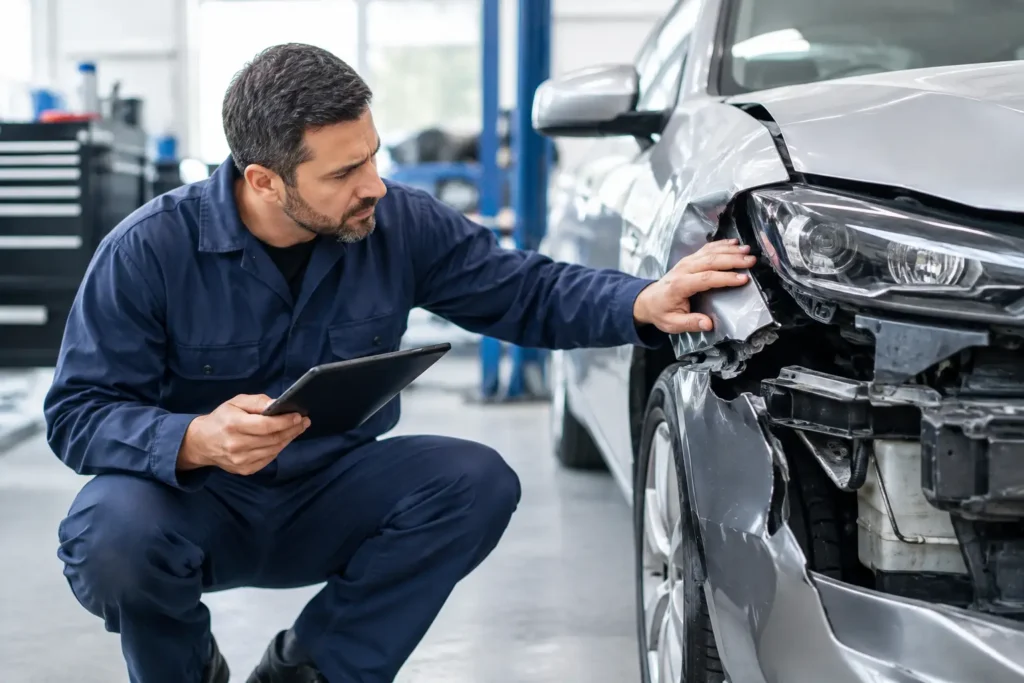
A hard impact can leave a vehicle looking more driveable than it truly is. A guide to structural repair safety starts with one clear fact: dents and cracked paint are only part of the story after a collision. Damage behind a bumper, beneath the floor, or around a door opening can affect how your vehicle handles, protects occupants, and performs in another accident.
For drivers across Cathedral City, Palm Springs, Palm Desert, Rancho Mirage, and the Coachella Valley, the safest next step is not guessing based on appearance. It is having the vehicle inspected by qualified collision-repair professionals who can measure the structure, identify hidden damage, and explain what needs to be repaired.
What Structural Damage Means for Your Vehicle
Your vehicle’s structure is the framework designed to support the body, suspension, drivetrain, and passenger compartment. On most modern vehicles, that includes unibody sections such as frame rails, rocker panels, pillars, aprons, wheel housings, and roof rails. On trucks and certain SUVs, it may also include a separate frame.
These parts are engineered to manage collision forces in specific ways. Some areas are designed to absorb energy, while the passenger compartment is designed to remain as intact as possible. When a collision bends, crushes, tears, or shifts those components, the vehicle may no longer perform as its manufacturer intended.
Structural damage is not limited to high-speed crashes. A curb strike, parking-lot impact, rear-end collision, or side impact can move parts by a small amount that still matters. A door that no longer closes smoothly, uneven panel gaps, a steering wheel that sits off-center, or a vehicle that pulls to one side can all point to damage requiring professional evaluation.
Why Structural Repair Safety Cannot Be Cosmetic
A vehicle can have a fresh coat of paint and still be unsafe if its underlying structure was not properly restored. Structural repair safety involves more than making damaged panels look straight. It requires confirming that critical mounting points, crumple zones, safety-system components, and alignment measurements are within acceptable specifications.
Poor-quality repairs can create immediate problems, such as uneven tire wear or poor alignment. They can also create risks that may not be obvious until a later collision. If a damaged rail is improperly pulled, repaired with the wrong method, or replaced without correct welds and corrosion protection, the vehicle may not absorb impact energy as designed.
This is why a low estimate is not always a true savings. The right repair plan depends on the vehicle, the location of the damage, manufacturer repair procedures, and the condition of the affected parts. Sometimes a section can be safely repaired. Other times, replacement is the appropriate option. A trusted shop should be able to explain that distinction in clear terms.
Signs You Should Schedule a Structural Inspection
Not every accident causes structural damage, but it is wise to arrange an inspection when the impact was strong enough to deploy airbags, damage suspension components, move a wheel, or distort body panels. Visible damage near the front or rear rails, roof, doors, quarter panels, or rocker panels also deserves attention.
Pay attention to changes in how the vehicle feels after an accident. New vibrations, wandering, unusual road noise, tire rubbing, or a vehicle that does not track straight should not be dismissed as minor inconveniences. They may be related to alignment, suspension, wheel, or structural concerns.
You should also avoid relying on a quick visual check from home. Many structural components are concealed by bumpers, trim, underbody shields, interior panels, and mechanical parts. A proper inspection may require scanning electronic systems, measuring the vehicle on dedicated equipment, and removing damaged parts to see the full extent of the loss.
The Safe Repair Process After a Collision
A quality collision repair begins with documentation and diagnosis, not immediate bodywork. Technicians inspect visible damage, identify related components, review vehicle-specific repair information, and prepare a detailed estimate. Because hidden damage is common, the initial estimate may need to be supplemented after disassembly. That is not automatically a red flag. It is often the responsible way to build an accurate repair plan.
Measuring Before Pulling or Replacing Parts
Structural repairs should be based on precise measurements rather than visual judgment alone. Modern measuring systems help technicians compare key points on the vehicle to manufacturer specifications. This establishes where the structure has moved and helps guide the repair process.
If pulling is appropriate, controlled equipment is used to return repairable areas to specification. If a component must be replaced, the shop should follow approved sectioning locations, attachment methods, weld procedures, and corrosion-protection requirements. The details matter because the structure works as a connected system.
Protecting Safety Systems and Electronics
Today’s vehicles have more than steel and aluminum to consider. Cameras, radar sensors, wiring harnesses, airbag sensors, seat belt pretensioners, and advanced driver-assistance systems can all be affected by a collision or repair process.
Depending on the vehicle and damage, safe completion may include diagnostic scans, wheel alignment, sensor calibration, and verification of restraint-system components. A warning light should never be ignored after an accident. Even without a warning light, damaged mounting areas or components may need inspection before the vehicle is returned to service.
Verifying the Finished Repair
The final stage should include more than checking paint color and panel fit. The repair facility should confirm that structural measurements, alignment, and applicable safety-system procedures have been completed. A road test may be appropriate when conditions allow, and the vehicle should be reviewed for proper operation before delivery.
Ask for an explanation of the work performed, including any parts replaced and any calibrations or alignment work completed. Clear answers are a sign of a transparent repair process. You do not need to be an automotive expert to ask what was damaged, how it was repaired, and what was done to confirm safety.
Choosing a Shop for Structural Repair Safety
The right collision repair shop should have trained technicians, proper measuring and repair equipment, and experience working with a wide range of foreign and domestic vehicles. Certifications such as I-CAR and ASE can be useful indicators of ongoing technical training, though the repair plan and quality controls remain just as important.
Look for a shop that takes time to explain the estimate and does not pressure you to approve work you do not understand. Insurance coordination can make the process easier, but the repair facility should still advocate for a complete, safe repair based on the vehicle’s needs. Insurance estimates often begin before all hidden damage is known, so communication throughout the process matters.
Convenience also has real value after an accident. Towing coordination, rental vehicle assistance, repair-status updates, and help with the claims process can reduce disruption for families, commuters, and working professionals. At CatCity Auto Body, certified technicians combine detailed collision repair with practical support designed to make the experience more manageable.
What Drivers Can Do While Waiting for Repairs
If you suspect structural damage, do not continue driving simply because the vehicle starts and moves. A damaged vehicle may have compromised steering, suspension, lighting, tires, or safety systems. When there is uncertainty, arrange towing rather than taking a chance on the road.
Take photographs of the vehicle and collision scene if it is safe to do so, save claim information, and keep notes about new noises or changes in handling. Remove personal belongings before towing, but avoid pulling loose parts, disconnecting wiring, or attempting a home repair. Even a seemingly simple adjustment can interfere with the inspection or make damage worse.
After repairs are completed, take a moment to review the vehicle before leaving. Check that doors, trunk, hood, lights, windows, and controls operate normally. Ask questions about anything that feels unfamiliar. A professional shop will want you to feel confident in the repair, not rushed out the door.
A collision can disrupt far more than your schedule, but safe structural repair gives you a clear path forward. Choose careful inspection, qualified workmanship, and honest communication so your vehicle is ready to protect the people who rely on it.