A repair estimate can include terms most drivers never expected to compare: OEM versus aftermarket collision parts. After an accident, that choice can affect the price, fit, appearance, warranty, and, in certain repairs, how well safety-related systems are restored. The right answer is not automatically the most expensive part or the least expensive one. It depends on your vehicle, the damaged area, the part’s quality, and the repair plan.
For drivers in Cathedral City and throughout the Coachella Valley, clear answers matter. A collision repair should restore your vehicle correctly while helping you make an informed decision about insurance coverage and out-of-pocket costs.
What OEM and aftermarket parts mean
OEM stands for Original Equipment Manufacturer. An OEM replacement part is made by or for the vehicle manufacturer and is designed to match the part originally installed on your vehicle. For example, an OEM bumper cover for a specific model is produced to that manufacturer’s specifications for fit, mounting points, materials, and finish preparation.
Aftermarket parts are made by companies other than the vehicle manufacturer. They are designed to replace original parts and may range from high-quality, well-engineered components to lower-cost alternatives with more variation in fit and finish. “Aftermarket” does not automatically mean poor quality. It means the part did not come through the vehicle manufacturer’s parts program.
There is also a third term customers may see: recycled or salvage parts. These are original manufacturer parts removed from another vehicle, often used for items such as doors, wheels, or mechanical components when condition and compatibility can be confirmed. They are different from both new OEM and new aftermarket parts.
OEM versus aftermarket collision parts: the differences that matter
The visible price difference gets attention first, but it is only one part of the decision. A bumper, fender, headlamp, grille, hood, or door can affect the vehicle’s appearance, panel alignment, paint work, sensors, and repair time.
Fit and finish
OEM parts are generally expected to provide the closest match to factory dimensions. This can be especially valuable when a repair involves several adjacent panels, complex body lines, or luxury and late-model vehicles. Better initial fit may reduce the amount of adjustment needed before painting and reassembly.
A quality aftermarket part can also fit well, particularly for common vehicle models and straightforward repairs. However, fit can vary by manufacturer. A lower-quality part may require additional preparation, adjustment, or refinement to align properly with surrounding panels. In some cases, a part that costs less at the start can take more labor to install correctly.
Materials and durability
OEM parts are built to the manufacturer’s specified materials and construction standards. That consistency matters when replacing parts that contribute to structural performance, weather sealing, corrosion protection, or the proper placement of safety equipment.
Aftermarket manufacturers use their own designs and production methods. Some meet respected industry standards and offer dependable performance. Others may use thinner materials, different plastics, or coatings that do not match the original part as closely. The repair facility should evaluate the specific part, not make assumptions based on the aftermarket label alone.
Safety systems and vehicle technology
Modern vehicles have much more than sheet metal behind the bumper. Cameras, radar units, parking sensors, blind-spot monitoring equipment, airbag sensors, brackets, wiring, and active grille shutters may all be involved in a collision repair.
When a replacement part affects the mounting or operation of these systems, the repair must follow manufacturer procedures. That may include scanning the vehicle before and after repairs, calibrating cameras or radar, and verifying that warning lights and safety features operate as intended. OEM parts are sometimes required or strongly preferred for specific applications. In other situations, a certified alternative may be acceptable. The vehicle’s repair information, not guesswork, should guide that decision.
Paint and appearance
No replacement panel arrives perfectly matched to a vehicle that has spent years in desert sun, heat, and daily driving. Professional refinishing includes color matching, blending when necessary, and proper preparation of the replacement part.
OEM panels may arrive with coatings intended for refinishing, while aftermarket panels can vary in primer quality and surface preparation. A skilled auto body shop inspects the part before paint work begins. If a panel has flaws or does not fit to an acceptable standard, it should not simply be painted and installed because it was the lowest-cost option.
How insurance coverage affects the choice
Many insurance policies allow insurers to specify aftermarket or recycled parts when repairing vehicles beyond a certain age or mileage. California insurers must follow disclosure requirements for non-original manufacturer parts, but the details of coverage and part selection can still depend on the policy, the claim, and the vehicle.
If your estimate lists an aftermarket part, ask what it is, who made it, and whether it is certified by a recognized parts organization when applicable. Ask whether the part affects sensors, structural components, or fit with nearby panels. You can also ask what the price difference would be if you prefer OEM.
Requesting OEM parts does not always mean your insurer must pay the full difference. Some policies include OEM parts coverage, while others do not. A vehicle’s age, make, trim level, and the availability of parts can also affect the outcome. A transparent repair facility can explain the estimate and communicate with the insurer, but it should not promise coverage that your policy does not provide.
When OEM parts are often the better choice
OEM parts may be the practical recommendation when the damaged component is closely tied to vehicle safety, advanced driver-assistance systems, structural integrity, or precise body alignment. They can also make sense for newer vehicles, leased vehicles with return-condition requirements, specialty models, and vehicles where a close factory fit is particularly important.
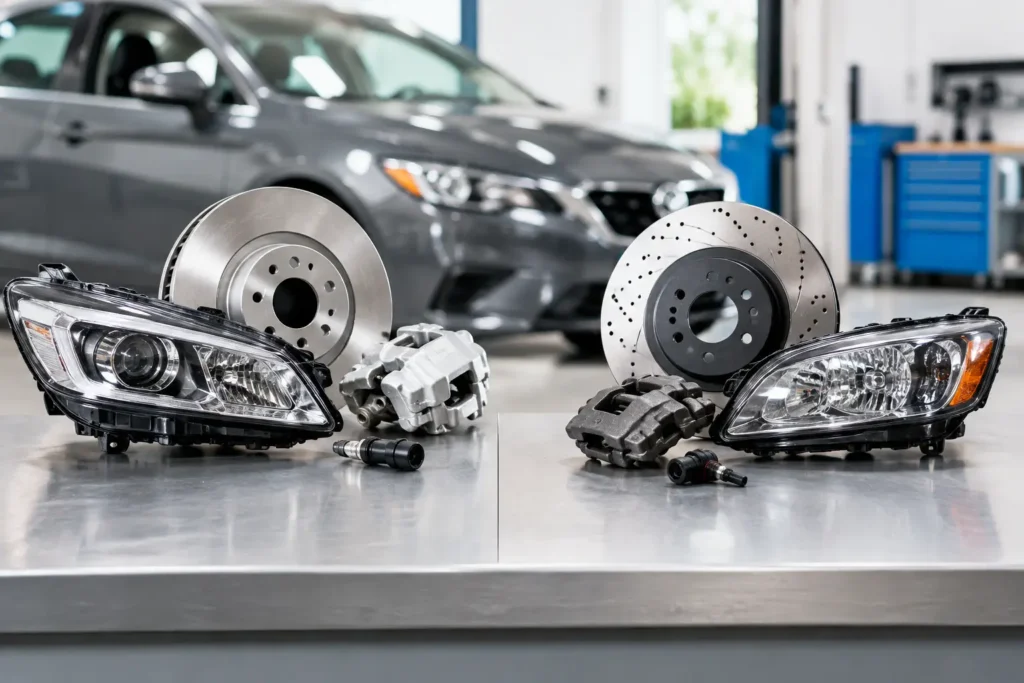
A headlamp assembly is one example. On many newer vehicles, it may contain adaptive lighting, sensors, or electronic modules. Choosing the correct component and confirming its operation can be more important than finding the lowest initial part price. The same careful approach applies to bumper reinforcements, crash-management components, sensor brackets, and other parts that may not be visible once the repair is complete.
OEM can also be worthwhile when an aftermarket alternative has a history of poor fit or is not available from a supplier the shop trusts. The goal is a safe, lasting repair, not a category preference for its own sake.
When aftermarket parts can be a sensible option
Aftermarket parts can be a cost-effective choice for certain non-structural repairs, especially on older or high-mileage vehicles. A properly fitting, reputable aftermarket fender, bumper cover, or exterior trim piece may help control repair costs without compromising the overall quality of the repair.
Availability matters, too. Supply delays can keep a vehicle out of service longer than necessary. If a suitable alternative is available, has been inspected for quality, and does not interfere with required repair procedures or safety systems, it may be a reasonable option. This is often a practical conversation for a family balancing a deductible, a rental vehicle, work schedules, and other expenses after an accident.
The important distinction is between a carefully selected part and the cheapest part available. A dependable shop considers part fit, source, warranty, repair procedures, and the condition of the vehicle before recommending a replacement.
Questions to ask before authorizing repairs
You do not need to become an auto body expert after a collision. You do deserve a straightforward explanation before approving the work. Ask whether the estimate calls for OEM, aftermarket, or recycled parts and why that choice was made. Ask whether any sensors, cameras, lights, or safety features require calibration after the repair.
It is also reasonable to ask about part warranties, expected repair timing, and what happens if a replacement component does not meet fit or quality standards. If your insurer prepared an estimate before the vehicle was fully disassembled, ask how additional hidden damage will be documented and approved. Collision damage is often more extensive than what is visible on the exterior.
At CatCity Auto Body, certified technicians inspect the repair needs of each foreign and domestic vehicle rather than treating every estimate the same. Clear estimates, direct insurance coordination, and repair-status updates help customers understand what is being repaired and why.
A quality collision repair is measured long after the vehicle leaves the shop. The panels should align, the paint should look right, safety systems should be properly addressed, and the vehicle should feel ready for the road again. Before you authorize repairs, take a moment to review the parts listed on your estimate and ask for an explanation you can trust.