
A collision can turn an ordinary drive through Cathedral City or the Coachella Valley into a day of phone calls, missed plans, and unanswered questions. A guide to collision claim documentation gives you one way to regain control: preserve clear facts early, keep every record in one place, and give your insurer and repair facility the information they need to move forward.
Good documentation does not guarantee an insurance outcome, and every policy and accident is different. It does, however, reduce avoidable delays, help establish the condition of your vehicle, and make it easier to understand what happens from the first estimate through completed repairs.
Start With Safety, Then Preserve the Facts
Your first responsibility at a collision scene is safety. Move to a safe location if possible, call 911 when anyone is injured or the situation requires police response, and follow directions from first responders. Do not put yourself in traffic or attempt to inspect a vehicle that may be unsafe to drive.
Once everyone is safe, document what you can without arguing about fault. Exchange the required information with the other driver, including names, contact details, insurance information, license plate numbers, and vehicle descriptions. If there are witnesses, ask for their names and phone numbers. A witness may remember details that are difficult to reconstruct later.
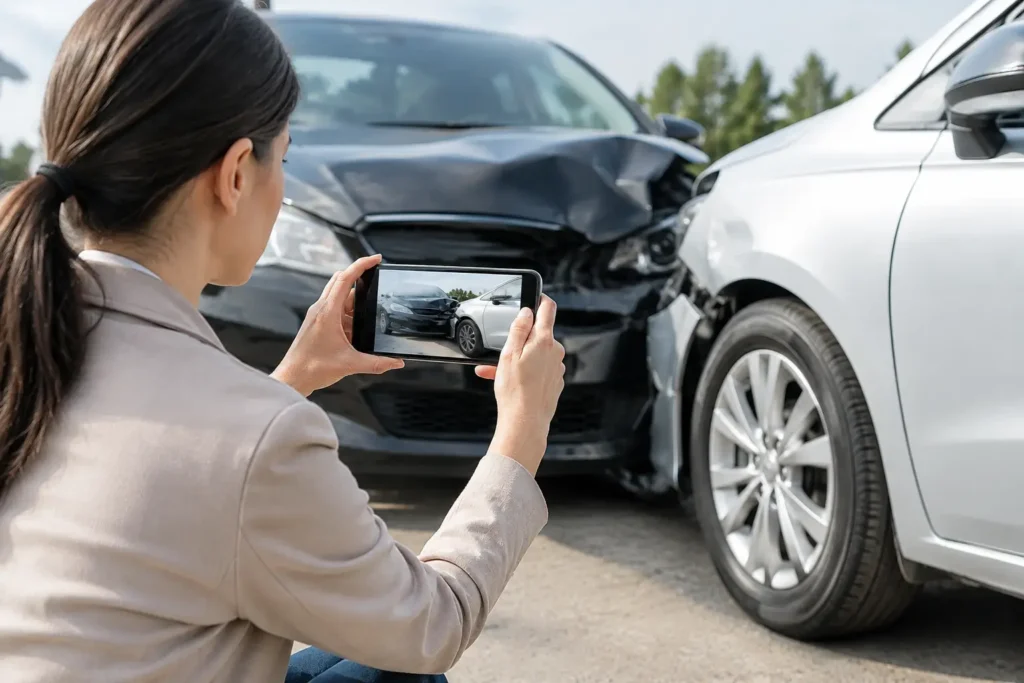
Use your phone to take broad photos first, then closer shots. Photograph each vehicle from multiple angles, visible damage, license plates, the roadway, traffic signs or signals, debris, skid marks, weather conditions, and the surrounding area. If your vehicle is drivable, take a photo of the odometer and dashboard warning lights as well.
Photos taken at the scene are valuable because they capture the condition of the vehicle before towing, storage, or repairs begin. Avoid editing the images. Keep the original files, including their date and time details, whenever possible.
The Documents That Support a Collision Claim
A claim file can become scattered quickly between your phone, email, glove box, insurer, tow company, and repair shop. Create one digital folder and one paper folder, then save documents as you receive them. These records are commonly helpful:
- The police or incident report number, plus a copy of the report when it becomes available
- Photos and videos from the scene, including images of all vehicle damage
- The other driver’s information, witness details, and any claim number assigned by an insurer
- Towing, storage, rental vehicle, rideshare, or transportation receipts related to the accident
- Repair estimates, insurer appraisals, supplements, invoices, and written repair authorizations
- Notes from calls, emails, or messages that include the date, name of the person, and what was discussed
Keep receipts even if you are unsure whether they will be reimbursed. Your insurer can explain what your policy covers, what documentation it requires, and whether there are deadlines for submitting expenses.
Build a Clear Timeline While Details Are Fresh
The best notes are simple and factual. On the same day, write down the time and location of the collision, direction of travel, road and weather conditions, what you saw, and what occurred immediately afterward. Include the names of responding officers, towing providers, and anyone who inspected the vehicle.
Do not guess at details you do not know. If you are uncertain, say so in your notes rather than filling in a gap from memory. A clear record is more useful than a dramatic one.
Continue the timeline as the claim develops. Record when you reported the loss, received a claim number, scheduled an inspection, obtained an estimate, approved repairs, picked up a rental, or received an update. This log can be especially useful when several parties are involved or when you need to clarify a prior conversation.
Understand Estimates, Appraisals, and Repair Supplements
An initial estimate is an informed assessment based on damage visible at the time of inspection. It is not always the final repair cost. Modern vehicles often have damage behind bumpers, panels, lighting assemblies, sensors, or structural components that cannot be confirmed until disassembly begins.
When additional accident-related damage is found, the repair facility documents it with photographs, parts information, and a repair plan. This is commonly called a supplement. The shop submits it for review under the claim process before proceeding with the added work when authorization is needed.
That is why the lowest initial estimate is not always the best measure of value. A thorough collision repair should follow manufacturer procedures, address safety-related damage, and use appropriate repair methods rather than simply making exterior damage less noticeable. Ask for an explanation of what the estimate includes, what may change after teardown, and how you will be updated if supplemental damage is found.
Keep Communication Organized and Specific
Insurance claims move more smoothly when each party has the correct claim number, vehicle information, and contact details. Save the claim number in your phone and include it in emails or paperwork you send about the repair. If you speak by phone, write down the representative’s name and the key next step before ending the call.
It also helps to separate questions by topic. Your insurer can explain coverage, deductibles, rental provisions, and claim decisions. A certified collision repair facility can explain visible and hidden damage, repair procedures, expected parts needs, and the condition of your vehicle during repairs. Keeping those roles clear can prevent mixed messages.
If an insurer asks for photos or documents, send complete copies and retain what you provided. If a request is unclear, ask what specific information is missing and whether there is a submission deadline. A calm follow-up with the date of your original submission is often more effective than starting the explanation over again.
Document the Vehicle Before Repairs Begin
Before authorizing repair work, photograph the vehicle again at the repair facility if you can do so safely. This creates an additional record of its condition after the collision and before work begins. Remove personal belongings from the vehicle, and keep a note of any items that must remain, such as wheel locks or specialty equipment.
Provide the shop with details that may affect the repair. Mention dashboard warnings, changes in steering or braking, unusual noises, prior damage, aftermarket accessories, or mechanical concerns that appeared after the impact. Be straightforward about pre-existing damage. Clear disclosure helps the repair plan focus accurately on collision-related work.
For drivers in Cathedral City, Palm Springs, Palm Desert, Rancho Mirage, and nearby communities, CatCity Auto Body can help organize the repair-side documentation, provide a detailed estimate, coordinate directly with insurers, and explain each stage in plain language. That support can be particularly helpful when towing, rental transportation, and repair scheduling all need attention at once.
Check Your Records at Vehicle Delivery
When repairs are complete, keep the final invoice, repair authorization, supplement records, parts documentation provided to you, and warranty information. Review the final paperwork with the facility and ask questions about any item you do not recognize.
Before leaving, take a careful walk around the vehicle in good lighting. Check repaired panels for proper alignment and color match, and make sure lights, cameras, sensors, windows, trunk or hatch operation, and other affected features work as expected. If your vehicle had calibration or diagnostic work, ask what was performed and whether any warning lights remain.
A professional repair facility should welcome reasonable questions. The goal is not to rush you out of the lot. It is to help you leave with a vehicle that looks right, functions correctly, and has been repaired with safety in mind.
When Documentation Needs Extra Care
Some claims require more detailed records than others. Multi-vehicle accidents, injuries, disputed facts, severe structural damage, commercial vehicles, and vehicles with advanced driver-assistance systems can involve additional inspections and communication. In these situations, save every notice, estimate, photo, and expense receipt in date order.
It may also take longer to complete repairs when parts are delayed or a vehicle needs specialized diagnostics, scanning, or calibration. Ask for updates based on confirmed information rather than promises that depend on parts availability or insurer authorization. Honest expectations are better than vague reassurance when you are arranging work, school, medical appointments, or family transportation.
The paperwork after an accident can feel like one more burden, but it is also your record of what happened and how your vehicle was restored. Take the first photos, save the first receipt, and keep asking clear questions. Those small steps give you a steadier path from a stressful collision to a safe, properly documented repair.