
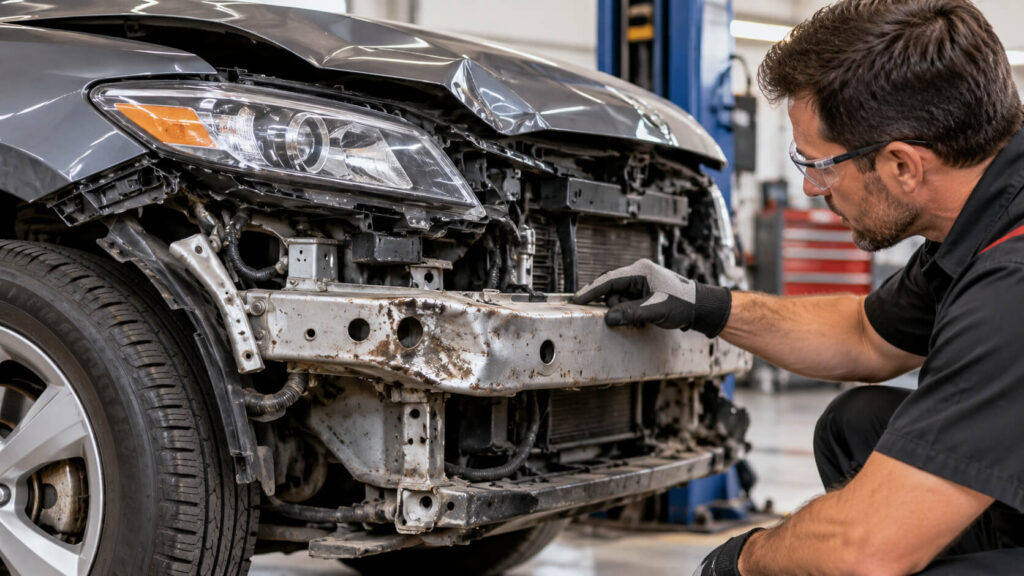
After a car accident, the most noticeable damage is often a dented bumper, scratched paint, or broken headlight. However, some collision damage is harder to see. A vehicle can look relatively normal from the outside while having damage to its frame or structural components.
A bent car frame can affect wheel alignment, suspension geometry, body panel fit, and overall vehicle safety. Even a collision that seems minor may cause structural damage, depending on the direction and force of the impact.
Knowing the signs of a bent car frame can help you recognize potential problems before they become more serious.
If you have recently experienced an accident in Cathedral City or the surrounding Coachella Valley, here are seven warning signs to watch for and what to do next.
What Does It Mean When a Car Frame Is Bent?
A vehicle’s frame or structural body provides support for important components, including the suspension, drivetrain, and passenger compartment.
Traditional body-on-frame vehicles have a separate frame beneath the body. Many modern passenger cars use unibody construction, where the body and structural framework form an integrated structure.
During a collision, impact forces can bend, twist, or deform structural components. This damage may change how the vehicle handles or how its exterior panels fit together.
Not every dent or damaged bumper indicates a bent frame. Likewise, not all structural damage is immediately visible.
A professional inspection is often necessary to determine whether the damage is cosmetic, mechanical, or structural.
For a more detailed explanation, read our guide on frame damage vs. body damage.
7 Warning Signs Your Car Frame May Be Bent
1. Your Car Pulls to One Side While Driving
One of the most noticeable warning signs after a collision is a vehicle that consistently pulls toward the left or right.
You may notice that:
- Your car drifts to one side on a relatively level road.
- The steering wheel appears off-center when driving straight.
- You need frequent steering corrections to maintain your direction.
- The vehicle still pulls after a wheel alignment.
A collision can damage suspension components, shift mounting points, or affect structural alignment. These changes may prevent the wheels from maintaining their intended positions.
However, pulling does not automatically mean your frame is bent. Uneven tire pressure, tire damage, brake problems, and suspension issues can produce similar symptoms.
What to do: Have the tires, suspension, steering, and structural alignment inspected. If the problem began immediately after an accident, explain that history to the repair technician.
Learn more about why a car may still pull after an alignment following an accident.
2. Uneven Gaps Between Doors, Hood, or Trunk
Look closely at the spaces between your vehicle’s exterior panels.
Manufacturers design doors, hoods, trunks, and fenders to fit within specific tolerances. A collision may shift these components or damage the structures supporting them.
Possible warning signs include:
- One side of the hood has a noticeably wider gap than the other.
- The trunk lid appears crooked.
- A door sits higher or lower than the adjacent panel.
- A fender no longer lines up properly with the bumper.
- Body panels appear uneven after an accident.
For example, if your vehicle was struck near the front corner, the impact may affect the fender, radiator support, or nearby structural components.
Uneven panel gaps can also result from damaged hinges, brackets, or incorrect previous repairs, so they are not definitive proof of frame damage.
What to do: Compare the panel gaps on both sides of the vehicle and document any changes. A collision repair technician can determine whether the problem involves panel adjustment or underlying structural damage.
3. Doors, Hood, or Trunk Are Difficult to Open or Close
If a door worked normally before an accident but suddenly becomes difficult to close, the collision may have affected its alignment.
You might experience:
- Doors that require extra force to latch.
- A trunk that no longer closes evenly.
- A hood that does not sit flush.
- Door seals that no longer make proper contact.
- Unusual rubbing or scraping when opening a door.
These problems can occur when hinges, latches, body panels, or structural openings become misaligned.
Damage around the pillars, rocker panels, or door openings deserves particular attention because these areas contribute to the vehicle’s structural integrity.
What to do: Avoid forcing damaged panels into place. Have the affected components inspected, especially if the door or hood cannot latch securely.
If you suspect damage beyond the visible exterior panels, explore our collision repair services in Cathedral City.
4. Uneven or Unusual Tire Wear
Tire wear can provide useful clues about a vehicle’s alignment and suspension condition.
After an accident, pay attention to tires that begin wearing unevenly or more quickly than expected.
Common patterns include:
- Excessive wear along the inside edge of a tire.
- More wear on the outside edge.
- Feathering or irregular tread patterns.
- One tire wearing significantly faster than the others.
These symptoms may occur when the wheels are no longer positioned at the correct alignment angles.
A collision can bend suspension parts or shift structural mounting points, changing the relationship between the wheels and the vehicle body.
However, tire wear develops over time and can have several causes unrelated to structural damage.
What to do: Have the tire condition and wheel alignment checked. If the alignment cannot be restored to manufacturer specifications, further suspension and structural measurements may be necessary.
Read our related article about how collision damage affects wheel alignment.
5. Your Vehicle Sits Unevenly
After a collision, examine how your vehicle sits on a level surface.
Does one corner appear lower than the others? Does one wheel seem positioned differently within its wheel opening?
An uneven stance may indicate damage to suspension components, structural mounting points, or supporting body sections.
Possible symptoms include:
- One side of the vehicle appears lower.
- A wheel sits unusually far forward or backward in its wheel arch.
- The vehicle looks tilted despite being parked on level ground.
- The distance between a tire and fender differs noticeably from the opposite side.
Keep in mind that a damaged spring, strut, control arm, or tire can also cause an uneven stance.
What to do: Do not attempt to diagnose structural damage based on vehicle height alone. A technician should inspect the suspension and measure relevant structural points when collision damage is suspected.
6. New Vibrations, Noises, or Unusual Handling
A vehicle that feels different after an accident may have damage that is not visible from the outside.
You might notice new vibrations, rattling, clunking, or changes in steering response.
Examples include:
- Vibrations that increase with vehicle speed.
- Clunking noises while turning or traveling over bumps.
- A steering wheel that shakes unexpectedly.
- Unusual instability during normal driving.
- New rubbing sounds near the wheels.
These symptoms can result from damaged wheels, tires, steering parts, suspension components, or other mechanical systems.
Structural damage is one possible explanation, particularly when suspension mounting locations have shifted.
What to do: Have the vehicle professionally inspected before continuing regular use. If steering, braking, or vehicle stability feels compromised, stop driving when safe and arrange towing.
A collision-related handling problem should not be ignored simply because the exterior damage looks minor.
7. Visible Bending, Wrinkles, or Cracks in Structural Areas
Some collision damage produces visible changes to the vehicle’s underlying structure.
Depending on the vehicle design and location of the impact, you may notice:
- Bent metal beneath the vehicle.
- Wrinkled or buckled structural panels.
- Cracks or separation around damaged metal seams.
- Deformed areas near the front or rear structure.
- Unusual folds in metal inside the engine compartment or trunk.
These signs can indicate that impact forces reached structural components.
However, many important areas are concealed behind bumpers, trim, underbody panels, or other parts. A vehicle can have structural damage without obvious visible deformation.
What to do: Do not crawl beneath an unstable or accident-damaged vehicle. Have a qualified collision repair technician inspect the affected areas and perform measurements where necessary.
To understand how damaged structures are assessed and repaired, visit our frame straightening service page.
Can a Minor Car Accident Bend the Frame?
Yes. A relatively minor-looking collision can sometimes cause structural damage.
The severity of frame damage depends on several factors, including impact speed, angle, location, vehicle design, and how collision forces travel through the structure.
For example, a low-speed impact near a suspension mounting point may create problems that are not obvious from the bumper’s appearance.
On the other hand, a visibly damaged bumper does not necessarily mean the vehicle has structural damage. Bumper covers and other exterior components can deform without affecting the main structure.
The important distinction is that visible damage alone cannot reliably establish whether a vehicle’s frame is bent.
A professional inspection is the most reliable way to determine the extent of damage.
For additional information, see how to tell if your car has hidden damage after an accident.
How Do Auto Body Shops Check for a Bent Frame?
A collision repair shop may use several inspection methods to evaluate suspected structural damage.
The process generally includes the following steps.
Visual Damage Assessment
The technician examines damaged panels, visible structural areas, suspension components, and possible signs of impact-related deformation.
Structural Measurements
Where appropriate, specialized measuring equipment is used to compare vehicle reference points against manufacturer specifications.
Electronic or computerized measuring systems can help identify deviations that may not be visible during a basic inspection.
Suspension and Alignment Inspection
The technician may check wheel alignment and related suspension components to determine whether an impact has changed their position or geometry.
Repair Planning
If structural damage is confirmed, the repair plan depends on the vehicle manufacturer’s procedures, the type of material involved, and the severity and location of the damage.
Some structural components may be repairable through approved straightening methods, while others require replacement.
You can learn more about the frame straightening equipment, process, and safety considerations.
Is It Safe to Drive a Car With a Bent Frame?
A vehicle with suspected structural damage should not be assumed safe to drive until it has been inspected.
Structural components are designed to help manage collision forces and maintain the intended positions of critical vehicle systems.
Damage may affect steering, suspension geometry, crash protection, or the operation of other safety-related components.
Even if the vehicle starts and moves normally, that does not establish that it is safe.
If you notice severe pulling, unstable handling, tire rubbing, fluid leaks, damaged steering components, or problems with door or hood latching, avoid driving the vehicle and arrange professional assistance.
When the condition is uncertain, towing is the safer option.
Can a Bent Car Frame Be Repaired?
In some cases, yes. However, not every type of structural damage can or should be straightened.
Repairability depends on the vehicle’s construction, damaged materials, impact severity, and manufacturer repair requirements.
Professional structural repair may involve:
- Inspecting and documenting the collision damage.
- Measuring the vehicle against manufacturer specifications.
- Identifying components that can be repaired or must be replaced.
- Performing approved structural repair procedures.
- Verifying measurements and completing required safety-related inspections.
Modern vehicles may contain high-strength steel, ultra-high-strength steel, aluminum, and other materials with specific repair limitations.
For this reason, frame repair should follow vehicle-specific procedures rather than relying on visual appearance alone.
If you are wondering whether your vehicle requires structural correction, read when a car needs frame straightening.
What Should You Do if You Suspect Frame Damage?
If your vehicle begins showing any of the warning signs discussed above, taking the right steps can help you avoid additional problems.
First, avoid unnecessary driving until you understand the vehicle’s condition. If steering, braking, or handling is affected, arrange towing.
Next, document the visible damage. Take clear photographs of uneven body panels, damaged areas, and any noticeable changes to wheel positioning.
When scheduling an inspection, explain when the accident happened, where the vehicle was struck, and which symptoms appeared afterward.
Ask the repair shop whether structural measurements are necessary and whether the proposed repair follows the manufacturer’s procedures.
If you plan to submit an insurance claim, keep your inspection findings, photographs, and repair estimates organized.
For help understanding the claims process, visit our insurance claim assistance page.
Get Your Vehicle Inspected After a Collision in Cathedral City
A bent frame is not always easy to identify. Your car may still look normal, but changes in steering, tire wear, panel alignment, or handling can indicate that further inspection is necessary.
At CatCity Auto Body, we help drivers in Cathedral City, California, address collision-related vehicle damage through auto body repair services, including collision repair and frame straightening.
Whether your vehicle has visible exterior damage or you are concerned about possible hidden structural problems, an appropriate inspection can help determine the next steps.
Do not wait for a small warning sign to become a bigger problem.
Contact CatCity Auto Body to discuss your vehicle’s damage and request a repair estimate.
Frequently Asked Questions About Bent Car Frames
Common warning signs include uneven body panel gaps, pulling to one side, unusual tire wear, difficulty closing doors, and visible structural deformation. These symptoms can have other causes, so a professional inspection and structural measurements may be necessary to confirm frame damage.
Yes. Structural damage can occur beneath exterior panels or in areas that are difficult to inspect visually. A vehicle may appear relatively undamaged while having deformation in concealed structural components or suspension mounting areas.
No. Some structural damage can affect wheel alignment, but not every type of frame damage produces noticeable alignment symptoms. Similarly, alignment problems do not always indicate a bent frame.
It is not advisable to assume that a vehicle with suspected structural damage is safe to drive. Even limited deformation may affect important systems depending on its location. Have the vehicle inspected before returning it to normal use.
The cost varies depending on the vehicle, severity of damage, labor requirements, and whether structural components must be repaired or replaced. A professional damage assessment is needed to provide a meaningful estimate.
No. Frame straightening addresses structural deformation using appropriate repair equipment and procedures. Wheel alignment adjusts the angles of the wheels according to manufacturer specifications. Some collision repairs may require both services.
Frame damage may be covered under collision coverage or another applicable insurance policy, depending on the circumstances, policy terms, deductibles, and claim determination. Documenting the damage and obtaining a professional estimate can help with the claims process.