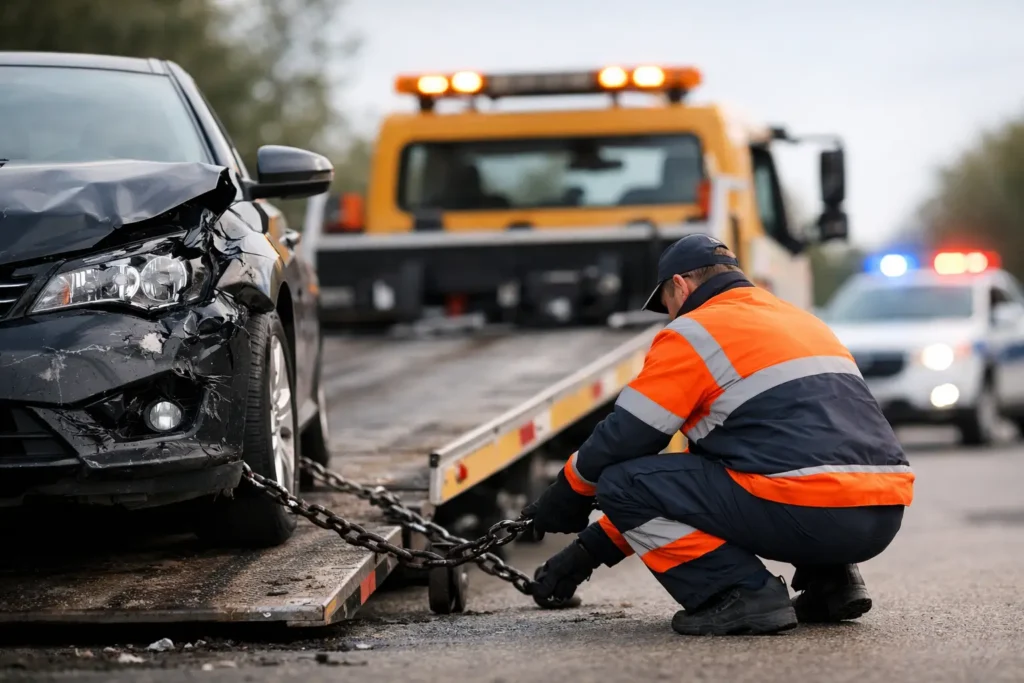
A collision can leave your car blocking traffic on Highway 111, sitting in a busy Palm Springs parking lot, or stopped on a dark Coachella Valley road. In those first stressful minutes, emergency towing after a car accident is not simply about moving a damaged vehicle. It is about protecting everyone at the scene, preserving your options, and getting your vehicle to a repair facility that can assess it properly.
The right next step depends on the damage, the location of the accident, and whether law enforcement is involved. A calm, informed approach can help you avoid unsafe decisions, unnecessary storage costs, and confusion with your insurance claim.
1. Put Safety Before the Tow
First, check yourself and your passengers for injuries. Call 911 immediately if anyone is hurt, if there is a fire risk, if a vehicle is leaking fuel, or if the crash is blocking traffic. Even a collision that appears minor can cause injuries that are not obvious at the scene.
If your vehicle can be moved safely and law enforcement has not instructed you otherwise, pull it out of the travel lane. Turn on your hazard lights. In high-traffic areas, do not stand between vehicles or remain in a place where passing traffic could put you at risk. In the desert, heat can also become a real concern quickly, so move to a safe shaded location when possible.
Do not attempt to drive a vehicle that has a leaking fluid, deployed airbags, a damaged wheel, a rubbing tire, broken lights, or steering and braking problems. Damage can be hidden beneath a bumper or behind a wheel, and driving a compromised vehicle may make the repair more extensive.
2. Document the Scene Before the Vehicle Leaves
Once everyone is safe, take photos of the vehicles, damage, license plates, road conditions, nearby signs, and the overall accident scene. Photograph the other driver’s insurance and contact information if appropriate. These photos can be useful when explaining the loss to your insurer and when a collision repair facility prepares an estimate.
Exchange contact, registration, and insurance information with the other driver. If police respond, ask how to obtain the incident or traffic collision report when it becomes available. Avoid discussing fault or agreeing to a cash arrangement at the roadside. The facts may not be clear, and vehicle damage that looks minor can involve sensors, brackets, structural components, or mechanical systems behind the visible impact area.
Before the tow truck arrives, remove personal belongings, garage remotes, work equipment, medications, and valuable items from the vehicle if it is safe to do so. Keep your keys, paperwork, and tow receipt together with your accident documents.
3. Know Who Is Authorizing the Tow
After an accident, a tow may be arranged by law enforcement, your roadside-assistance provider, your insurance company, or you. These situations are different, so ask clear questions before authorizing service.
If police or the California Highway Patrol calls a tow because your vehicle is disabled in an unsafe location, you may have limited immediate choice. Ask the officer or tow operator where the vehicle will be taken, the company name, and how you can retrieve it. A police-directed tow often goes first to an impound or storage yard, where storage fees can begin accumulating.
If you can select the towing provider, confirm the estimated arrival time, the destination, and all anticipated charges. Ask whether the quoted rate includes mileage, loading, after-hours service, and storage if the car cannot be delivered immediately. A reputable provider should be able to explain the basics without pressure.
Never sign a blank authorization form. Read any tow paperwork before signing, and make sure the destination written on the form matches where you want the vehicle taken.
Emergency Towing After a Car Accident: Choose the Right Destination
The cheapest or nearest destination is not always the best choice. A tow yard may be necessary when an accident occurs late at night or when a vehicle must be held for an investigation, but it can add delays and daily storage charges. If you have the choice, having the vehicle towed directly to a qualified collision repair facility can simplify the next steps.
A proper repair facility can inspect visible and concealed damage, document the condition of the vehicle, prepare a detailed repair plan, and communicate with your insurer. This is especially helpful after impacts involving bumper covers, headlights, wheels, suspension, advanced driver-assistance sensors, or frame and unibody components.
You generally have the right to choose the repair shop for your vehicle. Your insurer may recommend a network facility, but a recommendation is not the same as a requirement. Select a shop based on repair standards, technician training, communication, estimate clarity, and its ability to work with your insurer.
For Coachella Valley drivers, choosing a local shop can also make practical life easier. You may need help arranging a rental vehicle, reviewing an estimate in person, checking repair status, or coordinating pickup when repairs are complete. Those details matter when an accident has already interrupted work, family schedules, and transportation.
4. Use the Towing Method That Fits the Damage
Not every damaged vehicle should be towed the same way. A flatbed is often the preferred option for vehicles with wheel, suspension, steering, drivetrain, or significant collision damage because all four wheels can remain off the ground. It is also commonly the better choice for all-wheel-drive, electric, luxury, and low-clearance vehicles.
A wheel-lift tow may be appropriate in certain situations, but only when the vehicle can be moved without damaging the drivetrain or affected components. Tell the dispatcher if the car will not roll, has a flat tire, has locked wheels, is all-wheel drive, or has been involved in a severe front or rear impact. Accurate information helps the operator arrive with the right equipment.
Do not let anyone attach chains, hooks, or straps to a damaged area without understanding the vehicle’s proper tow points. Improper recovery can damage a bumper, suspension, underbody panels, or frame components that were not affected in the collision.
5. Start the Insurance Process Without Letting It Stall the Tow
Report the accident to your insurer as soon as you reasonably can. Have your policy number, accident location, date and time, photos, other driver’s information, and police report details available. Ask about towing coverage, rental reimbursement, deductible responsibility, and the claim number.
You do not need to wait for an insurance adjuster to approve every decision before moving an unsafe vehicle from the road. Protecting the vehicle from further damage and avoiding excessive storage is usually the sensible first step. Keep every receipt, including towing, storage, and transportation costs, and submit them according to your insurer’s instructions.
An initial insurance estimate may not include every repair the vehicle needs. This is common, particularly when damage is hidden behind panels. Once disassembly and inspection begin, a repair facility may identify additional necessary work and submit a supplement for insurer review. The goal is not to rush the estimate. It is to restore the vehicle safely and properly.
6. Watch for Red Flags at the Scene
Most towing professionals provide valuable help during a difficult moment. Still, accidents can create opportunities for high-pressure sales tactics. Be cautious if someone arrives unexpectedly and insists that your vehicle must go to a specific shop, refuses to explain charges, discourages you from contacting your insurer, or pressures you to sign documents quickly.
Ask for the towing company’s name and identification, request a copy of all paperwork, and take a photo of the truck and license plate if you have concerns. If a repair shop is recommended, you can still take time to verify its qualifications and decide whether it is the right fit for your vehicle.
Clear documentation protects you. It also helps prevent confusion if a vehicle is transferred from one location to another before repairs begin.
7. Prepare for the Repair Conversation
When your vehicle reaches the shop, share everything you know about the accident, including warning lights, unusual sounds, trouble steering, or changes you noticed after impact. Provide the claim number and insurer contact information when you have them. Good information helps technicians look beyond cosmetic damage and create a more accurate repair plan.
Ask how the shop will communicate updates, whether it can assist with insurance coordination and rental arrangements, and what happens if additional damage is found. A detailed estimate should explain the repair approach in understandable terms rather than leaving you to interpret unfamiliar parts and procedures alone.
At CatCity Auto Body, certified technicians help Cathedral City and Coachella Valley drivers move from the tow truck to a clear repair plan, with insurance coordination and attentive support throughout the process. Whether the damage is limited to a bumper or involves structural repair, every vehicle deserves careful inspection and safety-focused work.
After the scene is clear and your vehicle is secure, give yourself time to ask questions before making the next decision. A trusted tow, complete documentation, and a repair shop that explains the process clearly can turn a disruptive accident into a manageable path back on the road.