
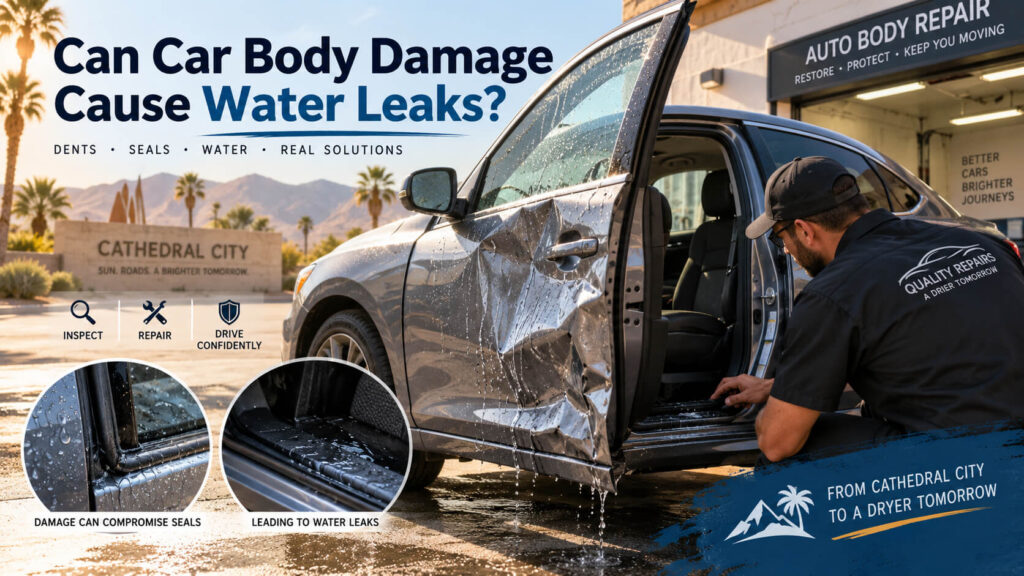
Car body damage can cause more than dents, scratches, and damaged paint. After an accident, even relatively small changes to the alignment of a door, trunk, window frame, or body panel can create openings that allow rainwater or car-wash water into the vehicle.
For drivers in Cathedral City, a water leak after an accident should not automatically be dismissed as a worn seal. Collision-related body damage can change how panels, weatherstripping, doors, windows, and seams fit together.
The sooner the source is identified, the easier it may be to prevent additional damage to the vehicle’s interior.
Can Car Body Damage Cause Water Leaks?
Yes. Car body damage can cause water leaks when an accident changes the alignment or sealing of doors, windows, body panels, the trunk, or structural seams.
A vehicle does not need to have severe visible damage for this to happen. A small impact can sometimes move a panel or door enough to prevent a weather seal from making full contact.
Common leak areas after body damage include the doors, trunk or liftgate, windshield perimeter, rear window area, quarter panels, roof seams, and damaged body joints.
The important question is not simply whether water is getting inside. It is why the original seal is no longer keeping water out.
How an Accident Can Create a Water Leak
Modern vehicles rely on precisely aligned body panels and sealing systems. Doors, windows, trunks, and liftgates are designed to close against weatherstripping with a specific amount of pressure.
After a collision, that alignment can change.
For example, an impact to a rear quarter panel may slightly alter how the trunk closes. Damage near the front door may move the door opening or hinges. Rear-end damage can affect the trunk floor, rear body panel, or liftgate opening.
The outside of the vehicle may still look relatively normal, while a small gap allows water to travel behind interior trim.
That is why a new water leak appearing shortly after an accident deserves closer inspection.
7 Areas Cathedral City Drivers Should Check
| Area | What Accident Damage May Cause | Possible Leak Sign |
| Doors | Door or frame misalignment | Wet carpet near the door |
| Weatherstripping | Torn, compressed, or displaced seal | Water along door opening |
| Trunk or liftgate | Misaligned opening or latch | Damp trunk carpeting |
| Body panel seams | Cracked or disturbed seam sealer | Moisture behind trim |
| Windshield area | Distorted surrounding body structure | Water near dashboard or headliner |
| Rear window area | Damage around window opening | Wet rear seat or package tray |
| Quarter/rear panels | Shifted body alignment | Water collecting in cargo area |
Understanding where the water appears can help narrow down where the problem actually begins.
1. Door Alignment Problems
A door does not have to look badly damaged to leak.
After a side impact or collision near the fender, rocker panel, or quarter panel, the door can sit slightly differently in its opening. Even a small alignment change may prevent the weatherstripping from creating an even seal.
You may notice that the door suddenly requires more force to close, sits farther out than surrounding panels, produces additional wind noise, or has uneven gaps around its edges.
Water appearing on the carpet beside one particular door can also indicate a sealing or alignment problem.
In this situation, replacing weatherstripping alone may not solve the issue if the underlying problem is the position of the door or body opening.
2. Damaged or Displaced Weatherstripping
Weatherstripping is the rubber sealing material found around doors, windows, trunks, and liftgates.
During a collision, this material can become torn, stretched, compressed, pulled away from its mounting surface, or unable to contact the body correctly.
A damaged seal may be easy to see. In other cases, the weatherstripping itself is still in good condition but cannot seal properly because a nearby panel has moved.
That distinction is important.
If water began entering the vehicle immediately after body damage occurred, both the seal and the surrounding panel alignment should be inspected.
3. Trunk and Liftgate Damage
Rear-end collisions are particularly relevant when a vehicle suddenly develops water in its trunk or cargo area.
An impact can affect the bumper, rear body panel, quarter panels, trunk floor, trunk lid, or liftgate opening.
The trunk may still close and latch normally while sitting just far enough out of position to create a small opening in the seal.
Drivers may first notice the problem when they find damp carpeting, moisture underneath the spare tire, condensation inside the trunk, or a musty smell.
Water can also travel behind trim panels before reaching the lowest part of the cargo area, so the visible wet spot may not be directly below the actual leak.
4. Cracked Body Seams or Seam Sealer
Vehicle bodies contain numerous joined panels. Manufacturers use seam sealers and other materials to prevent moisture from entering where these sections connect.
Collision damage can affect these areas.
If metal around a seam bends or shifts, the original sealing material can sometimes crack, separate, or lose adhesion.
These leaks may be difficult for a vehicle owner to identify because the affected seam can be hidden behind trim, carpeting, interior panels, or exterior body components.
This is one reason a professional body inspection can be useful when a leak begins following an accident but no obvious damaged weatherstrip can be found.
5. Damage Around the Windshield or Rear Glass
Water near the dashboard does not always mean the windshield itself is defective.
If collision damage alters the body opening surrounding the glass, sealing problems may develop around the windshield or rear window.
Drivers might notice moisture around the A-pillars, headliner, dashboard edges, rear seat area, or interior trim surrounding the glass.
A glass leak and collision-related body misalignment can produce similar symptoms, so identifying the actual entry point matters before repairs begin.
Simply adding sealant around the glass without determining the underlying cause may only hide the problem temporarily.
6. Uneven Body Panel Gaps
Panel gaps can provide valuable clues after an accident.
Compare the gaps around both sides of the vehicle. Doors, fenders, the hood, trunk, and quarter panels should generally have consistent spacing.
If one side suddenly has a noticeably wider or narrower gap, something may have shifted.
Uneven gaps do not automatically prove that a water leak exists, but when they appear alongside new interior moisture, they can indicate collision-related alignment problems.
This is especially worth checking when visible exterior damage appears minor but water problems begin soon afterward.
7. Hidden Damage Behind Exterior Panels
Sometimes the panel you can see is not the only part affected.
An exterior bumper cover, for example, can return close to its original shape after a low-speed impact while components underneath remain damaged.
Similarly, a dented quarter panel may be accompanied by changes to the inner structure or surrounding seams.
If you recently had an accident and are unsure whether additional damage exists, understanding the signs of hidden damage after an accident can help you decide when a professional inspection is appropriate.
Signs Your Water Leak May Be Related to Body Damage
A leak is more likely to deserve collision-related inspection when it begins only after an accident.
Pay particular attention when water intrusion is accompanied by uneven panel gaps, a door that closes differently, increased wind noise, a misaligned trunk or liftgate, damaged weatherstripping, or visible damage near the area where moisture appears.
Timing matters.
If your vehicle never leaked before a collision and suddenly develops water intrusion afterward, the accident should be considered as a possible cause even if the visible damage seems small.
Why Water Leaks Should Not Be Ignored
Water inside a vehicle can affect much more than appearance.
Persistent moisture can lead to unpleasant odors, stained upholstery, wet insulation, mold or mildew growth, corrosion of exposed metal, and deterioration of interior materials.
Modern vehicles also contain wiring, connectors, sensors, control modules, speakers, and other electronic components throughout the cabin and cargo areas. Water reaching those areas can create additional problems.
Finding the source early is usually better than repeatedly drying the carpet while the underlying leak remains.
Can Cathedral City Heat Make the Problem Worse?
Cathedral City is known for a hot desert climate, and high temperatures can be tough on vehicle materials over time.
Rubber weatherstripping and sealing materials naturally age as vehicles get older. When collision damage creates an alignment problem at the same time, an already aging seal may be less capable of compensating for the change.
Heat can also make a hidden moisture problem difficult to recognize. The visible surface of the carpet may dry while padding or insulation underneath remains damp.
That means a vehicle can appear dry even though moisture is still trapped below the surface.
Is the Leak From Body Damage or Just a Bad Seal?
Sometimes it is one. Sometimes it is both.
If weatherstripping has simply become old or cracked, replacing it may solve the problem. But when the leak starts following an accident, it is important to check whether the door, trunk, liftgate, window opening, or surrounding body structure has changed position.
A new seal cannot necessarily compensate for a misaligned body panel.
An auto body technician may inspect panel alignment, hinges, latches, weatherstripping, body seams, collision damage, and the surrounding structure before determining where water is entering.
Can Minor Body Damage Really Cause a Water Leak?
Yes.
The severity of the visible dent does not always reflect how much the surrounding components moved during an impact.
A small collision can affect a hinge, latch, mounting point, body seam, or panel position without producing dramatic exterior damage.
This is particularly important with door openings, trunks, liftgates, and quarter-panel areas because they depend on accurate alignment to maintain a weather-tight seal.
If you’re trying to determine whether the problem is limited to exterior sheet metal or involves something more significant, our guide to frame damage vs. body damage explains the difference.
How Is a Collision-Related Water Leak Diagnosed?
Diagnosing a water leak usually starts with identifying where the moisture appears and tracing it toward its highest likely entry point.
A technician may inspect the alignment of nearby body panels, look for damaged seals or seams, examine accident damage, and test the suspected area for water intrusion.
The goal is to determine the root cause rather than simply treating the place where water eventually becomes visible.
For example, water found underneath trunk carpeting might actually enter higher up near a damaged rear body seam.
Likewise, moisture on the front carpet may originate around a door or glass opening before traveling behind interior trim.
Does Water Leakage Mean the Car Has Structural Damage?
Not necessarily.
A damaged rubber seal or slightly misaligned door can sometimes cause a leak without serious structural damage.
However, water intrusion can also appear when collision damage has changed the shape or alignment of a body opening.
The leak itself cannot tell you which situation applies.
An inspection is the safer way to determine whether the problem involves only weatherstripping and exterior panels or something deeper.
Should You Repair the Leak Before It Gets Worse?
If a leak is related to collision damage, correcting the source early can help prevent secondary problems.
Drying the interior, adding temporary sealant, or repeatedly cleaning the affected area does not correct a misaligned panel or damaged seam.
A lasting repair should address the reason water is getting into the vehicle.
Depending on the damage, that could involve aligning a door or trunk, repairing body metal, restoring a damaged seam, replacing weatherstripping, or correcting another collision-related issue.
The appropriate repair depends on what the inspection finds.
Car Body Damage Repair in Cathedral City
If your vehicle started leaking water after an accident, don’t assume that the problem is simply an old rubber seal.
The collision may have affected the alignment of a door, trunk, liftgate, body panel, glass opening, or sealed body seam.
CatCity Auto Body in Cathedral City can inspect collision-related body damage and help determine whether the leak is connected to damaged or misaligned exterior components.
If additional repairs are necessary, knowing the actual source first can prevent unnecessary work and help ensure that the underlying problem is addressed rather than temporarily covered up.
You can also review what an auto body shop repairs to understand which collision-related areas may require professional body repair.
Frequently Asked Questions
Yes. An accident can change the alignment of doors, trunks, liftgates, windows, panels, or body seams, creating a path for water to enter.
Possible causes include damaged weatherstripping, a misaligned door, trunk or liftgate damage, disturbed body seams, damaged window openings, or hidden collision damage.
Yes. If an impact changes how the door sits in its opening, the weatherstripping may no longer create a complete seal.
Yes. Rear-end damage can affect the trunk lid, liftgate, rear body panel, quarter panels, seams, or trunk opening. Any of these changes may contribute to water intrusion.
An auto body shop can inspect collision-related panels, seals, alignment, seams, and damaged areas to determine whether body damage is contributing to the leak.
Yes. A relatively small impact can alter a hinge, latch, seal, panel gap, or body opening enough to create a leak without causing severe visible damage.
Final Takeaway
Car body damage can cause water leaks when an accident affects the fit or sealing of doors, windows, trunks, liftgates, panels, or body seams.
For Cathedral City drivers, the most important clue is often timing: if the vehicle did not leak before an accident but begins leaking afterward, collision-related damage should be investigated.
Look for changes in panel gaps, door operation, trunk alignment, weatherstripping, wind noise, and moisture around the damaged area. Fixing the source of the leak—not simply drying the interior—offers the best chance of preventing the problem from returning.