When your vehicle is damaged in an accident, parking-lot incident, or minor impact, it is not always obvious whether you need a mechanic or an auto body shop.
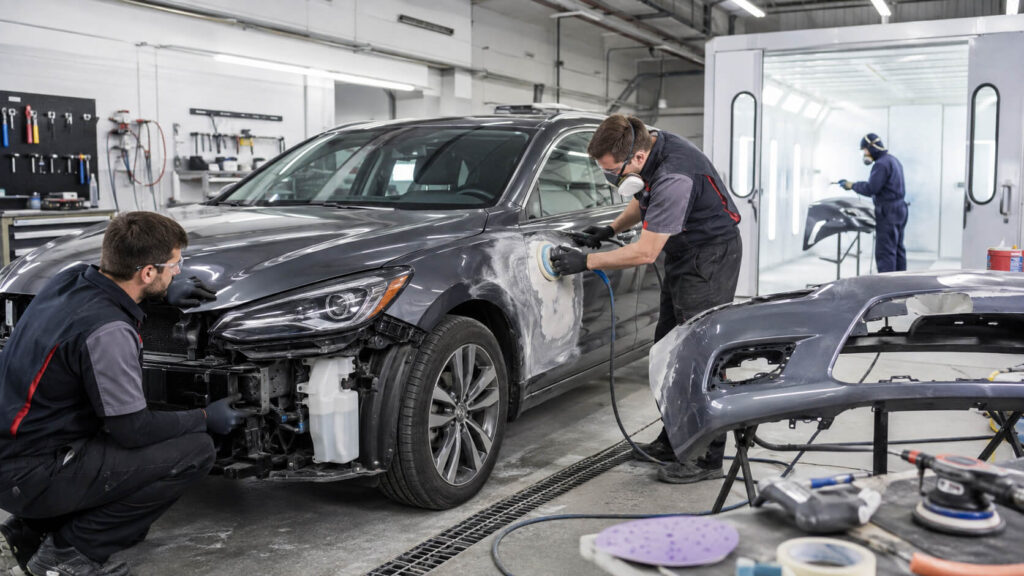
An auto body shop repairs damage to the exterior, body panels, paint, bumpers, structural components, and collision-damaged areas of a vehicle. Depending on the shop, technicians may also inspect related suspension, sensor, alignment, and safety-system issues caused by an accident.
That means an auto body shop can handle much more than dents and scratches.
A qualified collision repair facility may repair:
- Accident damage
- Dents and door dings
- Scratches and chipped paint
- Cracked or dented bumpers
- Damaged fenders
- Vehicle paint and clear coat
- Doors, hoods, and quarter panels
- Frame or unibody damage
- Hidden damage after a collision
- Damage involving parking sensors and driver-assistance systems
If you are searching for an auto body shop near you, understanding these services can help you decide where to take your vehicle and what type of repair may be needed.
What Is an Auto Body Shop?
An auto body shop specializes in repairing the physical body and exterior structure of a vehicle.
The work usually focuses on areas damaged by:
- Collisions
- Parking accidents
- Road debris
- Hail
- Shopping carts
- Vandalism
- Sun exposure
- Scrapes against walls or posts
- Minor fender benders
Body shops use specialized tools and repair processes to restore the shape, fit, finish, and appearance of damaged vehicle components.
A collision repair facility may work on everything from a small door ding to significant structural damage after a crash.
For Cathedral City drivers, CatCity Auto Body provides several related services, including collision repair, dent repair, auto painting, frame straightening, and bumper and fender repair.
Auto Body Shop vs. Mechanic: What Is the Difference?
This is one of the most common questions drivers have after an accident.
A mechanic usually focuses on mechanical and maintenance problems such as:
- Engine repairs
- Oil changes
- Brake service
- Battery replacement
- Transmission problems
- Cooling-system repairs
- Routine maintenance
An auto body shop primarily focuses on:
- Collision damage
- Exterior body panels
- Dents
- Bumpers
- Paint
- Structural damage
- Frame or unibody alignment
- Cosmetic accident damage
Some accident repairs involve both mechanical and body-related work.
For example, a front-end collision might damage the bumper, fender, radiator support, suspension, and cooling system. In this case, the collision repair facility may complete some work itself and coordinate specialized mechanical repairs when necessary.
1. Collision and Accident Damage
Collision damage is one of the primary reasons drivers visit an auto body shop.
Accidents can affect multiple areas of a vehicle at the same time. What appears to be a damaged bumper may also involve the fender, headlight, reinforcement, mounting points, sensors, or inner structure.
Common collision damage includes:
- Front-end damage
- Rear-end damage
- Side-impact damage
- Crumpled body panels
- Broken exterior trim
- Misaligned panels
- Scratched paint
- Structural damage
A professional repair usually begins with an inspection and estimate.
The technician evaluates what can be seen from outside and determines whether disassembly is needed to check for hidden damage.
If your vehicle has been involved in an accident, CatCity’s collision repair service in Cathedral City is the most relevant starting point.
2. Car Dents and Door Dings
Auto body shops routinely repair dents caused by:
- Car doors
- Shopping carts
- Hail
- Parking-lot impacts
- Falling objects
- Minor accidents
Not every dent requires the same repair method.
Paintless Dent Repair
Paintless dent repair, commonly known as PDR, may be suitable when:
- The paint remains intact
- The dent is not excessively deep
- The metal is not severely stretched
- The technician can access the damaged area
Instead of sanding and repainting the panel, the technician carefully reshapes the metal.
Conventional Dent Repair
Traditional dent repair is more appropriate when:
- Paint is cracked
- The metal is stretched
- The dent has a sharp crease
- The damage is too severe for PDR
- The panel requires refinishing
The repair may involve metal straightening, surface preparation, primer, color matching, and clear coat.
Learn more about CatCity’s dent repair service for door dings, creases, and collision-related dents.
3. Scratches and Paint Damage
A scratch can range from a light clear-coat mark to damage that exposes bare metal.
An auto body shop can evaluate whether the scratch requires:
- Polishing
- Paint correction
- Spot refinishing
- Full-panel repainting
- Adjacent-panel blending
Light Surface Scratches
Some scratches affect only the upper clear-coat layer and may be reduced through professional polishing.
Deep Scratches
A deeper scratch may cut through:
- Clear coat
- Base color
- Primer
- Bare metal
Once lower layers are exposed, repainting may be necessary to restore appearance and corrosion protection.
Drivers with fading, scratches, peeling clear coat, or damaged paint can use CatCity’s auto-painting service for professional refinishing and color matching.
4. Bumper Damage
Modern bumpers are more complicated than they appear.
The visible bumper cover may hide:
- Energy absorbers
- Reinforcement bars
- Mounting brackets
- Wiring
- Parking sensors
- Radar modules
- Lights
Common bumper problems include:
- Scratches
- Cracks
- Dents
- Broken clips
- Loose bumper covers
- Paint damage
- Sensor damage
- Misalignment
A body shop determines whether the bumper can be repaired or should be replaced.
Minor surface damage may be repairable, while extensive cracking, broken mounting points, or damage in sensitive sensor areas may require replacement.
CatCity’s bumper and fender repair page covers damage from parking impacts, minor collisions, and larger accidents.
5. Fender Damage
Fenders are frequently damaged during low-speed accidents, parking incidents, and front-corner impacts.
A fender may become:
- Dented
- Creased
- Scratched
- Bent
- Torn
- Misaligned
Repairability depends on how much the metal has stretched and whether the fender’s mounting points remain intact.
A technician may repair the original fender by reshaping the metal, or replace it when damage is too extensive.
Fender damage can also involve nearby areas such as:
- Headlights
- Bumper covers
- Wheel liners
- Hood edges
- Doors
- Suspension components
That is why the technician should inspect more than the visible dent.
6. Auto Painting and Vehicle Refinishing
Auto body shops also repair damaged or deteriorated vehicle paint.
Painting may be needed after:
- Collision repair
- Dent repair
- Bumper repair
- Scratch repair
- Clear-coat failure
- Sun fading
- Oxidation
Professional auto painting usually involves several steps.
Surface Preparation
The technician sands and prepares the damaged surface so that primer and paint can adhere properly.
Primer
Primer helps create a stable foundation and can protect repaired surfaces.
Color Matching
Modern shops use the vehicle’s paint code and color-matching technology to create a formula close to the existing finish.
Because paint changes with age and sun exposure, the original factory formula may need adjustment.
Base Coat and Clear Coat
The base coat creates the visible color. Clear coat provides gloss and helps protect the finish.
For some repairs, technicians blend the new color into an adjacent panel so there is no obvious color transition.
7. Hood, Door and Quarter-Panel Damage
Auto body shops frequently repair individual body panels.
Hood Damage
A hood may be damaged by:
- Front-end accidents
- Falling objects
- Hail
- Clear-coat failure
- Stone impacts
The hood may be repaired, refinished, or replaced depending on the damage.
Door Damage
Vehicle doors may suffer:
- Dents
- Scratches
- Creases
- Damaged edges
- Broken trim
- Misalignment
Door repairs can also involve handles, mirrors, wiring, window components, and side-impact systems.
Quarter-Panel Damage
Quarter panels are often more complicated because they are usually welded into the vehicle body rather than simply bolted on.
A repair may involve:
- Metal straightening
- Panel replacement
- Welding
- Corrosion protection
- Paint blending
The repair plan should be based on damage severity and vehicle-specific procedures.
8. Frame and Structural Damage
A vehicle can have structural damage even when the exterior does not look severely damaged.
Modern vehicles commonly use unibody construction, where the body and structural sections function together.
Accident forces can affect:
- Frame rails
- Aprons
- Strut towers
- Rocker panels
- Floor sections
- Suspension mounting points
- Front or rear body structure
Possible signs of structural damage include:
- Vehicle pulling to one side
- Steering wheel no longer centered
- Uneven tire wear
- Large or uneven panel gaps
- Door or trunk alignment problems
- Wheels appearing out of position
- Difficulty completing a proper alignment
A qualified shop may use computerized measuring equipment to compare structural points with specifications.
CatCity’s frame-straightening service is designed for vehicles that may have accident-related structural or alignment problems.
9. Hidden Damage Behind Exterior Panels
One of the biggest reasons to visit a professional auto body shop after an accident is that not all collision damage is visible.
A bumper may look slightly dented while hiding:
- Broken reinforcement
- Crushed energy absorbers
- Bent brackets
- Damaged wiring
- Sensor problems
A damaged fender may conceal problems involving:
- Inner structure
- Headlight mounts
- Suspension
- Wheel liners
The first estimate may therefore change after the shop removes damaged exterior components.
This is known as a collision repair supplement when additional accident-related work is added to the original estimate.
If your insurer’s estimate appears lower than the shop’s repair plan, it does not automatically mean you have to pay the difference. The shop may document hidden damage and submit additional repair items for insurance review.
10. Parking Sensors, Cameras and Driver-Assistance Components
Newer vehicles frequently have technology integrated into exterior areas that auto body shops repair.
Depending on the vehicle, collision-sensitive components may include:
- Parking sensors
- Blind-spot radar
- Forward radar
- Cameras
- Automatic emergency braking sensors
- Lane-assistance systems
A small bumper impact can potentially:
- Break a sensor holder
- Move a radar bracket
- Damage wiring
- Distort the bumper cover
- Affect sensor alignment
This means a bumper repair may involve more than plastic repair and paint.
The shop should check manufacturer requirements to determine whether:
- Diagnostic scanning is needed
- Sensor replacement is required
- Calibration is necessary
- Certain bumper areas have repair restrictions
Drivers should not assume a vehicle’s safety or assistance systems are functioning correctly just because no warning light appears.
Can an Auto Body Shop Repair Multiple Problems at Once?
Yes.
A single collision may require several types of repair.
For example, a front-corner accident could involve:
- Bumper repair
- Fender repair
- Dent removal
- Headlight replacement
- Auto painting
- Sensor inspection
- Structural measurement
Using a collision repair facility that can coordinate these services can simplify the process.
Instead of viewing each damaged component separately, the shop creates one overall repair plan.
How Does an Auto Body Shop Decide Whether to Repair or Replace a Panel?
A technician considers several factors, including:
- Damage size
- Damage location
- Panel material
- Metal stretching
- Cracks or tears
- Structural function
- Manufacturer repair restrictions
- Labor required
- Replacement-part availability
A small dent may be easily repairable.
A severely folded fender with damaged mounting points may be more practical to replace.
The cheapest option is not always the best choice. The recommended repair should restore appropriate panel shape, fit, finish, and function.
How Long Do Auto Body Repairs Take?
Repair time depends on the amount and type of damage.
A small dent may take less time than a collision involving structural repairs, painting, and multiple replacement parts.
The schedule may be affected by:
- Hidden damage
- Insurance approval
- Parts availability
- Paint curing
- Structural repair
- Sensor calibration
- Additional mechanical repairs
A shop can usually provide a more accurate completion estimate after the vehicle has been inspected and required parts have been identified.
Does Insurance Cover Auto Body Repair?
Auto body damage may be covered depending on:
- How the accident happened
- Who was responsible
- Your insurance coverage
- Your deductible
- Policy limitations
Potentially relevant coverage can include:
- Collision coverage
- Comprehensive coverage
- Another driver’s property-damage liability coverage
The body shop can prepare an estimate and communicate repair information to the insurer, but the insurance company determines coverage.
When Should You Visit an Auto Body Shop After an Accident?
You should consider an inspection when you notice:
- A cracked bumper
- A loose exterior panel
- A large dent
- Paint damage exposing metal
- Misaligned hood or trunk
- A door that does not close normally
- Vehicle pulling
- New tire wear
- Sensor warnings
- Unusual panel gaps
Even a low-speed accident can cause hidden damage.
An inspection is especially important when the impact affected a wheel, bumper corner, structural area, or location containing sensors.
What Should You Ask an Auto Body Shop?
Before approving repairs, ask:
- What damage did you find?
- Is there possible hidden damage?
- Can the damaged panel be repaired?
- Which parts need replacement?
- Will painting be required?
- Is color blending necessary?
- Are sensors located in the repair area?
- Does the vehicle need structural measurement?
- Will you communicate with my insurer?
- What warranty applies to the work?
Clear answers can help you understand what you are paying for and why each repair is recommended.
Auto Body Repair in Cathedral City, CA
If you are searching for an auto body shop in Cathedral City, choose a facility that can evaluate the complete vehicle rather than focusing only on the most visible dent or scratch.
CatCity Auto Body provides related repair services from one local facility, including:
Whether your vehicle has a small parking-lot dent or accident damage affecting multiple panels, the first step is determining the full repair scope.
For an auto body repair estimate in Cathedral City, contact CatCity Auto Body at 760-324-7117.
Frequently Asked Questions
Yes. Body shops repair small door dings, creases, hail dents, and larger accident-related dents. Paintless dent repair may be used when the paint remains intact, while conventional repair is used when refinishing is required.
Yes. Light surface scratches may be polished, while deeper scratches may require sanding, primer, base color, and clear coat.
Yes. Body shops repair and replace scratched, cracked, dented, or loose bumpers. Modern bumper repairs may also involve parking sensors, radar, brackets, and wiring.
Yes. Auto body shops commonly provide panel repainting, collision refinishing, color matching, clear-coat repair, and in some cases complete vehicle repainting.
A properly equipped collision repair facility can diagnose and repair certain frame and unibody damage using structural measuring and straightening equipment.
Yes, when the damage qualifies for paintless dent repair and the original paint remains intact. If the paint is cracked or chipped, refinishing is usually required.