A collision can leave more behind than a dented bumper or scratched paint. Damage beneath the exterior can affect how a vehicle drives, aligns, absorbs impact, and protects its occupants. That is why frame straightening Palm Springs drivers need after a significant accident should be treated as a safety repair, not a cosmetic add-on.
Whether your vehicle was hit at a busy Palm Springs intersection, clipped in a parking lot, or involved in a highway collision, the right repair begins with an accurate structural inspection. A trusted collision shop can identify hidden damage, explain what the vehicle needs, and restore it according to manufacturer repair procedures and safety standards.
What Frame Straightening Actually Means
The term “frame straightening” is commonly used for structural collision repair, but modern vehicles do not all have the same type of frame. Many trucks and larger SUVs use a separate body-on-frame design. Most passenger cars, crossovers, and many SUVs use a unibody structure, where the frame and body are built as one connected unit.
In either design, a collision can push, twist, crush, or pull structural components out of their intended position. Even a small shift can affect wheel alignment, panel fit, steering response, suspension geometry, and the way the vehicle manages energy in a future crash.
Structural repair is the process of measuring that damage and returning the affected areas to the correct specifications when repairable. It may involve controlled pulling on dedicated equipment, replacing damaged structural sections, repairing related suspension damage, and confirming measurements before the vehicle moves to body and paint work.
The goal is not simply to make the vehicle look straight. The goal is to restore the vehicle’s structural integrity and safe driving performance as closely as possible to its pre-accident condition.
Why Frame Straightening Palm Springs Repairs Require Precision
A vehicle can appear nearly normal after an accident while still having structural damage. A hood may close but sit slightly unevenly. Doors may need extra force to latch. Tires may wear unevenly after an alignment. The steering wheel may pull to one side, or the vehicle may feel different on the road.
Those signs deserve attention, but they are not the only reason to schedule a professional inspection. Structural damage is often hidden behind bumpers, fenders, underbody panels, and mechanical components. Without proper measuring equipment, it is difficult to see the full extent of the damage from the outside.
Precision matters because vehicle structures are designed with exact dimensions and designated crumple zones. A repair that looks acceptable but does not meet specifications can create problems with fit, handling, or crash performance. This is particularly relevant on newer vehicles equipped with cameras, sensors, radar systems, advanced driver-assistance features, and complex airbag systems.
At CatCity Auto Body, structural repairs are handled with the same careful attention given to every collision repair, whether the visible damage is minor or extensive. Certified technicians use professional repair methods and clear communication to help customers understand what is being repaired and why.
How a Professional Structural Repair Process Works
The process starts with a thorough damage assessment. After an accident, visible damage may tell only part of the story. A technician examines the exterior, underbody, suspension, mounting points, and surrounding components to determine whether the impact reached structural areas.
Measuring Comes Before Pulling
Before any straightening work begins, the vehicle is measured against manufacturer specifications. This establishes where the damage is located and how far a component has moved. Accurate measurements guide the repair plan and help avoid unnecessary work.
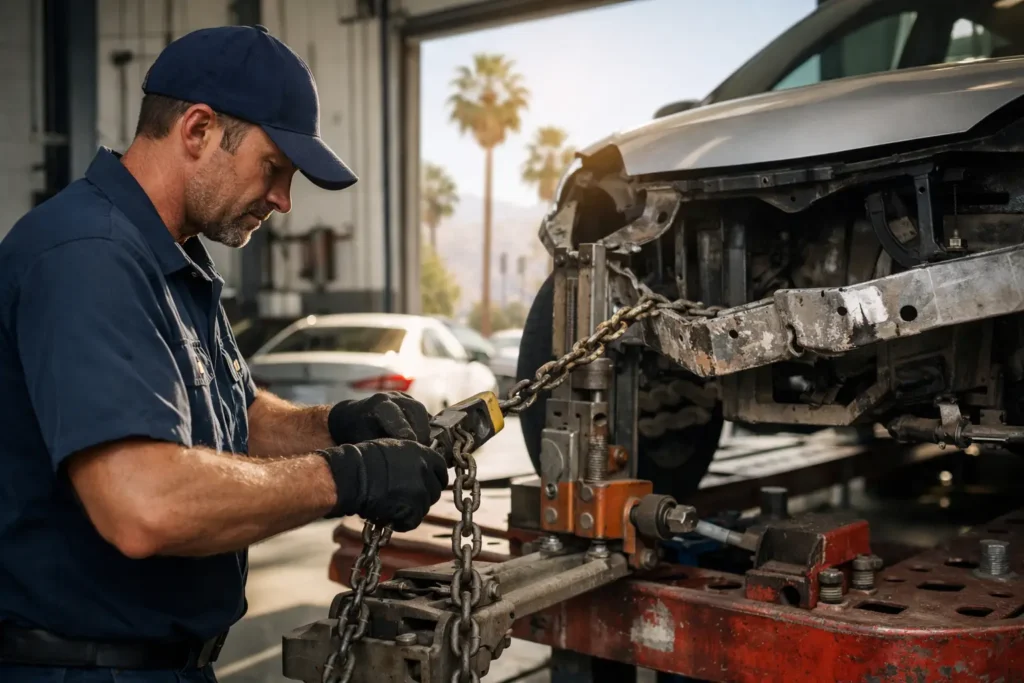
If the structure can be safely repaired, the vehicle is secured on specialized equipment. Controlled force is then applied in carefully planned directions to return the damaged area toward its proper position. This is not a process of simply pulling until panels appear even. The repair must follow measured points and approved procedures.
Related Damage Must Be Addressed
A structural impact can also affect suspension, steering, wheels, tires, cooling components, electrical systems, and safety features. Repairing the frame or unibody without addressing related damage can leave a vehicle unsafe or unreliable.
Depending on the collision, the repair plan may include wheel alignment, replacement of damaged parts, sensor calibration, refinishing, and a final inspection. The exact work depends on the vehicle, impact location, repairability of the materials, and manufacturer requirements.
Final Verification Protects the Driver
After structural work is complete, technicians verify the repair through measurements, alignment checks, and quality-control inspections. Panel fit and operation are reviewed, as are any systems affected by the collision. This final stage matters because the vehicle should not only look restored but also drive correctly and operate as intended.
When a Vehicle May Need Structural Inspection
Not every fender bender requires frame straightening. A low-speed collision may be limited to a bumper cover, grille, lamp, or exterior panel. Still, it is wise to have the vehicle inspected when the impact was strong enough to move components or trigger safety systems.
Consider a structural inspection if you notice changes in steering, uneven gaps around doors or the hood, a trunk that no longer latches properly, unusual tire wear, vibration, fluid leaks, or an alignment issue after the accident. Airbag deployment, wheel damage, a hard hit to the corner of the vehicle, or a collision involving a curb or median can also signal the need for closer evaluation.
There is no benefit to guessing. A detailed estimate provides a clearer picture of the repair needs, expected work, and any parts that may require replacement. It also gives you useful documentation when working with your insurance company.
Repair, Replacement, or a Total Loss: It Depends
Customers often ask whether a bent frame can be fixed. In many cases, the answer is yes, provided the damage is within repairable limits and the correct procedures are followed. In other cases, a structural component may need replacement rather than straightening, especially if it is severely crushed, torn, weakened, or made of materials requiring specific repair methods.
Sometimes the cost of safe repairs exceeds the vehicle’s value under an insurance policy. That can lead to a total-loss determination. While that result is frustrating, it is based on the relationship between repair cost, vehicle value, and safety requirements, not simply on how the vehicle looks.
A reputable shop should be transparent about these possibilities. The right answer is the one that supports safe, appropriate repairs and gives you a realistic understanding of your options.
Insurance Support Makes the Process Easier
After an accident, structural repair is only one part of the disruption. You may be arranging transportation, speaking with an insurance adjuster, managing a deductible, and trying to keep work or family commitments on track.
A full-service local collision shop can help reduce that burden by preparing a detailed estimate, documenting damage, coordinating directly with insurers, and assisting with rental vehicle arrangements when available. If additional damage is found during disassembly, the shop can communicate the necessary supplement with the insurer rather than leaving you to manage technical repair discussions alone.
You still have a role in the process. Review the estimate, ask what structural areas were affected, and request clear explanations of the recommended repairs. Honest answers and regular repair updates can make a difficult situation far more manageable.
Choosing a Palm Springs Area Shop for Structural Work
Frame repair should never be selected on price alone. Cost matters, particularly after an unexpected collision, but structural work also calls for qualified technicians, proper equipment, manufacturer-aware repair practices, and a commitment to safety.
Look for a collision repair shop with I-CAR and ASE-certified professionals, experience with both foreign and domestic vehicles, and the ability to manage repairs from damage assessment through final delivery. Ask whether the shop can coordinate insurance communication and explain the repair plan in plain language. Those details can make a meaningful difference in both repair quality and your overall experience.
For drivers in Palm Springs, Cathedral City, Palm Desert, Rancho Mirage, and across the Coachella Valley, a free professional estimate is a practical first step after a collision. If your vehicle does not drive or look the way it did before the impact, have it inspected promptly. Getting clear answers early helps protect your safety, your time, and the long-term value of your vehicle.