
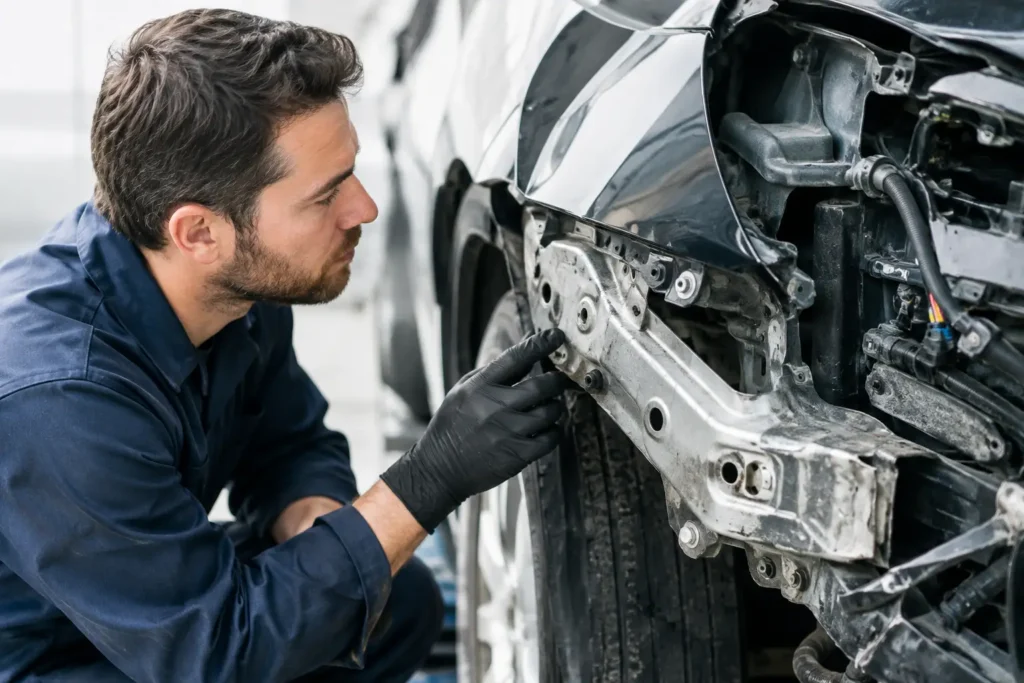
A bumper can look nearly untouched while the structure behind it has shifted just enough to affect how your vehicle drives, protects you, and wears over time. Knowing the best signs of hidden frame damage after a collision can help Coachella Valley drivers make a safer decision before returning to daily commutes, school drop-offs, or weekend trips.
Not every accident causes structural damage, and not every crooked-looking panel means the frame is bent. Modern vehicles are built with crumple zones designed to absorb collision energy, so damage can be difficult to see without a professional inspection. That is why a careful assessment matters even after what seems like a low-speed impact.
Why hidden frame damage deserves attention
Your vehicle’s structural components provide the foundation for proper wheel alignment, suspension operation, body-panel fit, and occupant protection. Depending on the vehicle, this may include a traditional frame, a unibody structure, subframes, rails, aprons, and reinforced areas around the cabin.
When those components move out of specification, the problem can extend beyond appearance. A vehicle may pull to one side, wear out tires prematurely, or respond differently in another accident. Safety systems also rely on precise mounting locations and structural geometry. Repairing visible dents without checking what sits behind them can leave an issue unresolved.
A qualified collision repair facility uses measurements and manufacturer-informed repair procedures to determine whether structural damage exists and what restoration requires. The goal is not simply to make a car look straight again. It is to restore it as closely as possible to its pre-accident condition.
Best signs of hidden frame damage to watch for
Uneven gaps between body panels
Look at the spaces around the hood, trunk, doors, headlights, grille, and fenders. Consistent gaps usually indicate that panels are sitting where they should. If one side of the hood is noticeably higher, a door catches when closing, or a bumper no longer lines up with the fender, the impact may have affected more than the exterior panel.
Panel gaps alone do not prove frame damage. A damaged latch, hinge, bumper bracket, or fender can create similar symptoms. Still, uneven fit is a strong reason to have the vehicle inspected, especially if it appeared after an accident.
A vehicle that pulls, wanders, or has a crooked steering wheel
After a collision, pay attention on a safe, level road. Does the car drift left or right when you briefly relax your grip on the steering wheel? Does the steering wheel sit off-center while traveling straight? Does the vehicle feel less stable than it did before the accident?
These symptoms may point to alignment or suspension damage, which can sometimes occur alongside structural movement. An alignment adjustment may resolve a minor issue, but alignment alone is not a complete answer if underlying mounting points or structural sections are out of position. A repair shop should inspect the cause before treating the symptom.
New tire wear or repeated alignment problems
Tires provide useful clues because they reflect how the suspension and wheels meet the road. Rapid wear on one edge, feathering across the tread, or a car that needs frequent alignment service can signal an issue that deserves closer evaluation.
Desert roads, potholes, curb contact, and normal aging can also affect alignment. The difference is timing. If the tire wear or handling concern started after a collision, mention that clearly when requesting an estimate. That context helps the technician inspect the right areas.
Doors, hood, or trunk that will not operate normally
A door that needs to be slammed, a hood that will not latch cleanly, or a trunk that suddenly rubs against the body can be more than an inconvenience. These issues can result from shifted panels, but they can also indicate that the surrounding structure has moved.
Do not force a latch repeatedly or assume it will settle back into place. A poorly latching hood or door is a safety concern. Have it evaluated before relying on the vehicle for regular travel.
Unusual noises, vibration, or a changed ride
New rattles, clunks, wind noise, vibration, or a feeling that the vehicle sits differently can all follow an impact. A loose splash shield or damaged wheel can cause noise, but so can compromised brackets, suspension components, or structural sections that no longer support parts correctly.
Try to note when the sound occurs: during braking, over bumps, at highway speeds, or when turning. Those details are useful to a collision technician. Avoid diagnosing the problem yourself or delaying service simply because the vehicle still moves under its own power.
Visible ripples, wrinkles, or fresh damage under the vehicle
Some of the clearest warnings are underneath the car or behind removed exterior parts. Wrinkled metal in an engine compartment, distorted frame rails, cracked seam sealer, bent mounting points, or uneven underbody components can all indicate impact energy traveled beyond the visible damage.
A quick look can be useful, but do not crawl under a vehicle that is not securely raised or attempt to straighten metal at home. Structural repair requires proper measuring equipment, trained technicians, and procedures designed for your specific vehicle.
Warning lights or safety-system concerns
An airbag, seat belt, steering, camera, or sensor warning light after a crash should always be addressed. Warning lights do not automatically mean frame damage, but they can indicate that the collision affected systems connected to the vehicle’s structure.
Modern vehicles may have radar sensors, cameras, blind-spot equipment, and advanced driver-assistance features positioned in bumpers, windshields, mirrors, or other areas affected by a collision. These systems may need inspection, repair, and calibration after body or structural work.
What to do after a collision in the Coachella Valley
If your vehicle is safe to move, start by documenting visible damage with clear photos and noting any changes in handling, noises, warning lights, or door operation. Contact your insurance company if you plan to file a claim, but remember that you can choose the repair facility that works on your vehicle.
A complete collision estimate should involve more than a walk-around of the bumper. Some damage is only visible after disassembly, which is why a repair plan can change as technicians access hidden areas. Transparent communication matters here: you should understand what was found, why it affects the repair, and how it will be addressed.
For vehicles that pull sharply, have loose parts, display critical warning lights, leak fluids, or have doors or hoods that will not latch, arrange towing rather than driving. The safest option depends on the condition of the vehicle, not on how minor the outside damage appears.
At CatCity Auto Body, certified technicians use professional collision-repair equipment to inspect accident damage, explain the findings, and coordinate practical next steps with customers and insurers. That support can include a detailed estimate, rental assistance, repair-status updates, and help reducing the disruption an accident creates.
Why a professional structural inspection is different
A proper inspection combines visual evaluation with measurement and repair knowledge. Technicians look for damage patterns, compare structural points to factory specifications where applicable, inspect suspension and mounting locations, and identify related parts that may require repair or replacement.
The right repair is not always the most extensive repair, but it must be the safe one. Minor cosmetic damage may only need refinishing or panel work. A stronger impact may require frame straightening, replacement of a damaged structural component, wheel alignment, and calibration of vehicle safety features. The needed work depends on the force and direction of the collision, the vehicle’s design, and the damage found during inspection.
Do not let a clean-looking bumper create false confidence. If your vehicle was involved in an impact and something feels, sounds, fits, or drives differently afterward, request a professional estimate. A careful inspection now can protect your safety, preserve your vehicle’s value, and give you confidence every time you get back behind the wheel.