
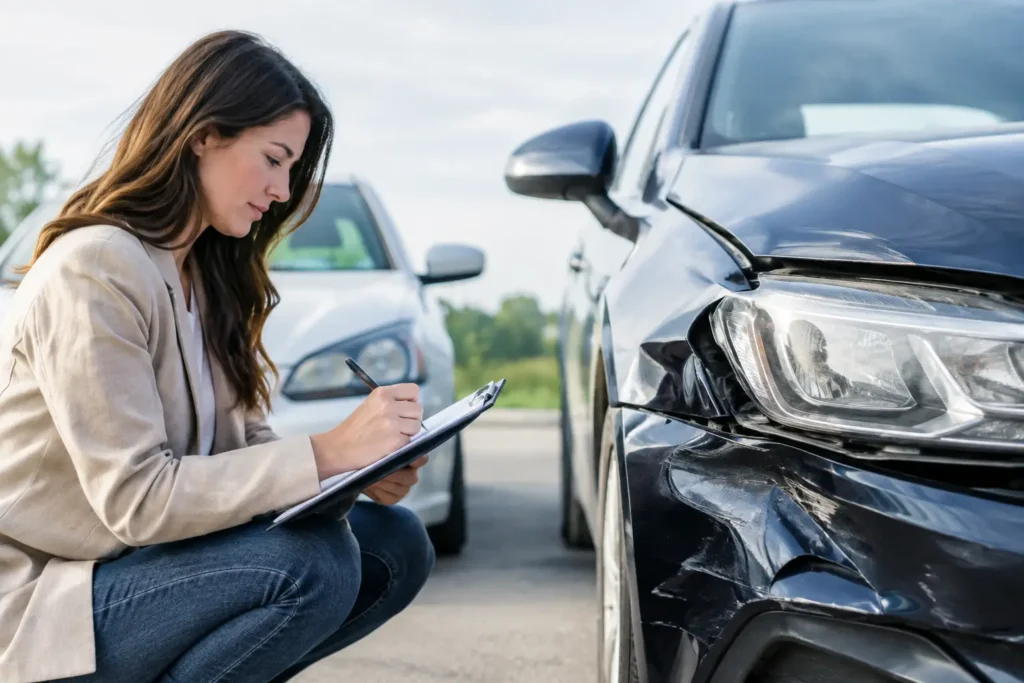
A collision can turn an ordinary drive through Cathedral City or the Coachella Valley into a stressful series of decisions. The best post collision action checklist gives you a clear order of operations: protect people first, preserve the facts, begin the claim correctly, and make sure the vehicle is repaired safely rather than hurried back on the road.
Best Post Collision Action Checklist: Start at the Scene
1. Stop, assess the area, and check for injuries
Pull over as safely as possible, turn on your hazard lights, and check yourself, your passengers, and anyone else involved for injuries. Call 911 immediately if anyone is hurt, if traffic is blocked, or if the crash presents a danger to others.
Do not assume that a low-speed impact means no one needs medical attention. Pain and stiffness can appear later, especially after a rear-end collision. If you are able, move away from active traffic and wait in a safe location.
2. Call law enforcement when the situation requires it
A police report can provide an important record of what occurred, particularly when there are injuries, significant vehicle damage, suspected impairment, an uncooperative driver, or disagreement about the events. Follow the instructions of responding officers and ask how to obtain the report number.
For a minor crash on private property or in circumstances where officers do not respond, document the scene carefully and exchange information. California reporting requirements can vary based on the circumstances, so it is wise to speak with your insurer promptly about what documentation is needed.
3. Exchange information, but avoid assigning blame
Collect the other driver’s name, phone number, address, driver’s license number, insurance carrier, policy number, vehicle plate number, and vehicle description. If there are passengers or witnesses, get their names and contact information as well.
Keep the conversation calm and factual. You do not need to debate fault at the roadside or apologize for something you do not yet fully understand. Statements made in the stress of the moment can be incomplete or misunderstood later. Share the necessary information, cooperate with authorities, and let the evidence and insurers handle the investigation.
4. Take thorough photos and notes
Photos are often the most useful record from the first few minutes after a collision. Capture wide shots showing vehicle positions, nearby intersections, lane markings, traffic signals, weather conditions, and road debris. Then take close photos of damage to every vehicle, including bumpers, panels, lights, wheels, and visible fluid leaks.
Make a short note while details are fresh. Include the date, time, location, direction of travel, what you saw, and the names of officers or witnesses. If the other driver provides an insurance card, photograph it after confirming that the information is readable.
Protect Your Vehicle Before More Damage Occurs
5. Decide whether the vehicle is safe to drive
A car can look mostly intact and still be unsafe. Do not drive if you see leaking fluid, a damaged wheel or tire, loose body panels, a broken headlight or taillight, smoke, an airbag warning light, or signs that the steering pulls or feels unstable. A bumper that appears cosmetic may be hiding damage to sensors, brackets, cooling components, or impact-absorbing materials.
If there is any doubt, arrange towing instead of taking chances on busy roads. This is especially practical after a collision in the desert heat, where an unseen radiator or cooling-system issue can quickly become a larger problem. Keep towing receipts and confirm where the vehicle is being taken before it leaves the scene.
6. Notify your insurance company promptly
Report the incident to your insurer as soon as you reasonably can. Provide the facts, the claim number if one has already been assigned, photos, the police report information, and the other driver’s details. Prompt reporting helps start the claim process and reduces the chance that paperwork delays repairs.
You can choose the repair facility that works on your vehicle. An insurer may recommend a shop within its network, but the decision is yours. A qualified independent collision repair facility can explain visible and hidden damage, provide a detailed estimate, and coordinate directly with the insurance company while you remain informed.
Choose Repairs Based on Safety, Not Just Appearance
7. Get a complete collision repair estimate
A reliable estimate should cover more than the dent you can see. Modern vehicles are built with layered safety systems, cameras, sensors, advanced driver-assistance features, structural components, and carefully engineered crumple zones. Damage behind a bumper cover or under a fender may not be visible until disassembly begins.
Ask the repair facility to explain what is known at the initial inspection and what may require further evaluation. Supplements are not automatically a red flag. They are often necessary when hidden damage is found after the vehicle is taken apart. The key is transparency: you should understand why additional repairs are needed and how they affect timing and insurance approval.
8. Ask how the shop will restore safety systems
Quality collision repair is not simply paint and bodywork. Depending on the impact, your vehicle may need frame or unibody measurement, suspension inspection, wheel alignment, airbag-system evaluation, or calibration of cameras and sensors. These procedures matter because a vehicle that looks good but does not respond correctly in an emergency is not fully repaired.
Ask whether the technicians are trained for collision work, how measurements and repairs are documented, and whether required calibrations will be performed after repairs. I-CAR and ASE-certified technicians, proper equipment, and manufacturer-informed repair procedures offer meaningful reassurance when your family’s safety is involved.
9. Keep your claim records in one place
Save the claim number, adjuster contact details, estimates, repair authorization, towing invoice, rental paperwork, photos, and all repair updates. A simple folder on your phone or a paper file can prevent frustrating searches later.
If you need a rental vehicle, ask early about coverage limits and the expected repair timeline. Rental arrangements depend on your policy and the circumstances of the claim, so getting clear answers at the beginning helps you plan for work, school, appointments, and family responsibilities.
Before You Accept the Vehicle Back
10. Review the completed repair and ask questions
When the repair is finished, take a few minutes to walk around the vehicle with the repair team. Check the paint color and finish in good light, panel alignment, trim, lights, doors, trunk or liftgate operation, and the overall cleanliness of the interior and exterior. Confirm that warning lights are addressed and that any driver-assistance features affected by the collision have been checked or calibrated as required.
Ask for an explanation of the work completed and retain the final invoice and warranty information. If something does not look or feel right, speak up before leaving. A professional shop should welcome the question and explain the next step clearly.
A Better Next Step After a Coachella Valley Collision
Not every collision creates the same repair plan. A minor parking-lot dent may need a straightforward cosmetic solution, while a freeway impact can require structural measurement, parts replacement, paint refinishing, and safety-system calibration. What should not change is the standard of care: clear communication, accurate documentation, and repairs designed to return the vehicle to pre-accident condition.
For drivers in Cathedral City, Palm Springs, Palm Desert, Rancho Mirage, and surrounding communities, CatCity Auto Body can help remove the confusion after an accident with a free estimate, insurance claim coordination, rental assistance, and certified collision repair. Once everyone is safe, make the call that gives you dependable information and a repair plan you can trust.