A bumper can look nearly untouched after a parking-lot impact, while the components behind it have absorbed the force. That is why knowing the top signs hidden collision damage can cause matters after any accident, even one that seems minor. A prompt inspection can identify problems before they affect how your vehicle steers, brakes, protects passengers, or holds up in a future collision.
For drivers in Cathedral City and across the Coachella Valley, a vehicle is often essential for work, appointments, family errands, and daily travel. Do not let a clean-looking exterior persuade you that everything underneath is fine.
Why Hidden Collision Damage Is Easy to Miss
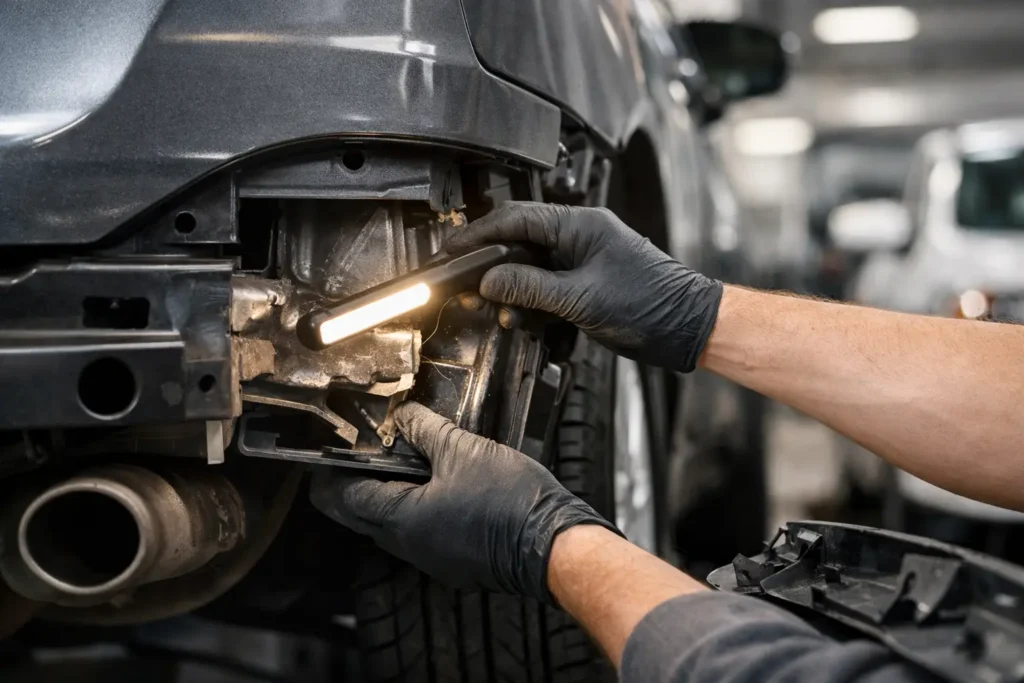
Modern vehicles are designed to manage crash energy through bumpers, reinforcement bars, crumple zones, sensors, brackets, and structural components. That engineering helps protect occupants, but it also means damage may occur behind panels that spring back into place or show only a small scratch.
Low-speed impacts can still shift mounting points, crack plastic retainers, bend brackets, or disturb safety-system sensors. The severity depends on where the vehicle was hit, the angle of impact, vehicle height, speed, and whether another vehicle, curb, pole, or roadside object was involved. A rear-end tap and a front-corner impact can create very different concerns, even when the visible damage appears similar.
7 Top Signs of Hidden Collision Damage to Check
1. Uneven Panel Gaps or Misaligned Body Parts
Look at the spaces around the hood, trunk, doors, headlights, grille, and bumper. Consistent gaps are usually a good sign. If one side has a noticeably wider space, a panel sits higher than the other, or the hood no longer latches smoothly, something beneath the surface may have shifted.
A bumper cover can also appear intact while its internal supports are damaged. Do not force a door, hood, or trunk that suddenly sticks. The issue may be a bent hinge, latch support, or body alignment problem that needs professional attention.
2. New Pulling, Wandering, or an Off-Center Steering Wheel
After a collision, pay close attention to how the vehicle behaves on a level, straight road. If it pulls to one side, feels unsettled, drifts, or requires repeated steering correction, the impact may have affected alignment, suspension, steering components, or the vehicle structure.
An off-center steering wheel is another practical clue. Alignment can sometimes correct the concern, but an alignment alone does not answer every question. A qualified collision repair inspection determines whether a bent wheel, damaged control arm, shifted subframe, or other underlying issue is causing the symptom.
3. Vibration, Shaking, or Unusual Road Noise
A vibration in the steering wheel, floor, or seat that starts after an accident deserves attention. It may come from a wheel or tire issue, but it can also point to damaged suspension parts, a bent rim, driveline concerns, or a component that is no longer securely mounted.
Listen for rattles, clunks, scraping, or wind noise as well. A loose splash shield, broken bumper retainer, displaced wheel-well liner, or damaged underbody panel may not look serious at first. Left unaddressed, loose parts can worsen, interfere with nearby components, or become a road hazard.
4. Warning Lights That Appear After the Impact
A dashboard warning light should never be dismissed as a coincidence after a crash. Check-engine, airbag, traction-control, anti-lock brake, parking-assist, and collision-warning alerts can indicate that sensors or wiring were affected.
Many newer vehicles use cameras, radar units, and sensors behind bumpers, mirrors, windshields, and grilles. Even a small shift in position can affect their accuracy. These systems may require diagnostic testing and calibration after repair. Clearing a warning light without identifying the cause is not a repair and can leave a safety feature unavailable when you need it.
5. Fluid Leaks or New Smells
Check the ground beneath your parked vehicle, especially in the first few days after an accident. Clear water from air conditioning is often normal, but colored, oily, or sweet-smelling fluid is reason to schedule an inspection. Depending on its location and appearance, a leak could involve coolant, engine oil, transmission fluid, brake fluid, power steering fluid, or windshield-washer fluid.
New odors matter too. A burning smell may come from a tire rubbing against a damaged liner or from material contacting a hot component. A fuel smell needs immediate attention. If you suspect a fuel, brake-fluid, or coolant leak, avoid unnecessary driving and arrange for safe transport instead.
6. Tires Wearing Unevenly or Sitting at an Odd Angle
After a side impact, curb strike, or pothole-related collision, inspect the tires and wheels. A tire that appears tilted, sits farther forward or backward in the wheel opening, or begins wearing unevenly can signal suspension or alignment damage.
Also check for sidewall cuts, bulges, rim cracks, and loss of tire pressure. Cosmetic wheel damage is common, but a damaged wheel can affect tire sealing and safe handling. Because tires are the vehicle’s connection to the road, this is not a concern to postpone for long commutes or high-speed driving.
7. Trunk, Door, or Interior Problems After the Crash
Hidden damage is not limited to the engine bay or undercarriage. A trunk that leaks, a door that whistles at highway speed, a window that no longer moves correctly, or a seat that will not adjust as it should may indicate shifted body panels, damaged seals, wiring concerns, or impact-related component damage.
After a rear collision, inspect the trunk floor and spare-tire area for moisture, wrinkles, cracked seam sealer, or displaced trim. After a front collision, check whether headlights, turn signals, and daytime running lights operate normally. These details help a repair professional understand where force traveled through the vehicle.
What to Do After You Notice a Possible Problem
Take clear photos of visible damage, warning lights, fluid spots, and uneven gaps. Make a short note of when you first noticed pulling, noise, vibration, or other changes. This information is useful when discussing the repair with your insurer and collision repair facility.
Avoid trying to bend parts back, reset warning lights, or cover a leak before the vehicle is inspected. A temporary cosmetic fix can hide useful evidence and may make a proper repair more difficult. If the vehicle has steering trouble, braking changes, active safety warnings, tire damage, or a suspected fluid leak, it is wiser not to drive it until a professional evaluates it.
A complete estimate should go beyond the scratch or dent you can see. It may include a visual inspection, diagnostic scanning, measurements, and, when necessary, partial disassembly to identify damage behind the bumper or panel. This process can reveal additional repairs after the initial estimate, but that is often a sign the shop is documenting the full scope of accident-related damage rather than guessing from the outside.
Choose a Repair Process That Protects More Than Appearance
Quality collision repair is about restoring fit, function, and safety – not simply making a damaged area look better. The right repair may involve frame or unibody measurement, suspension inspection, replacement of damaged energy-absorbing parts, sensor calibration, refinishing, and final quality checks. What is required depends on the vehicle and the impact, which is why each accident deserves individual attention.
At CatCity Auto Body, certified technicians provide detailed estimates and explain the repair process in clear terms, so local drivers can make informed decisions without added stress. Insurance coordination, rental assistance, and repair updates can also help reduce the disruption an accident creates.
If your vehicle does not feel, sound, or operate the way it did before the accident, trust that instinct. A timely professional inspection can turn an uncertain drive into a clear plan for safe, dependable repairs.