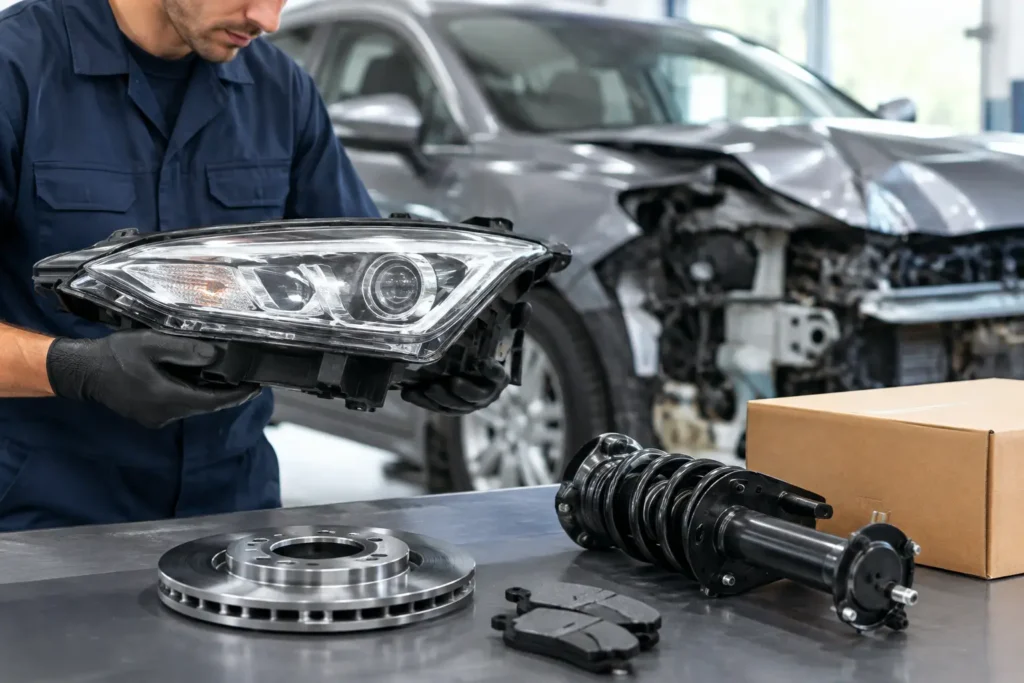
After a collision, the part that looks like a simple bumper cover, headlight, or fender may affect far more than your vehicle’s appearance. OEM parts are made by, or for, your vehicle’s original manufacturer and are designed to match its intended specifications. For drivers in Cathedral City and throughout the Coachella Valley, understanding when these parts matter can make repair decisions less stressful and help protect the safety, performance, and value of the vehicle you depend on every day.
What OEM Parts Mean for Collision Repair
OEM stands for Original Equipment Manufacturer. In practical terms, an OEM replacement part is designed for the exact make, model, and often the specific trim level of your vehicle. It is intended to have the same dimensions, attachment points, materials, and performance standards as the part installed when the vehicle was new.
That does not mean every repair automatically requires an OEM part. Collision repair is not a one-size-fits-all process. A minor cosmetic repair on an older vehicle may have different needs than front-end damage on a late-model SUV equipped with cameras, radar sensors, adaptive headlights, and parking-assist technology.
The right decision begins with a complete inspection. A trusted collision repair facility should identify visible damage, check for hidden damage behind panels, review manufacturer repair procedures, and explain the available part options in plain language. The goal is not simply to make a damaged area look better. It is to restore the vehicle as closely as possible to its pre-accident condition.
Why OEM Parts Can Matter After an Accident
Modern vehicles are engineered as connected systems. A bumper is no longer just a painted exterior panel. Depending on the vehicle, it may support energy absorbers, sensors, brackets, wiring, cameras, and safety features that need precise positioning to work correctly.
OEM parts can offer a stronger level of confidence when fit, safety-system compatibility, corrosion protection, or structural performance is especially important. Because the part is made to the manufacturer’s specifications, technicians generally have a clearer starting point for installation, alignment, and calibration.
Fit and finish are more than cosmetic details
A panel that does not fit correctly can create uneven gaps, wind noise, water leaks, rubbing, or difficulty opening a door, hood, or trunk. Paint may also blend differently if the surface shape or material does not match the original design.
A quality aftermarket part can fit well in some situations, but quality varies by manufacturer and application. If additional adjustment is needed, labor costs can rise and the final result may still fall short of the intended factory appearance. OEM parts are often the preferred choice for highly visible panels, lighting assemblies, and components where exact fit supports both appearance and function.
Safety systems depend on proper placement
Advanced driver-assistance systems require particular attention after a collision. Cameras, blind-spot monitors, radar units, airbags, seat belt components, and impact sensors may require inspection, replacement, programming, or calibration. The repair process must follow the vehicle manufacturer’s procedures, regardless of which part is selected.
An OEM bumper reinforcement, sensor bracket, grille, or headlamp assembly may be specified or strongly preferred where it affects the placement and operation of these systems. The technician’s responsibility is to verify the repair requirements for that specific vehicle, rather than assume that one approach works for every car.
Material quality and long-term durability
Original parts may use specific steel grades, aluminum construction, plastics, coatings, sound-deadening materials, or mounting hardware. These details can affect corrosion resistance, durability, noise levels, and how a component responds in a future impact.
That said, OEM does not automatically mean it is the only acceptable option. Some certified aftermarket parts are manufactured to recognized quality standards and can be a sensible choice for certain repairs. The key is matching the part to the repair plan, the vehicle’s needs, and the owner’s priorities.
OEM, Aftermarket, and Recycled Parts: Understanding the Difference
A detailed estimate may include several part categories. Knowing the terms helps you have a more productive conversation with your repair facility and insurance company.
OEM parts are new parts made by or authorized for the vehicle manufacturer. Aftermarket parts are new parts made by companies other than the original manufacturer. They are often less expensive, but their fit, material, finish, and warranty can differ by supplier. Recycled, sometimes called salvage or used, parts are original manufacturer parts removed from another vehicle. They can be a practical option for items such as doors, wheels, or trim when condition, color, and availability are appropriate.
Each category involves trade-offs. OEM parts may cost more and can occasionally take longer to obtain. Aftermarket parts may help control repair costs, especially for non-critical cosmetic damage, but should be assessed for quality and fit. Recycled OEM parts can provide original fit at a lower price, though their availability depends on the market and their condition must be carefully verified.
A professional estimate should identify the type of part proposed whenever possible. If you are unsure why a particular part was selected, ask. Clear answers are part of a transparent repair process.
How Insurance Coverage Affects Part Choices
Many drivers assume insurance always pays for new OEM parts. In reality, coverage depends on the policy language, the age and condition of the vehicle, state requirements, the insurance carrier’s repair guidelines, and the circumstances of the claim.
An insurer may write an estimate using aftermarket or recycled parts to return a vehicle to its pre-loss condition at a reasonable cost. Some policies include an OEM parts endorsement, which may provide broader coverage for original manufacturer parts. Others may only consider OEM parts under certain conditions, such as when an aftermarket equivalent is unavailable or when the vehicle is very new.
You still have a voice in the repair. If OEM parts are important to you, tell the repair facility and your insurer early in the process. Ask whether your policy includes OEM coverage, whether the manufacturer specifies an OEM component for the repair, and whether there would be an out-of-pocket difference. A good shop can document repair needs, communicate directly with the insurer, and explain the estimate without turning the process into a guessing game.
A Repair Plan Should Be Based on Your Specific Vehicle
The best part decision is made after the vehicle is inspected, not before. Vehicle age, mileage, trim level, damage location, safety equipment, part availability, and your insurance coverage all matter.
For example, a new luxury vehicle with a damaged adaptive headlight may call for an OEM assembly and manufacturer-required calibration. A ten-year-old commuter vehicle with a lightly damaged non-structural exterior trim piece may be well served by a quality alternative. Neither choice is automatically right in every situation.
At CatCity Auto Body, certified technicians evaluate collision damage using the proper repair procedures and explain the estimate before work moves forward. That includes discussing part options when they apply, coordinating with insurance carriers, and keeping customers informed while their vehicle is being repaired. For families, commuters, and retirees who need transportation back quickly, that clarity is every bit as valuable as the repair itself.
Questions Worth Asking Before Repairs Begin
You do not need to be an automotive expert to ask the right questions. Before authorizing repairs, ask what type of parts are listed on the estimate, whether any OEM components are required by the manufacturer, and whether your vehicle will need scanning or calibration after repair.
It is also reasonable to ask about part warranties, expected availability, paint and corrosion protection, and how any newly discovered damage will be handled. Collision damage is often hidden behind bumpers, fenders, and interior panels, so supplements to the original estimate can be necessary. The important thing is that the repair facility communicates the reason for the change and obtains the appropriate approval before proceeding.
Frequently Asked Questions About OEM Parts
Are OEM parts always better than aftermarket parts?
Not always. OEM parts are designed to manufacturer specifications and can be the strongest choice where fit, safety features, appearance, or manufacturer procedures are critical. A high-quality aftermarket part may be appropriate for certain non-critical repairs. The proper choice depends on the vehicle and damage.
Can I request OEM parts for my repair?
Yes. You can request them, although insurance payment depends on your policy and claim details. Your repair facility can help explain the estimate, identify manufacturer requirements, and discuss any cost difference before repairs begin.
Will OEM parts protect my vehicle’s resale value?
They may support buyer confidence, especially on newer or higher-value vehicles, but resale value is influenced by many factors, including accident history, repair quality, documentation, mileage, and overall condition. A safe, properly documented repair is always the priority.
After an accident, the quickest answer is not always the best answer. Take the time to review your estimate, understand the parts being proposed, and choose a repair team that treats safety, fit, and clear communication as part of the same promise. A free, detailed estimate can give you a practical path forward before the repair process begins.