
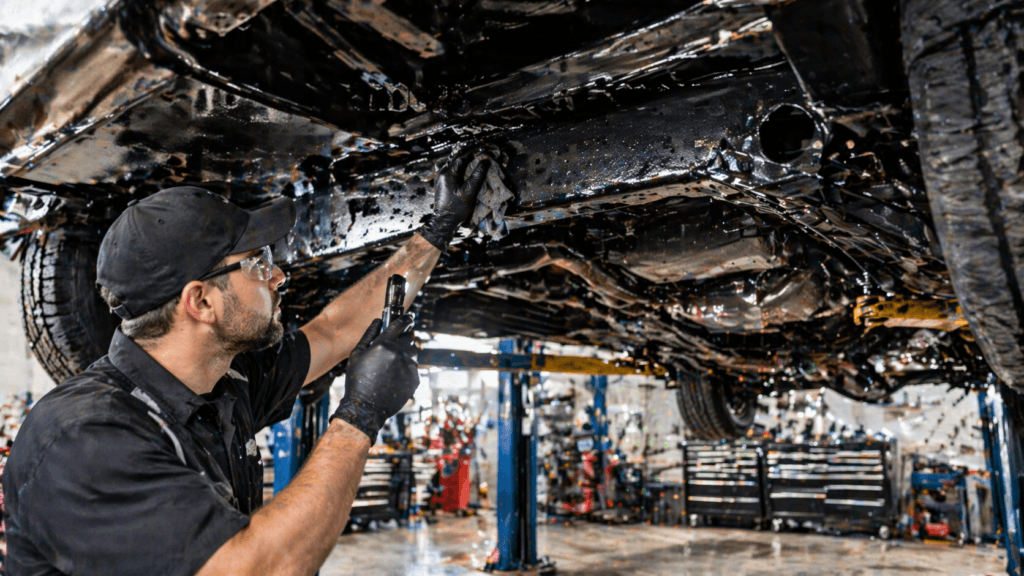
Your vehicle’s engine gets regular oil changes. Your tires get rotated. Your brakes get inspected. But when was the last time you thought seriously about your car frame care?
For most drivers, the answer is never — and that’s completely understandable. The frame is invisible in everyday driving. It doesn’t make noise when it needs attention, it doesn’t trigger a dashboard warning light, and it doesn’t have a manufacturer-recommended service interval printed in your owner’s manual. It simply does its job, quietly and continuously, holding everything together and protecting you every time you get behind the wheel.
But that invisibility comes with a risk. Because frame maintenance doesn’t announce itself as a necessity the way an oil change does, it tends to get overlooked until something goes wrong — and by the time a frame problem is obvious, it has almost always been developing for a long time. The consequences of neglecting your vehicle’s frame range from premature wear on tires and suspension components to compromised crash safety to structural failures that make a vehicle genuinely dangerous to drive.
Vehicle durability over the long term is inseparable from the health of the frame. Understanding what frame maintenance involves, what threatens your frame’s integrity, and what best practices keep it in peak condition is one of the most valuable things a car owner can invest time in learning.
Understanding Your Vehicle’s Frame
Before getting into maintenance practices, it’s worth establishing a clear picture of what your vehicle’s frame actually is and what it does — because the answer varies depending on what you drive.
Body-on-Frame Construction
Trucks, full-size SUVs, and some larger vehicles use a body-on-frame design — a separate, rigid steel chassis onto which the vehicle’s body is mounted. This ladder-style frame is robust and well-suited to heavy-duty use, towing, and off-road conditions. It’s also relatively straightforward to inspect and repair, since the frame and body are separate components.
Car frame care for body-on-frame vehicles centers on protecting the chassis rails, crossmembers, and mounting points from corrosion, physical damage, and fatigue — all of which are highly accessible for inspection and treatment.
Unibody Construction
The majority of modern passenger cars, crossovers, and many SUVs use unibody construction, where the body and frame are integrated into a single welded structure. There is no separate chassis — the floor pan, pillars, roof rails, and body panels all work together as a unified load-bearing system.
Unibody frame maintenance is somewhat more complex because the structural components are distributed throughout the vehicle and integrated with body panels. Damage or corrosion in one area can affect the behavior and integrity of adjacent structural zones in ways that aren’t always immediately apparent.
Regardless of which type of construction your vehicle uses, the principles of good car frame care — protecting against corrosion, monitoring for damage, addressing issues promptly, and working with qualified professionals — apply equally.
What Threatens Your Vehicle’s Frame
Effective frame maintenance starts with understanding the threats. Several factors work against your frame’s long-term integrity, and many of them are easy to underestimate.
Corrosion
Rust is the most pervasive and destructive threat to any vehicle frame. Steel — the primary material in virtually all vehicle frames — is inherently vulnerable to oxidation when protective coatings are compromised and bare metal is exposed to moisture and oxygen.
For drivers in Cathedral City and the Coachella Valley, rust may seem like someone else’s problem. But desert climates present their own rust-promoting conditions — seasonal humidity, temperature cycling that causes condensation, and constant sand abrasion that wears through protective undercoating over time.
Frame corrosion that begins as surface rust can progress through the metal layers to become structural rust — a condition where the metal itself has been eaten away, reducing its thickness, strength, and ability to perform its load-bearing function. In advanced cases, structural rust can cause frame components to crack or fail under loads they would otherwise handle without issue.
Car frame care that prioritizes corrosion prevention — through regular undercoating, inspection, and prompt treatment of early rust — is fundamentally about keeping this progression from ever reaching the structural stage.
Impact Damage
Collisions are the most obvious source of frame damage, but they’re not the only one. Impacts from road debris, severe potholes, off-road driving, and even repeated minor curb strikes can introduce stress and deformation into frame components over time.
Unlike collision damage, which tends to be sudden and significant enough to be noticed, incremental impact damage accumulates gradually. Each individual event may seem minor — a jarring pothole, a hard landing on a rough road — but the cumulative effect on frame geometry and metal fatigue can be meaningful, particularly in vehicles that accumulate high mileage over years of demanding driving conditions.
Metal Fatigue
Even without visible damage or corrosion, metal subjected to repeated cyclical stress will eventually develop microscopic cracks that can propagate over time. This phenomenon — metal fatigue — is a natural consequence of the constant flexing and loading that a vehicle frame experiences in normal operation.
Fatigue is more of a concern in older, high-mileage vehicles, and it’s accelerated by driving conditions that subject the frame to repeated high stress — rough roads, heavy loads, frequent towing. While metal fatigue in a well-maintained frame is unlikely to become a safety issue under normal driving conditions, it underscores why periodic professional inspection becomes increasingly important as a vehicle ages.
Improper Repairs
One of the most underappreciated threats to long-term vehicle durability is a prior repair performed incorrectly. A frame that has been straightened improperly, welded in the wrong location, or repaired with non-OEM-approved techniques may look fine on the surface while having compromised structural integrity that won’t reveal itself until a subsequent collision — at the worst possible moment.
This is why the quality of any frame repair work your vehicle receives matters enormously for its long-term health, not just its immediate appearance.
Best Practices for Long-Term Frame Maintenance
With the threats clearly understood, here are the core best practices that protect your vehicle’s frame and support genuine vehicle durability over the long term.
Schedule Regular Professional Undercarriage Inspections
The frame cannot be effectively maintained without being seen, and most of it isn’t visible without getting the vehicle off the ground. A professional undercarriage inspection performed periodically — at minimum annually, and more frequently for older vehicles or those driven on demanding roads — gives trained eyes access to the frame surfaces, joints, and undercoating that you can’t evaluate from a standing position.
During a professional inspection, technicians look for early-stage rust formation, cracks in welds or metal surfaces, damage to undercoating and frame coatings, deformation in structural members, and any signs of prior repairs that may need evaluation. Catching issues at this stage, before they progress, is the foundation of effective frame maintenance.
Maintain and Renew Undercoating
Factory undercoating applied during manufacturing provides meaningful initial protection, but it doesn’t last indefinitely. Heat, abrasion, UV exposure, and the general wear of driving gradually degrade undercoating over time, and chips or cracks in the coating expose the bare metal beneath.
Professional undercoating renewal — applying a fresh layer of rubberized or oil-based coating over the undercarriage — is one of the highest-impact car frame care investments available. It seals the frame and surrounding structural components from moisture, oxygen, and abrasive debris, extending the life of the metal beneath it significantly.
For desert vehicles, the sand abrasion factor makes undercoating maintenance particularly important. The Coachella Valley’s fine road grit is highly effective at wearing through protective coatings, making more frequent inspection and reapplication appropriate compared to vehicles driven primarily on paved urban roads.
Address Paint Chips and Surface Damage Promptly
On the visible body panels that form part of the unibody structure, paint damage is the first line of compromise. A chip or scratch that reaches bare metal is the starting point for corrosion that can eventually penetrate to structural layers. Addressing paint damage promptly — with professional touch-up application or panel refinishing as appropriate — closes this vulnerability before it has a chance to develop.
This aspect of frame maintenance is easy to deprioritize because paint damage seems cosmetic. But in the context of a unibody vehicle, where body panels and structural components are one integrated system, cosmetic surface protection and structural protection are directly connected.
Keep the Vehicle Clean — Including the Undercarriage
Regular washing removes the environmental contaminants that accelerate frame corrosion — road grime, organic material, and any chemical residues from road surfaces. Equally important is periodic undercarriage washing, which is easy to overlook but highly effective at removing the accumulated debris that traps moisture against frame surfaces.
Many professional car washes offer undercarriage spray as a standard or add-on service. For drivers serious about car frame care, this should be a regular part of their vehicle cleaning routine, not an occasional afterthought.
Monitor Alignment and Suspension for Frame Signals
Your vehicle’s wheel alignment and suspension behavior are sensitive indicators of frame condition. Pulling to one side, uneven tire wear, vibration, or handling changes that develop gradually can all signal that something has shifted in the vehicle’s structural geometry — whether through collision damage, fatigue, or corrosion-related weakening of mounting points.
Paying attention to these signals and having them professionally investigated promptly is an important part of frame maintenance. What presents as a handling issue may have a structural root cause that needs to be addressed before it progresses further.
Have Frame Repairs Done Right — Every Time
If your vehicle sustains collision damage that affects the frame, the quality of the repair matters as much for the vehicle’s future as it does for its immediate condition. A properly performed frame repair — using manufacturer-approved procedures, precision measuring equipment, and qualified technicians — restores the vehicle’s structural geometry, strength, and crash performance.
An improperly performed repair may restore the vehicle’s appearance while leaving its structural integrity compromised. For vehicle durability over the long term, there is no substitute for frame repairs performed correctly by certified, properly equipped professionals.
Signs Your Frame May Need Attention Right Now
Not every frame issue develops slowly enough to be caught during a scheduled inspection. Knowing the warning signs that indicate your frame may need immediate professional evaluation is just as important as preventative care.
Visible Rust on Lower Panels and Wheel Wells
Rust bubbling on lower panels, rocker panels, or wheel wells — particularly if the metal feels soft or spongy when pressed — suggests corrosion has progressed to a stage requiring immediate professional assessment. Surface bubbling is almost always an indicator that more significant corrosion is present beneath the paint layer.
Persistent Pulling Despite Fresh Alignment
If your vehicle pulls consistently to one side despite correct tire inflation and a recent wheel alignment, the cause may be structural rather than mechanical. Persistent pulling after alignment correction suggests a geometry issue rooted in the frame itself — something that requires structural evaluation, not further alignment adjustment.
Unusual Creaking or Groaning From the Structure
Creaking or groaning sounds from the vehicle’s structure during normal driving — particularly over uneven surfaces — can indicate fatigue cracks, weakened welds, or corrosion-related structural compromise. These sounds should never be dismissed as normal vehicle noise, especially in older or high-mileage vehicles.
Doors or Trunk Lids That No Longer Align Correctly
Doors or trunk lids that no longer align, close correctly, or seal properly can signal frame deformation — either from an unaddressed collision or from gradual structural change. Any of these signs warrants prompt professional inspection rather than deferred maintenance.
CatCity Auto Body: Expert Frame Care in Cathedral City
At CatCity Auto Body, Inc., we understand that vehicle durability is built on structural integrity — and that structural integrity requires consistent, expert frame maintenance throughout a vehicle’s life. Our team has over 20 years of experience working with every type of vehicle frame and construction, and we bring that expertise to every inspection, repair, and preventative service we perform.
Whether your vehicle needs a professional undercarriage inspection, undercoating renewal, corrosion treatment, or precision frame repair following a collision, CatCity Auto Body, Inc. has the equipment, certifications, and hands-on expertise to do the job correctly. We use computerized measuring systems to verify structural geometry, follow OEM-approved repair procedures, and hold ourselves to the highest standards of car frame care on every vehicle we touch.
Don’t wait for frame problems to announce themselves — by that point, they’ve already been developing for far too long. Call CatCity Auto Body, Inc. at 760-324-7117 to schedule a professional frame inspection and find out exactly where your vehicle stands. Serving Cathedral City and the entire Coachella Valley, we’re here to protect your vehicle’s structure, safety, and long-term value.
CatCity Auto Body, Inc. — Cathedral City’s trusted collision repair experts for over 20 years.