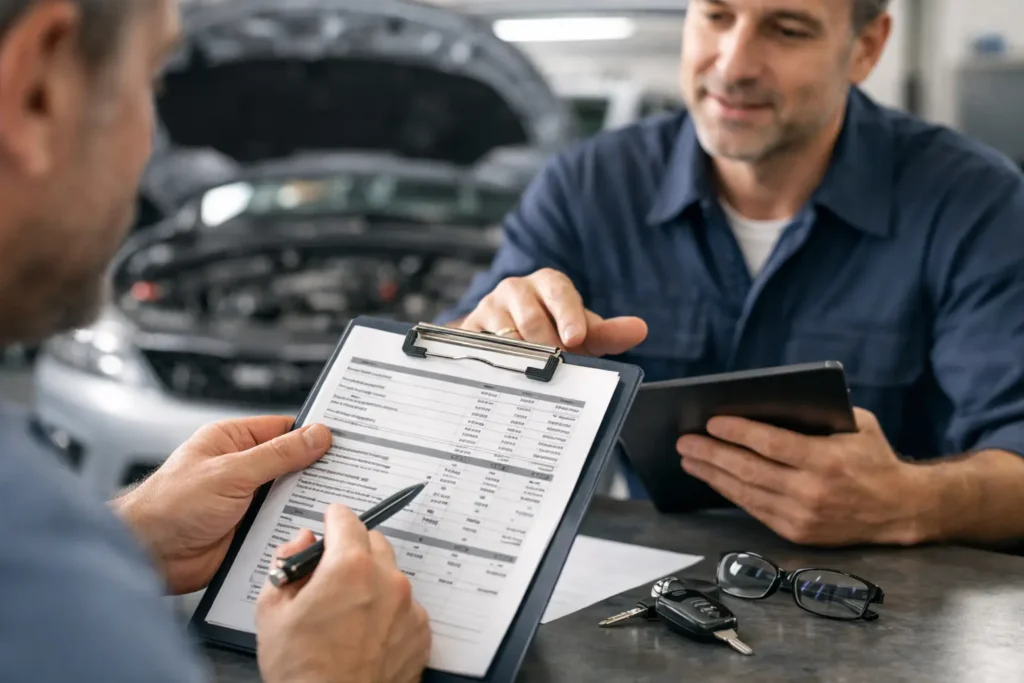
A collision estimate can look intimidating at first glance: rows of abbreviations, part numbers, labor times, paint calculations, and totals that may not match what you expected after an accident. Learning how to read repair estimates helps you make informed decisions, understand your insurance claim, and feel confident that your vehicle is being repaired safely rather than simply made to look better.
For drivers in Cathedral City and across the Coachella Valley, the most useful estimate is not necessarily the shortest or lowest-priced one. It is the one that clearly explains what was damaged, what work is required, which parts will be used, and what may change once repairs begin.
Start With the Vehicle and Claim Information
The top portion of an auto body estimate identifies the vehicle, customer, repair facility, and sometimes the insurance claim. Confirm that the year, make, model, VIN, mileage, and license plate are correct. A small error here can create confusion later, especially when ordering parts or working with an insurer.
If insurance is involved, you may also see a claim number, adjuster information, policyholder name, and deductible. Your deductible is the amount you are responsible for paying under your policy before insurance contributes to covered repairs. It is not an extra charge from the repair shop, and it should not be confused with the full repair total.
Look for the estimate date and expiration details as well. Parts pricing, labor rates, and availability can change, particularly for newer vehicles or vehicles with supply-chain delays.
How to Read Repair Estimates Line by Line
Most collision estimates are organized by vehicle area, such as the front bumper, left fender, hood, door, quarter panel, or rear body section. Under each area, you will find operations describing what the technician needs to do.
Common repair operations include:
- Replace means the damaged part will be removed and a new or recycled part will be installed.
- Repair means the existing part can be restored through metal work, dent repair, plastic repair, or refinishing.
- Remove and install, often shown as R&I, means a part is taken off to allow access for repair and then reinstalled.
- Remove and replace, sometimes shown as R&R, means an old part is removed and another part is installed in its place.
- Refinish covers the preparation, primer, color, and clear coat work needed to restore the painted surface.
These terms matter because they affect both cost and repair quality. A bumper cover with a minor scuff may be repairable, while a bumper with torn mounting points, internal damage, or compromised safety components may need replacement. The right choice depends on the damage, the manufacturer’s repair procedures, and the part’s role in vehicle safety.
Labor Hours Are Not the Same as Calendar Days
You will likely see labor categories with a number of hours beside each operation. Body labor covers structural or panel repair. Paint labor covers refinishing work. Mechanical labor may apply when suspension, cooling, steering, or other mechanical components were damaged. Frame or structural labor may appear when a collision affects the vehicle’s underlying structure.
Those hours are billed according to published labor rates, but they do not tell you exactly how many days your repair will take. A six-hour repair can require more than one day because the vehicle may need disassembly, paint curing time, parts delivery, quality checks, or insurer approval before work can proceed.
Ask the shop for an expected completion range rather than trying to calculate the finish date from labor hours alone. A trusted shop should explain the process and keep you updated if a part delay or hidden damage changes the schedule.
Understand Parts: OEM, Aftermarket, and Recycled
The parts section shows what will be replaced and what type of part is proposed. This is one of the most important areas to review with your repair facility and insurance company.
OEM parts are made by or for the vehicle manufacturer. They are designed to meet the manufacturer’s specifications and can be especially relevant for fit, finish, sensors, safety systems, and newer vehicles. Aftermarket parts are made by other manufacturers. Quality can vary, and some policies permit their use for certain repairs. Recycled or recycled OEM parts are original parts removed from another vehicle and may be appropriate when they are in good condition and meet the repair plan.
There is no universal answer for every repair. The appropriate part depends on your vehicle, the damaged area, part availability, insurer guidelines, warranty considerations, and manufacturer procedures. If the estimate uses an abbreviation you do not recognize, ask what it means and why that part type was selected.
Also check whether the estimate includes items that are easy to overlook, such as clips, brackets, moldings, emblems, sensors, absorbers, or one-time-use fasteners. These small components can be necessary for a proper repair, but they may not be visible until the damaged panels are removed.
Look Closely at Paint and Materials Charges
Paint work involves more than applying a matching color. A proper refinish process may include sanding, corrosion protection, primer, sealer, color application, clear coat, polishing, and final inspection. The estimate may list paint labor separately from paint and materials, which covers the coatings, masking supplies, sandpaper, solvents, and related products used during refinishing.
You may also see blend operations. Blending means refinishing an adjacent panel to create a consistent color transition. Even when only one panel was damaged, blending may be needed because factory paint changes over time from sun exposure, weather, and normal vehicle use. In the bright desert conditions common throughout Palm Springs, Palm Desert, and Rancho Mirage, color consistency can be especially noticeable.
A blend is not automatically unnecessary work. It is often the practical way to achieve a finish that does not leave a visible color difference at the repaired panel.
Watch for Calibration, Scans, and Safety Procedures
Many newer vehicles use advanced driver-assistance systems, including parking sensors, backup cameras, blind-spot monitoring, lane-assist features, radar, and automatic emergency braking. Even a relatively minor collision can affect components that support these systems.
Your estimate may include a pre-repair scan, post-repair scan, calibration, aiming, diagnostic time, or sublet operation. A sublet is work performed by a qualified outside provider, such as glass replacement, wheel alignment, mechanical repair, or specialized calibration.
Do not assume these are optional add-ons. When required by the vehicle manufacturer or indicated by diagnostic results, they are part of restoring the vehicle to safe operating condition. Ask which safety systems are affected, whether calibration is required, and how the shop will verify that those systems function correctly after repairs.
Know Why the First Estimate May Change
An estimate is an informed assessment based on visible damage. It is not always the final repair plan. Once a technician removes a bumper, fender, trim panel, or damaged component, additional damage may appear behind it. Bent brackets, broken retainers, damaged wiring, cracked reinforcements, or hidden structural issues are common examples.
When this happens, the shop prepares a supplement. A supplement documents the newly discovered damage, necessary operations, and additional parts or labor. If insurance is handling the claim, the repair facility typically sends the supplement to the insurer for review and approval.
A supplement does not mean the original estimate was careless. It often means the shop is following the correct process: documenting damage only after it can be properly inspected. What matters is communication. You should be told what was found, why it affects the repair, whether it changes your out-of-pocket cost, and whether it affects the expected completion date.
Questions Worth Asking Before You Approve Repairs
You do not need to become a collision repair expert to review an estimate well. You do need clear answers. Ask whether the estimate includes all known safety-related procedures, what type of replacement parts are planned, and whether any manufacturer-required calibrations are anticipated.
It is also reasonable to ask what happens if hidden damage is found, who will communicate with the insurance company, whether the repairs are guaranteed, and when you can expect updates. If an item is unclear, ask the estimator to point to the line and explain it in plain language. A detailed quote should reduce uncertainty, not create more of it.
At CatCity Auto Body, certified technicians help Coachella Valley drivers understand the repair plan, coordinate with insurers, and address the details that protect the vehicle’s appearance, performance, and safety. A free estimate is a starting point for an honest conversation about what your vehicle needs.
Before authorizing work, take a few minutes to compare the estimate with the visible damage, your insurance information, and your own questions. Clear explanations now can make the entire repair process feel far more manageable after an already stressful accident.