Taking your vehicle to an auto body shop can feel stressful, especially when the repair is the result of an accident. Knowing what to do before dropping off your car can make the process easier and help prevent unnecessary delays.
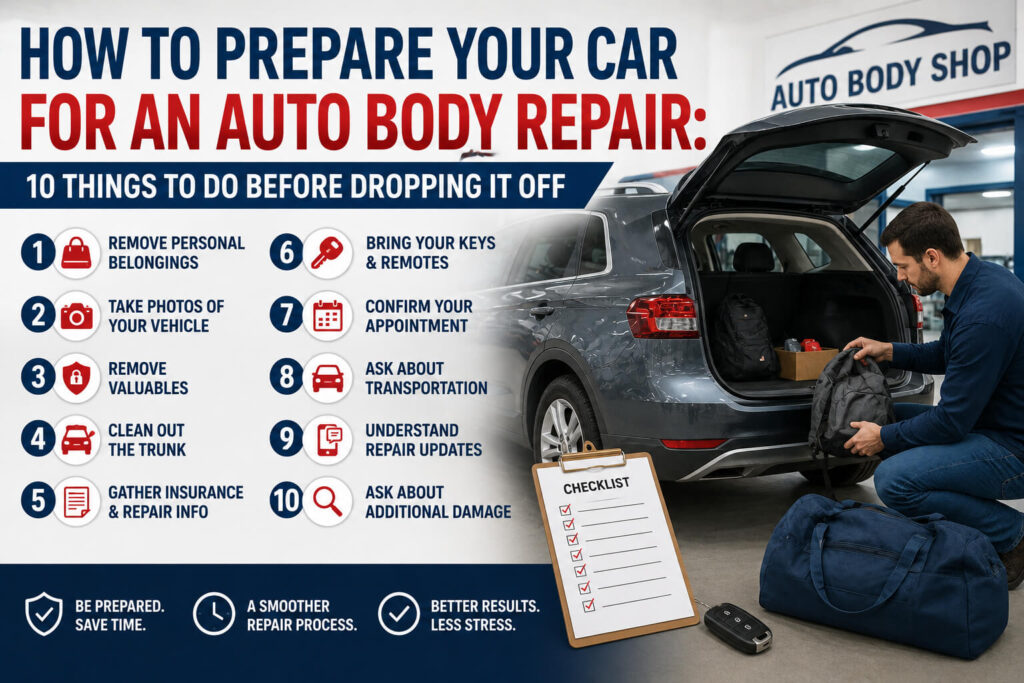
Before taking your car to an auto body shop, remove personal belongings, photograph the vehicle, gather your insurance and repair documents, remove valuables, confirm transportation arrangements, and ask the shop what to expect during the repair.
You don’t need to completely prepare the vehicle mechanically before bringing it in. The body shop will inspect the vehicle and determine what repairs are required.
However, a little preparation on your end can make a big difference.
Before your appointment, consider:
- Removing personal items from the cabin
- Cleaning out the trunk
- Taking photographs of the vehicle
- Removing valuables
- Gathering insurance information
- Bringing your keys and vehicle access devices
- Confirming your appointment
- Asking about rental transportation
- Understanding how repair updates will be provided
- Asking what happens if additional damage is discovered
For drivers in Cathedral City, CatCity Auto Body provides collision repair services for accident-related damage, along with specialized services for dents, paint, bumpers, fenders, and structural damage.
Why Should You Prepare Your Car Before Body Repair?
Auto body repairs can involve removing panels, trim, bumpers, lights, interior components, and other parts of the vehicle.
Personal belongings can get in the way or become misplaced while technicians are working around the vehicle.
Preparing the car also gives you an opportunity to document its condition before the repair begins.
This can be especially useful after an accident.
Taking photographs before dropping off the vehicle creates a record of:
- Existing damage
- Undamaged areas
- Personal belongings
- Fuel level
- Vehicle condition
The goal isn’t to make the shop’s job difficult or complicated.
It’s simply to make the handoff cleaner and give you a clear record of the vehicle’s condition.
10 Things to Do Before Taking Your Car to an Auto Body Shop
1. Remove Personal Belongings From the Vehicle
One of the most important things you can do is remove personal items.
Check:
- Glove compartment
- Center console
- Door pockets
- Under the seats
- Trunk
- Cargo area
- Cup holders
- Back-seat storage
- Spare-tire compartment
Don’t assume that small items will be safe just because technicians aren’t working directly inside the cabin.
Depending on the repair, technicians may need to move seats, remove trim, access wiring, or work around interior components.
Remove anything you don’t want left in the vehicle.
This includes:
- Sunglasses
- Chargers
- Cash
- Documents
- Electronics
- Tools
- Clothing
- Children’s items
- Personal paperwork
It’s also a good idea to remove anything valuable or irreplaceable.
2. Take Photos of Your Vehicle Before the Repair
Take clear photographs before dropping off the car.
Photograph the vehicle from several angles, including:
- Front
- Rear
- Driver’s side
- Passenger’s side
- Damaged area
- Wheels and tires
- Interior
- Trunk
- Dashboard
Take closer pictures of existing scratches, dents, or damage that is unrelated to the current repair.
Why?
Because you want a clear record of the vehicle’s condition when you handed it over.
Your photos don’t need to be professional.
Use your phone and make sure the images are clear enough to identify the vehicle and the condition of the affected areas.
If the damage involves dents, scratches, or damaged panels, you can also review CatCity’s dent repair service to understand the types of exterior damage a professional body shop can address.
3. Remove Important Documents and Valuables
Never leave unnecessary valuables in a vehicle that is going into a repair facility.
Remove:
- Wallets
- Cash
- Jewelry
- Laptops
- Tablets
- Cameras
- Important paperwork
- Spare keys
- Personal identification
If you normally keep registration or insurance documents in the glove box, check whether you need them for the repair appointment.
Bring only the documents the shop actually needs.
4. Clean Out the Trunk
The trunk is easy to overlook.
However, body repairs can sometimes involve access to areas around:
- Rear body panels
- Tail lights
- Trunk floor
- Spare-tire well
- Quarter panels
- Rear bumper
Remove unnecessary items before the appointment.
If your trunk contains:
- Sports equipment
- Groceries
- Tools
- Luggage
- Emergency supplies
- Work equipment
take them out unless the shop specifically asks you to leave something inside.
A mostly empty trunk makes it easier for technicians to access areas that may need inspection or repair.
5. Gather Your Insurance and Repair Information
If your repair is related to an accident, organize the information you already have.
This may include:
- Insurance claim number
- Insurance company information
- Adjuster’s contact information
- Accident date
- Police report information, when applicable
- Repair estimate
- Previous inspection information
- Other driver’s information
Having this information available can make communication easier.
You don’t necessarily need a large folder of paperwork.
A digital copy on your phone can also be useful.
The important thing is knowing where your information is when the shop asks for it.
If your vehicle needs accident-related work, you can also review CatCity’s collision repair service before your appointment to understand the types of repairs that may be involved.
6. Confirm Your Appointment Before Drop-Off
Before driving to the body shop, confirm:
- Appointment date
- Drop-off time
- Shop location
- Expected repair process
- Transportation arrangements
- Required documents
- Whether the vehicle needs to arrive with specific items
This simple step can prevent unnecessary trips.
If the shop has already ordered parts or scheduled technicians for the repair, arriving on the correct date can help keep the repair process organized.
7. Ask About Transportation or a Rental Car
If your vehicle will remain at the body shop for several days, transportation becomes important.
Ask the shop what options are available.
Depending on the repair facility and your insurance coverage, options may include:
- Rental vehicle assistance
- Local transportation
- Ride arrangements
- Pickup and delivery
- Personal transportation
Don’t wait until the day you drop off the vehicle to ask if you have transportation needs.
If you need a rental car for work, school, or family responsibilities, discuss it with the shop ahead of time.
8. Ask How You Will Receive Repair Updates
Before leaving your vehicle, ask how the shop communicates repair progress.
You may want to know:
- Who is your primary contact?
- How often will you receive updates?
- Will updates be sent by phone or text?
- Will the shop call when parts arrive?
- Will you be notified if the repair timeline changes?
- How will additional damage be communicated?
Clear communication can make the repair process much less stressful.
This is particularly helpful when repairs take longer than initially expected.
For example, a shop may discover additional damage after removing a bumper or damaged panel.
The repair plan may then need to change.
9. Ask What Happens If Hidden Damage Is Found
Don’t assume that the initial estimate will always identify every damaged component.
Some collision damage is hidden behind exterior panels.
For example, a damaged bumper can conceal:
- Broken brackets
- Reinforcement damage
- Sensor damage
- Wiring problems
- Energy absorbers
A front-end impact can also affect:
- Suspension
- Steering
- Cooling components
- Structural mounting points
Ask the shop what happens if additional accident-related damage is discovered during the repair.
This is particularly important for vehicles with more significant collision damage.
CatCity’s frame straightening service may be relevant when an accident has affected the vehicle’s structural components or mounting points.
10. Make Sure You Understand the Repair Plan
Before leaving the vehicle, make sure you understand the basic repair plan.
You don’t need to know every technical detail.
Ask about the major items:
- What panels are being repaired?
- What parts are being replaced?
- Will the vehicle be painted?
- Will paint blending be necessary?
- Is structural repair involved?
- Will the vehicle need alignment?
- Are diagnostic scans required?
- Could ADAS calibration be necessary?
- What is the expected repair timeline?
Understanding the plan gives you a better idea of what happens while your vehicle is in the shop.
If your vehicle needs refinishing after a collision, CatCity’s auto painting service can address damaged paint, repaired panels, and collision-related refinishing.
Should You Wash Your Car Before Body Repair?
You don’t necessarily need to have your vehicle professionally detailed before taking it to a body shop.
However, removing excessive dirt from the exterior can sometimes make it easier to identify scratches, dents, and other existing damage.
Don’t worry about making the vehicle perfect.
The body shop will prepare the repair areas as part of the repair process.
If you’re dealing with accident damage, the important thing is documenting the vehicle’s condition rather than making it look showroom-ready.
Should You Fill the Gas Tank Before Dropping Off Your Car?
Usually, there is no need to fill the fuel tank specifically for a body repair appointment.
However, keep enough fuel in the vehicle for normal transportation needs, especially if the shop needs to move or road-test the vehicle.
If the vehicle has very little fuel, let the shop know.
For electric and hybrid vehicles, make sure the shop is aware of any relevant charging or vehicle-specific considerations.
Should You Remove the License Plate?
Usually, no.
Leave the vehicle’s license plates installed unless the repair facility specifically tells you otherwise.
The shop may need the vehicle’s identification information during the repair process.
If you have personalized plate frames, specialty accessories, or other removable items that you are concerned about, ask the shop whether they should be removed before drop-off.
Should You Remove a Child Car Seat?
If you have a child safety seat installed, ask the shop whether you should remove it before dropping off the vehicle.
In many cases, removing personal equipment makes the vehicle easier for technicians to work around.
More importantly, you should not assume the shop is responsible for transporting or reinstalling personal child-safety equipment unless arrangements have been made.
If the vehicle requires interior work, removing the seat may be particularly helpful.
What Should You Bring to an Auto Body Shop?
The exact requirements vary, but you may need:
- Vehicle keys
- Insurance information
- Claim information
- Contact information
- Repair authorization
- Vehicle registration when requested
If your vehicle has multiple keys, key fobs, or special access devices, ask whether the shop needs all of them.
Don’t bring unnecessary personal belongings.
What Should You Not Leave in Your Car?
It’s best to remove anything valuable or personally important.
Examples include:
- Cash
- Jewelry
- Electronics
- Important documents
- Prescription items
- Work equipment
- Personal identification
- House keys
- Garage remotes
- Sensitive paperwork
Also remove items that could become damaged during repair.
A body shop is focused on repairing your vehicle, not storing your personal possessions.
Should You Document Existing Damage?
Yes.
This is especially important when your vehicle already has unrelated scratches, dents, paint damage, or other cosmetic issues.
Take photographs of:
- Existing dents
- Scratches
- Wheel damage
- Paint chips
- Interior damage
- Cracked glass
- Previous repairs
Good documentation creates a simple reference point for both you and the repair facility.
If you already have a dent or body-panel issue that is separate from the accident, ask whether professional dent repair can be handled during the same visit.
What Happens When You Drop Off Your Car?
The exact process varies by shop, but a typical drop-off may involve several steps.
Vehicle Check-In
The shop confirms your vehicle information and repair details.
Damage Review
The shop reviews the affected areas and documents the vehicle’s condition.
Documentation
Photographs and repair information may be recorded.
Repair Authorization
The appropriate paperwork is completed before work begins.
Disassembly
Depending on the repair, technicians may remove damaged components to inspect areas underneath.
Repair
The vehicle moves through the required body, mechanical, structural, paint, and finishing operations.
For major accident damage, this can include collision repair, structural work, paint refinishing, or other specialized procedures.
Quality Inspection
The completed repair is inspected before the vehicle is returned.
Can the Repair Take Longer Than Expected?
Yes.
Body repair timelines can change when technicians discover additional damage, parts become unavailable, or additional procedures are required.
For example, the original estimate might include a damaged bumper.
After removing it, the technician could discover damage to:
- Reinforcement
- Mounting brackets
- Sensors
- Wiring
That may require additional parts or repair operations.
Paint and refinishing work can also add time when:
- Multiple panels require repair
- Paint blending is needed
- Additional preparation is required
- Parts need refinishing
A change in timeline does not automatically mean something has gone wrong.
The important thing is that the shop communicates the reason for the change.
What Happens If Additional Damage Is Found?
Additional accident-related damage may result in a supplemental repair estimate.
The shop may:
- Document the newly discovered damage.
- Determine what repair or replacement is needed.
- Update the repair plan.
- Communicate the change to you.
- Work with the insurance company when applicable.
- Continue repairs once the appropriate process is completed.
This is one reason you should ask how additional damage is handled before authorizing repairs.
What Should You Ask the Body Shop Before Leaving?
A short checklist can help.
“Who should I contact about my repair?”
Get the name and contact information of your primary representative.
“How will I receive updates?”
Know whether communication will happen through calls, texts, or another method.
“What is the estimated completion date?”
Remember that this may change if additional damage is discovered.
“Will you contact me before additional work?”
Clarify the process for supplements and unexpected repairs.
“Do you provide rental or transportation assistance?”
Ask before leaving the vehicle.
“Will you inspect for hidden damage?”
This is especially important after a collision.
“Will the vehicle need paint blending, alignment, scanning, or calibration?”
These procedures may depend on the type of accident and vehicle.
How to Prepare an Accident-Damaged Car for a Body Shop
If your vehicle is going in for collision repair, the best preparation is simple.
Before leaving home:
- Remove personal belongings.
- Empty the trunk.
- Remove valuables.
- Take photos.
- Gather insurance information.
- Bring the necessary keys.
- Confirm your appointment.
- Arrange transportation.
- Save the shop’s contact information.
At the shop:
- Review the damage.
- Confirm your contact information.
- Ask about the repair process.
- Ask how updates will be provided.
- Discuss rental transportation.
- Ask how additional damage will be handled.
You don’t need to diagnose the vehicle yourself.
That’s the body shop’s job.
Preparing Your Vehicle for Auto Body Repair in Cathedral City
Preparing your car before an auto body repair appointment doesn’t have to be complicated.
The most important steps are removing personal belongings, documenting the vehicle’s condition, organizing your insurance information, confirming transportation, and understanding how the repair shop will communicate with you.
CatCity Auto Body provides auto body services in Cathedral City, including:
If your vehicle has accident damage, a professional inspection can determine what repairs are actually necessary.
For example, a visible dent may require dent repair, while accident-related bumper damage may require bumper and fender repair. Paint damage may require auto painting, while more significant collision damage can require structural and frame repair.
For auto body repair assistance in Cathedral City, contact CatCity Auto Body at 760-324-7117.
Frequently Asked Questions
Remove personal belongings and valuables, empty the trunk, photograph the vehicle, gather insurance information, confirm your appointment, and arrange transportation if necessary.
You don’t need to detail the vehicle. Removing excessive dirt and personal belongings is usually enough. The repair shop will prepare the affected areas as part of the repair.
It’s recommended to remove valuables, personal belongings, sensitive documents, electronics, and anything you don’t want left in the vehicle.
It depends on how long the repair will take and your transportation needs. Ask the body shop and your insurance company about rental or transportation options before dropping off the vehicle.
Yes. Some collision damage is hidden behind bumpers, panels, trim, and other components. Additional damage may be discovered after disassembly.
For accident-related damage, start withCollision Repair. For specific damage, CatCity also providesDent Repair,Auto Painting,Bumper and Fender Repair, andFrame Straightening services.