A dented door or cracked bumper can disrupt far more than your vehicle’s appearance. It can affect work commutes, school pickups, appointments, and family plans across the Coachella Valley. If you are wondering how long collision repair takes, the honest answer is that it depends on the damage, required parts, insurance approval, and the safety procedures your vehicle needs before it is ready for the road.
A quality repair should never be rushed simply to meet an arbitrary deadline. The right collision shop will give you a realistic estimate, explain what may change the timeline, and keep you updated from the first inspection through final delivery.
How Long Collision Repair Takes for Common Damage
Minor cosmetic damage may be completed quickly, while structural repairs require more time and careful inspection. Every vehicle, accident, and repair plan is different, but these general ranges can help set expectations.
Small dents, paint scuffs, and minor bumper damage may take one to three business days when parts are not needed. A repair involving a damaged fender, door, bumper cover, or headlamp often takes several days to a week, especially if replacement parts must be ordered and painted.
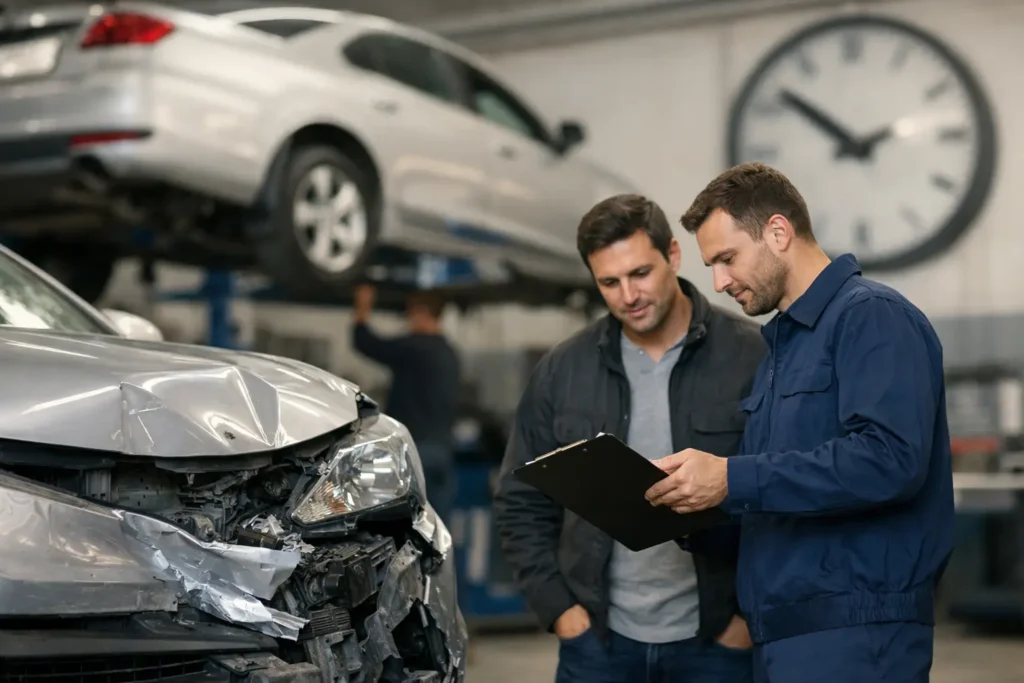
More significant collisions can take two to four weeks or longer. This is common when the impact affects multiple panels, suspension components, airbags, sensors, cooling systems, or the vehicle’s frame or unibody structure. Late-model vehicles often require additional scanning, calibration, and road testing after repairs are complete.
These are planning ranges, not promises. A professional estimate is the best way to understand your specific timeline after a technician has inspected the vehicle.
What Can Extend a Collision Repair Timeline?
Most delays are not caused by the hands-on repair itself. Body and paint work follow a defined process, but several factors can affect when that work can begin or move forward.
The full extent of hidden damage
Damage behind a bumper, fender, or exterior panel is not always visible at the first estimate. Once a technician removes damaged parts, they may find broken brackets, bent reinforcements, damaged wiring, or mechanical issues that were concealed by the vehicle’s exterior.
This is called a supplement. The repair facility documents the additional damage, prepares an updated estimate, and works with the insurer when a claim is involved. While a supplement can add time, identifying and repairing hidden damage is necessary for a safe, complete repair.
Parts availability
Replacement parts are one of the most common causes of schedule changes. A shop may need original equipment manufacturer parts, recycled parts, or approved aftermarket components depending on the repair plan and insurance coverage. Some parts are readily available locally, while others must be shipped from a regional warehouse or manufacturer.
A damaged vehicle should not be reassembled with an incorrect or poor-fitting part just to finish faster. Proper fit, function, and safety matter, particularly around bumper systems, lighting, airbags, and advanced driver-assistance features.
Insurance review and approvals
Insurance coordination can be straightforward for a minor repair, but larger claims sometimes require additional documentation, inspections, or approval for supplements. Choosing a shop that communicates directly with insurers can reduce the administrative burden on you and help keep the process organized.
You still have a role to play. Providing claim information promptly, reviewing deductible details, and responding quickly if your insurer needs authorization can prevent avoidable delays.
Paint and curing requirements
Auto painting is more than applying color to a replacement panel. The repair area must be prepared, primed, color-matched, painted, and cured correctly. Adjacent panels may also need blending so the finished color looks consistent under bright desert sunlight.
Temperature, humidity, paint complexity, and the number of panels involved all affect this stage. Pearl, metallic, tri-coat, and specialty finishes often require extra attention to produce a clean match.
Vehicle technology and calibrations
Many newer vehicles have cameras, radar sensors, parking sensors, blind-spot monitoring, lane-assist systems, and other features integrated into bumpers, windshields, mirrors, and grilles. After a collision, these systems may need diagnostic scanning and manufacturer-recommended calibration.
Calibration is not an optional finishing touch. It helps ensure that safety features work as designed after repairs. If a required calibration identifies another issue, the vehicle may need additional diagnosis before it can be released.
The Collision Repair Process, Step by Step
Knowing what happens in the shop can make the wait feel more manageable. After the initial estimate, the repair process generally moves through inspection, disassembly, repair planning, parts ordering, structural and body repair, refinishing, reassembly, and quality control.
The first estimate gives the shop and insurance company a starting point. Once repairs are authorized, technicians may disassemble damaged areas to confirm the full extent of the impact. This is when hidden damage is most likely to be discovered.
Next comes the repair plan. Technicians order parts and begin structural measurements, frame straightening, panel repair, or component replacement as needed. For major impacts, this work may include restoring the vehicle’s structural points to manufacturer specifications.
After body repairs are complete, the vehicle moves into refinishing. Once the paint has cured, technicians reassemble components, complete scans or calibrations, inspect panel gaps and finish quality, and perform a final quality-control review. A careful shop will not treat this final stage as a formality. It is where details such as lights, trim, sensors, and repaired surfaces are checked before delivery.
Why Faster Is Not Always Better
It is understandable to want your vehicle back as soon as possible. Rental costs, transportation needs, and the inconvenience of being without your car are real concerns. Still, a repair timeline should reflect the work required, not just the date everyone hopes to see on the calendar.
A repair that skips proper measuring, weld procedures, corrosion protection, paint curing, or safety-system calibration can create problems later. Those problems may affect appearance, resale value, drivability, or occupant protection in another accident.
The better question is not only, “When will my vehicle be ready?” It is also, “What needs to happen before it is safe and complete?” A trustworthy shop should be comfortable answering both questions in clear language.
How to Help Keep Your Repair Moving
You cannot control every part delay or insurance review, but a few early decisions can make the process easier. Schedule an estimate promptly, provide your insurance claim number if you have one, and tell the shop about any concerns you noticed after the accident, such as warning lights, pulling, unusual noises, or a door that no longer closes correctly.
It also helps to choose one point of contact for updates. Ask how the shop will communicate status changes and whether online repair tracking is available. Clear updates are especially valuable when a supplement, parts backorder, or calibration requirement changes the original schedule.
If you need transportation, ask about rental vehicle assistance early rather than waiting until repair work begins. Planning that piece ahead of time can reduce stress for commuters, families, and visitors who depend on a vehicle in Cathedral City, Palm Springs, Palm Desert, Rancho Mirage, and nearby communities.
What to Expect From a Trusted Local Body Shop
A dependable collision repair facility will give you a detailed estimate, explain the repair plan without unnecessary jargon, and tell you when the timeline changes. It should also have the equipment and trained technicians needed to repair foreign and domestic vehicles according to appropriate safety standards.
At CatCity Auto Body, certified technicians combine more than 20 years of collision-industry experience with direct insurance coordination, rental assistance, repair-status updates, and careful quality checks. Whether the repair involves a minor dent or significant collision damage, every vehicle deserves the same attention to safety, fit, finish, and clear communication.
After an accident, the most useful timeline is an honest one. Request a free estimate, ask what parts and procedures your vehicle needs, and choose a repair team that will keep you informed while doing the work right.