
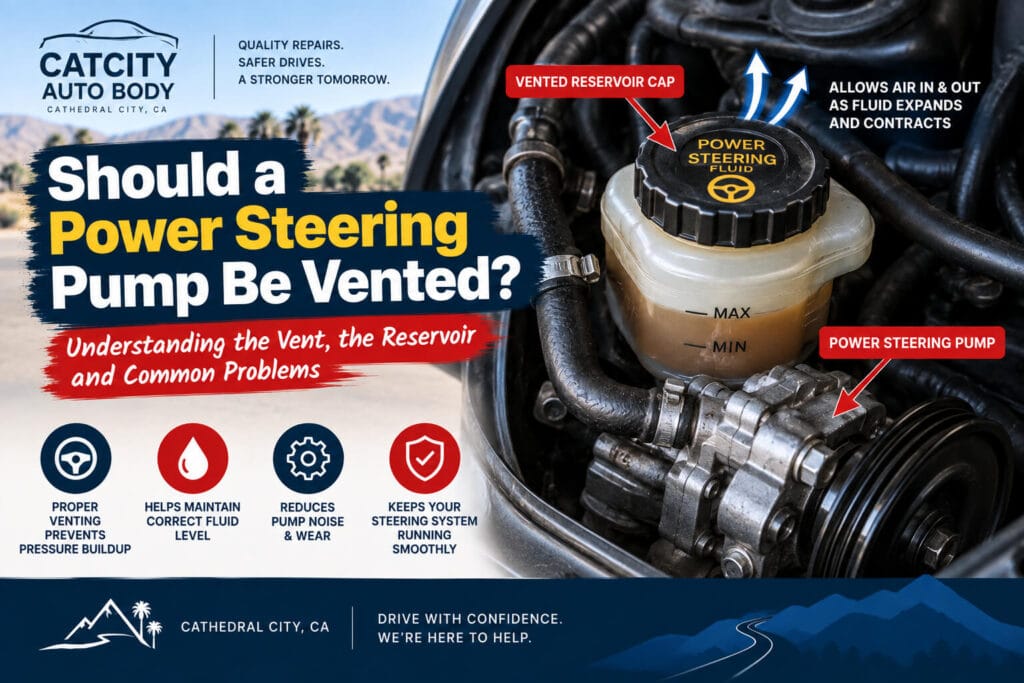
Yes—but technically, it is the power steering reservoir and its cap that need to be properly vented, not the pump itself.
Hydraulic power steering systems use a reservoir to store and supply fluid to the pump. The reservoir needs a way to accommodate changes in air volume, fluid temperature, and fluid level. Many systems therefore use a vented reservoir cap or another designed vent path.
A properly designed vent allows the reservoir to equalize with atmospheric pressure while helping keep power steering fluid contained. Automotive engineering documentation describes breathable power steering reservoir caps as allowing air to move between the reservoir and atmosphere as fluid expands and contracts.
This distinction matters because drivers sometimes search for “power steering pump should be vented” when the actual problem may involve a blocked reservoir vent, incorrect fluid level, aeration, a restricted hose, or another power steering-system issue.
If the venting system is blocked or incorrectly configured, pressure or vacuum can develop in the reservoir. Depending on the vehicle and system design, that can contribute to fluid leakage, aeration, pump noise, or seal problems.
What Does Venting Do in a Power Steering System?
A hydraulic power steering system continuously circulates fluid between the reservoir, pump, steering gear or rack, and return line.
As the fluid moves through the system, several things can happen:
- Fluid temperature changes
- Fluid expands when heated
- Fluid level changes
- Air may need to move in or out of the reservoir
- Returning fluid can create turbulence
- Pressure conditions can change within the system
A vent provides a controlled path for the reservoir to communicate with atmospheric pressure.
A breathable reservoir cap is specifically designed to allow air movement while limiting the escape of power steering fluid.
So, the purpose of venting isn’t to release high hydraulic pressure from the pump’s pressure line.
The pump’s high-pressure side remains a sealed hydraulic circuit. The reservoir is the component that generally needs atmospheric venting.
Does the Power Steering Pump Itself Need a Vent?
This is where terminology can cause confusion.
A typical hydraulic power steering pump does not need an open vent to the atmosphere in the same way that the reservoir does.
Instead, the pump:
- Draws fluid from the reservoir.
- Pressurizes the fluid.
- Send it toward the steering gear or rack.
- Receives returning fluid through the system.
- Continues circulating the fluid.
The reservoir provides the fluid storage and expansion space.
The reservoir’s venting system allows air to enter or leave as necessary.
Some pump designs may have their own seals, housing arrangements, or pressure-relief features, but that does not mean you should drill, remove, or add a vent to the pump.
Never modify a power steering component simply because you believe it needs additional ventilation. The vehicle manufacturer’s design should determine how the system is vented.
Why Does a Power Steering Reservoir Need to Be Vented?
The primary reason is to accommodate fluid expansion and contraction and changes in reservoir air volume.
Power steering fluid becomes warmer during operation. As temperature changes, the fluid and air inside the reservoir can expand or contract.
A properly designed breathable cap allows the reservoir to remain near atmospheric pressure while accommodating those changes. A patented reservoir design, for example, describes airflow out of the reservoir as fluid expands and airflow back into the reservoir as fluid contracts.
Without an appropriate vent path, the reservoir can experience unwanted pressure or vacuum conditions.
That can contribute to problems such as:
- Fluid being pushed toward the cap
- Difficulty maintaining the correct fluid level
- Air entering the system
- Pump noise
- Fluid aeration
- Seal stress
- Fluid leakage
The exact symptoms depend on the vehicle and the nature of the restriction.
What Happens If the Power Steering Reservoir Vent Is Blocked?
A blocked vent can interfere with the reservoir’s ability to equalize pressure.
One documented service bulletin from Daimler Truck North America explains that certain power steering reservoir fill caps incorporate pressure and vacuum venting to compensate for thermal cycling. The bulletin also notes that incorrect venting can cause fluid-level problems and fluid film around the reservoir.
Possible symptoms of a venting problem can include:
1. Fluid Around the Reservoir Cap
You may see oily residue or power steering fluid around the cap.
However, this does not automatically mean the cap is defective.
Fluid around the reservoir can also result from:
- Overfilling
- Aerated fluid
- Excessive return turbulence
- A damaged cap seal
- A hose leak
- Another nearby leak
The source should be identified before replacing parts.
2. Pressure When Removing the Cap
If you notice unusual pressure when opening the reservoir after operation, a technician may need to check the cap vent and the condition of the fluid.
A clogged vent can contribute to pressure buildup, although pressure symptoms can have other causes as well.
Never remove a power steering cap when the system is hot unless the vehicle manufacturer’s procedure specifically allows it. Hot fluid can cause burns.
3. Power Steering Fluid Loss
If fluid is repeatedly disappearing, don’t simply keep topping it off.
A leak may originate from:
- Reservoir
- Reservoir cap
- Return hose
- Pressure hose
- Pump seal
- Steering rack
- Steering gear
- Hose fitting
The source needs to be identified.
4. Fluid Aeration or Foaming
Air in hydraulic power steering fluid can cause the fluid to appear foamy or bubbly.
Aeration can reduce the pump’s ability to operate smoothly and may contribute to noise and inconsistent steering assistance.
A power steering troubleshooting guide from KSE identifies a non-vented reservoir as one possible cause of aerated fluid and pump problems.
What Does Aerated Power Steering Fluid Look Like?
Healthy fluid should generally appear relatively smooth rather than filled with persistent bubbles or foam.
Aerated fluid may look:
- Foamy
- Bubbly
- Frothy
- Milky in some circumstances
- Turbulent in the reservoir
However, fluid appearance alone does not identify the cause.
Air can enter a power steering system through problems such as:
- Low fluid level
- Loose suction-side connection
- Cracked return or inlet hose
- Restricted hose
- Reservoir problems
- Improper bleeding
- Other system faults
A technical troubleshooting guide specifically highlights the pump suction line and reservoir as important areas when diagnosing power steering problems.
Can a Blocked Vent Cause Power Steering Pump Noise?
It can contribute to abnormal operation, but pump noise should not automatically be blamed on the vent.
Power steering pump noise can have several causes.
Common possibilities include:
- Low power steering fluid
- Air in the system
- Incorrect fluid
- Restricted fluid flow
- Damaged pump
- Worn bearings
- Suction-side air leak
- Excessive fluid turbulence
If the pump makes a whining sound that changes with steering input, the system should be inspected rather than assuming the pump itself has failed.
Air in the system can be particularly important because it can cause noisy operation and may contribute to premature pump wear. Proper bleeding procedures are therefore important after power steering repairs.
Does a Vented Power Steering Cap Mean Fluid Should Come Out?
No.
A vented cap is designed to allow air movement—not to act as an open fluid outlet.
A small amount of fluid mist or residue may occur in some systems under certain conditions, but significant fluid escaping from the cap should be investigated.
Potential causes include:
- Overfilled reservoir
- Excessive fluid temperature
- Aerated fluid
- Excessive turbulence
- Incorrect cap
- Damaged cap
- Blocked or incorrectly oriented vent
- Another power steering-system problem
A 2025 Daimler Truck North America bulletin specifically notes that some properly functioning vented caps can leave a film of misted or vented fluid on the reservoir, while also explaining that excessive buildup or abnormal conditions should be evaluated.
Why Does Power Steering Fluid Come Out of the Reservoir?
If fluid is being pushed out of the reservoir, don’t immediately conclude that the reservoir needs replacement.
Start by checking the basics.
1. The Reservoir May Be Overfilled
An excessive fluid level leaves less room for thermal expansion.
Always check the fluid according to the vehicle manufacturer’s specified procedure and temperature conditions.
Some vehicles have different “HOT” and “COLD” markings, while others require a particular checking procedure.
2. The Fluid May Be Aerated
Air bubbles increase the apparent volume and can cause fluid to move or foam inside the reservoir.
Aeration may result from a low fluid level, suction-side air leak, hose problem, or improper bleeding.
3. The Cap May Be Damaged
A damaged or incorrect cap may not control fluid and airflow correctly.
4. The Vent May Be Restricted
A blocked vent can interfere with pressure equalization.
5. There May Be Excessive Return-Line Turbulence
Returning fluid should enter the reservoir in a way that minimizes unnecessary aeration and turbulence.
Reservoir design guidance for hydraulic power steering systems commonly emphasizes baffling and controlled return-fluid entry for this reason.
How Do You Know If a Power Steering Reservoir Cap Is Vented?
The safest approach is to use the correct cap specified for your vehicle rather than modifying the existing one.
Depending on the design, the vent may be:
- Integrated into the cap
- Hidden within the cap assembly
- Incorporated into a dedicated vent path
- Designed into the reservoir itself
Some caps may appear completely sealed from the outside while still providing a controlled breathing path.
A Daimler Truck service bulletin, for example, describes an integrated pressure-and-vacuum vent feature inside the fill cap.
Therefore, don’t drill a hole into the cap just because you cannot see a vent.
Should You Drill a Hole in a Power Steering Reservoir Cap?
No—not unless the vehicle or component manufacturer specifically instructs you to do so.
Drilling a hole can:
- Change the intended venting behavior
- Allow dirt into the reservoir
- Allow excessive fluid mist to escape
- Alter fluid containment
- Damage a component designed with an internal vent
- Create an incorrect repair
If you believe the cap is not venting correctly, replace it with the correct component or have the system inspected.
A properly designed power steering reservoir uses controlled venting rather than an improvised opening.
What Is the Difference Between Venting and Bleeding?
These terms are sometimes confused.
Venting
Venting refers to allowing the reservoir to exchange air with the atmosphere so that unwanted pressure or vacuum does not build up.
Bleeding
Bleeding means removing unwanted air from the hydraulic power steering system.
These are different processes.
A system can have a properly vented reservoir and still contain air because of:
- Low fluid level
- A suction-side leak
- Recent component replacement
- Incorrect filling procedure
- Other faults
After power steering work, the system may need to be properly bled according to the vehicle manufacturer’s procedure.
Some service procedures use specialized equipment, while others specify particular steering-wheel cycling procedures.
How Does Air Get Into the Power Steering System?
Air can enter through the low-pressure side of the hydraulic system.
Potential sources include:
- Cracked inlet hose
- Loose hose clamp
- Damaged hose fitting
- Reservoir connection leak
- Low fluid level
- Faulty seal
- Incorrectly installed component
The pump’s suction side deserves particular attention because a small air leak may not always produce an obvious external fluid leak.
In other words:
A system can pull air in without necessarily spraying fluid out.
That can make suction-side problems difficult to identify without proper diagnosis.
Signs Your Power Steering System May Have an Air or Venting Problem
Watch for a combination of symptoms rather than relying on one sign.
Possible warning signs include:
- Whining or groaning from the pump
- Foamy power steering fluid
- Persistent bubbles in the reservoir
- Fluid around the reservoir cap
- Fluid level that changes unexpectedly
- Steering that feels inconsistent
- Harder steering at low speed
- Repeated pump seal leaks
- Unusual pressure when checking the reservoir
These symptoms can overlap with other steering-system problems, so they do not establish a diagnosis on their own.
Can a Venting Problem Damage the Power Steering Pump?
Potentially, depending on the system and the underlying problem.
The pump depends on an adequate supply of fluid. If the system develops aeration, restriction, low fluid level, or other abnormal conditions, the pump may operate improperly.
KSE’s troubleshooting documentation identifies reservoir venting, low fluid, suction-line problems, aerated fluid, and inadequate reservoir design among possible causes of power steering problems.
A pump that repeatedly loses its seal or operates with aerated fluid should therefore be investigated at the system level, rather than simply replacing the pump repeatedly.
How to Check a Power Steering Reservoir Safely
If your vehicle has hydraulic power steering and a serviceable reservoir, you can perform a basic visual inspection.
Check the fluid level
Use the vehicle-specific procedure.
Do not assume every vehicle should be checked in the same temperature condition.
Look at the fluid
Check for:
- Persistent bubbles
- Foam
- Unusual contamination
- Incorrect fluid appearance
Inspect around the cap
Look for:
- Fresh fluid
- Wet residue
- Cracks
- Damaged seal
- Cap damage
Inspect hoses
Look for:
- Cracks
- Soft or collapsing hose
- Loose clamps
- Wet connections
- Abrasion
Listen for pump noise
Unusual whining or groaning may indicate a fluid or pump problem.
Keep hands, clothing, and tools away from belts, pulleys, fans, and other moving components.
What If the Power Steering Fluid Is Foamy?
Don’t simply add more fluid and continue driving.
First determine why the fluid is foaming.
Possible causes include:
- Air entering the suction side
- Low fluid level
- Improper bleeding
- Restricted fluid flow
- Reservoir design problems
- Excessive turbulence
- Pump problems
If the system was recently repaired, trapped air may be one possibility.
If the problem appeared without recent service, the system may need inspection for leaks, restrictions, or component problems.
Does Every Modern Car Have a Vented Power Steering Reservoir?
No.
This is an important consideration when researching power steering problems.
Many modern vehicles use electric power steering (EPS) rather than traditional hydraulic power steering.
Electric power steering does not use a conventional hydraulic power steering pump and reservoir in the same way.
Some vehicles use electro-hydraulic systems, while others use fully electric steering assistance.
Therefore, before diagnosing a power steering vent problem, determine which steering system your vehicle actually uses.
If your vehicle does not have hydraulic power steering fluid or a power steering reservoir, the concept of a vented hydraulic reservoir may not apply.
Power Steering Problems After an Accident
A collision can affect steering and related components.
Depending on where the vehicle was hit, an accident may damage:
- Power steering hoses
- Steering rack
- Steering components
- Reservoir
- Pump
- Suspension
- Wheel
- Tire
- Mounting points
- Nearby body structure
If you notice a power steering fluid leak after an accident, don’t assume that the pump is automatically responsible.
CatCity’s guide on hidden damage after an accident explains why fluid leaks, pulling, vibrations, alignment issues, and other symptoms can sometimes indicate damage that isn’t obvious from the exterior. How to Tell If Your Car Has Hidden Damage After an Accident
Power Steering and Pre-Trip Vehicle Checks
A power steering inspection can also be part of a broader road-trip preparation routine.
Before a long drive, check for:
- Fluid leaks
- Unusual steering effort
- Pump noise
- Fluid-level changes
- Damaged hoses
- Steering-wheel changes
- Suspension symptoms
Our Pre-Trip Auto Maintenance Guide already covers power steering fluid as one of the fluids drivers should check before a road trip. Pre-Trip Auto Maintenance Guide
If the steering feels different before a trip, don’t wait until you’re several hours from Cathedral City to investigate it.
Can a Power Steering Leak Be Related to Other Vehicle Damage?
Yes.
A fluid leak can sometimes be connected to collision damage, but it can also result from normal wear or a mechanical failure.
For example, a front-end impact may affect a power steering hose or nearby component.
CatCity’s bumper damage guide notes that a collision can affect systems behind exterior panels and lists the power-steering system among components that can potentially be affected by certain impacts. Is It Safe to Drive With a Cracked, Loose or Dented Bumper?
If the leak started after a collision, the entire affected area should be inspected.
Power Steering Inspection in Cathedral City
If you notice power steering fluid around the reservoir, foamy fluid, unusual pump noise, changing steering effort, or repeated fluid loss, don’t assume the solution is simply to replace the pump.
The correct diagnosis should consider the reservoir, venting system, fluid level, hoses, suction side, pump, steering gear, and related components.
For vehicles with collision-related steering or body damage, CatCity Auto Body in Cathedral City can inspect the affected collision area and identify body or structural concerns. For a purely mechanical power steering problem, a qualified mechanical or steering specialist may be the appropriate repair facility.
If the problem began after an accident, mention that history during the inspection because the location and timing of the damage can help determine what should be checked.
Frequently Asked Questions
The reservoir, rather than the pump’s high-pressure circuit, generally needs a properly designed venting arrangement. Many hydraulic power steering reservoirs use a breathable or vented cap to accommodate fluid expansion and contraction.
A restricted or incorrectly vented reservoir can contribute to abnormal pressure or vacuum conditions, fluid leakage, aeration, pump noise, or seal problems depending on the system.
No. Use the correct manufacturer-specified cap and venting design. Drilling the cap can allow contamination or fluid to escape and may change the intended operation of the system.
Possible causes include overfilling, aeration, excessive turbulence, a damaged cap, incorrect venting, or another power steering-system problem.
Foamy fluid can indicate air entering the hydraulic system. Low fluid, suction-side leaks, improper bleeding, restrictions, or reservoir-related problems are possible causes.
It can contribute to abnormal pressure conditions that may push fluid toward the cap or seals. However, a leak can have many other causes, so the source should be diagnosed rather than assuming the vent is responsible.
Fully electric power steering does not use the same hydraulic pump-and-reservoir arrangement. Check the vehicle’s steering-system design before applying hydraulic power-steering troubleshooting advice.
It can contribute to abnormal system behavior, but fluid around the reservoir does not prove the pump is defective. The cap, reservoir, hoses, fluid level, aeration, and other components should also be checked.
Final Takeaway
A power steering system does not normally need an openly vented pump. The hydraulic reservoir is the component that typically needs a properly designed venting system.
A vented reservoir allows air movement as fluid expands and contracts while helping prevent unwanted pressure or vacuum conditions. If the vent becomes blocked or the wrong cap is installed, the system can develop symptoms such as fluid around the cap, aerated fluid, pump noise, or repeated fluid-loss problems.
If you see fluid coming out of the power steering reservoir, don’t simply drill a hole in the cap or replace the pump.
Instead:
Check the correct fluid level → inspect the cap and vent → look for air entry or hose problems → check for aeration → inspect the pump and steering system → repair the actual cause.
For Cathedral City drivers, this is especially important when steering symptoms or fluid leaks appear after a collision. A broader inspection can help distinguish a simple fluid or reservoir issue from suspension, steering, or hidden collision damage.