
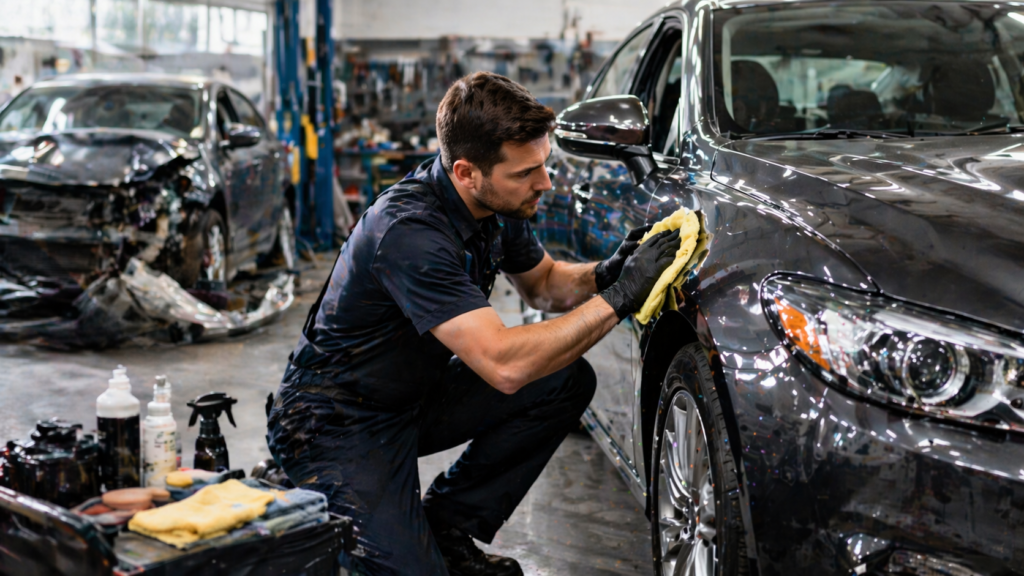
Most car owners are reasonably diligent about mechanical maintenance — oil changes, tire rotations, brake inspections. These are well-understood necessities, and the consequences of neglecting them are widely known. But auto body maintenance tends to get far less attention, often treated as a purely cosmetic concern rather than a functional one.
That’s a costly misconception.
The exterior of your vehicle — its paint, panels, glass, seals, and structural surfaces — is not just about appearance. It’s your vehicle’s first line of defense against corrosion, structural degradation, and a cascade of increasingly expensive problems that develop quietly over time when minor issues are left unaddressed. Regular auto body maintenance is one of the smartest investments a car owner can make, both for vehicle longevity and for avoiding the kind of repair bills that catch people completely off guard.
Here’s what auto body maintenance actually involves, why it matters more than most people realize, and how staying ahead of small issues protects your vehicle — and your finances — over the long term.
The True Cost of Neglecting Auto Body Maintenance
Before getting into what proper maintenance looks like, it’s worth understanding the financial reality of what happens when it’s neglected. Auto body problems don’t stay small. They compound.
A paint chip the size of a fingernail, left untreated, exposes bare metal to air and moisture. Within weeks, depending on the climate, rust begins to form. Within months, that rust spreads beneath the surrounding paint, which begins to bubble and peel. What started as a five-minute touch-up job has now become a panel refinishing project. Left further still, surface rust becomes structural rust — and structural rust can compromise the integrity of body panels, floor pans, and even frame components, turning a cosmetic issue into a safety concern and a repair bill measured in thousands rather than hundreds of dollars.
This progression — from minor, inexpensive issue to major, costly problem — is the core reason why preventative car repairs are so financially sound. The math is straightforward: addressing small issues early costs a fraction of what addressing their fully developed consequences costs later.
Key Areas of Auto Body Maintenance Every Car Owner Should Know
1. Paint Protection and Touch-Up
Your vehicle’s paint is far more than decorative. It’s a protective barrier that seals the metal underneath from the elements. When that barrier is compromised — through chips, scratches, or abrasions — moisture and oxygen reach the metal surface and oxidation begins.
Regular inspection of your vehicle’s paint surface should be part of every car owner’s routine. Look for chips along the hood and front bumper, where road debris impact is most common, as well as scratches along door edges and lower panels where contact with curbs, shopping carts, and other vehicles occurs most frequently.
Small chips and scratches that haven’t yet begun to rust can often be addressed with professional touch-up paint application — a relatively minor cost. Catching them before rust develops is the key. In Cathedral City’s intense desert sun, paint is also vulnerable to UV oxidation — a gradual fading and dulling that, left unaddressed, can eventually cause the clear coat to fail and require full panel refinishing.
Regular washing removes contaminants like bird droppings, tree sap, and road salt that chemically attack paint surfaces. A quality wax or paint sealant applied periodically provides an additional protective layer against UV damage and environmental contamination. Paint protection film on high-impact areas like the front hood and bumper offers an even higher level of defense.
2. Rust Prevention and Early Treatment
Rust is the single most destructive force in auto body deterioration, and it’s particularly insidious because so much of it happens out of sight. Wheel wells, the undersides of door panels, floor pans, and areas around drain plugs are all common locations where moisture accumulates and rust develops long before it becomes visible from the outside.
Preventative car repairs for rust include periodic undercarriage inspections — ideally by a professional who knows where to look and what early-stage rust looks like. Catching rust in its early stages, when it’s surface-level and hasn’t yet penetrated the metal, allows for treatment and coating that stops its progression. Catching it after it has eaten through panels or structural components means replacement — a dramatically more expensive outcome.
In the Coachella Valley, the combination of intense heat and occasional humidity creates conditions where rust can develop more quickly than car owners might expect. Desert areas aren’t immune to rust — particularly in vehicles that have spent time in other climates or that have paint damage allowing moisture intrusion.
3. Windshield and Glass Maintenance
A small chip in your windshield can be repaired quickly and inexpensively when it’s fresh — in many cases, for free under comprehensive insurance coverage. Left unaddressed, that chip becomes a crack, and cracks spread. Temperature fluctuations — and Cathedral City experiences significant ones between scorching summer days and cooler desert nights — accelerate crack propagation dramatically.
Beyond the cost of windshield replacement versus repair, there’s a structural consideration. Your windshield is a load-bearing component of your vehicle’s roof structure. A compromised windshield can affect how your vehicle’s cabin performs in a rollover event. Maintaining intact, undamaged glass is a safety issue, not just a visibility one.
Inspect your glass regularly for chips and address them promptly. Also check door and window seals periodically — degraded seals allow water intrusion that can lead to interior mold, electrical system damage, and rust in hidden body cavities.
4. Door, Hood, and Trunk Alignment
Vehicle panels are engineered to fit together within precise tolerances. Properly aligned doors, hoods, and trunk lids aren’t just aesthetically pleasing — they seal correctly, preventing water intrusion and wind noise, and they distribute stress across the body structure evenly during normal operation.
Panel misalignment that develops gradually — through minor impacts, worn hinges, or settling over time — is easy to ignore because it happens slowly. But a door that doesn’t quite close correctly, or a hood that sits slightly crooked, indicates that something in the panel alignment or hinge system needs attention. Addressing these issues early is straightforward. Allowing them to progress can result in water intrusion damage, accelerated wear on seals and latches, and in some cases structural stress on adjacent body components.
5. Bumper and Trim Maintenance
Bumpers and exterior trim pieces take more daily abuse than almost any other body component — parking lot contact, road debris, UV exposure, and the general wear of everyday driving. Cracked, loose, or missing bumper components aren’t just cosmetic problems. Modern bumpers house sensors for parking assist, adaptive cruise control, and automatic emergency braking systems. A damaged bumper can compromise these sensor systems, and a bumper that has been pushed out of position may no longer provide the level of pedestrian and low-speed impact protection it was designed to deliver.
Trim pieces that are cracking, separating, or missing should be addressed before they allow moisture intrusion into the body panels beneath them. Replacing a trim clip or a small section of molding is a minor expense. Repairing the rusted panel that developed underneath neglected trim is not.
The Role of Professional Auto Body Inspections
Many of the issues described above are difficult for the average car owner to assess without training. What looks like a surface scratch may have compromised the paint layers all the way to bare metal. What appears to be a minor panel gap may indicate a misalignment in the underlying structure. What seems like cosmetic rust bubbling may be the surface expression of significant corrosion underneath.
Periodic professional auto body inspections — not just mechanical checkups — give trained eyes a chance to identify developing problems before they escalate. A qualified auto body technician can assess paint condition, check for early rust formation in vulnerable areas, evaluate panel alignment, inspect seals and glass, and identify any areas of concern that deserve attention.
Think of it as preventative medicine for your vehicle’s exterior. The inspection itself is a minor investment. The problems it catches early can save you from repairs that cost many times more down the line — and in some cases, from safety issues that could have been avoided entirely.
Vehicle Longevity Starts With Consistent Care
Beyond avoiding expensive repairs, regular auto body maintenance has a direct impact on your vehicle’s long-term value and lifespan. A well-maintained exterior signals to prospective buyers that a vehicle has been cared for overall — it supports resale value in a way that neglected paint, rust, and body damage simply cannot. It also means the vehicle spends more of its life in a structurally and aesthetically sound condition, which translates to years of additional reliable service.
In a climate like Cathedral City’s, where UV intensity, heat, and temperature swings place real stress on exterior materials, consistent maintenance isn’t optional if vehicle longevity is the goal. Vehicles that receive regular attention outlast and outperform those that are treated reactively — addressed only when problems become impossible to ignore.
CatCity Auto Body: Your Partner in Preventative Care
At CatCity Auto Body, Inc., we believe that great auto body care doesn’t start after a major collision — it starts with the small things, addressed consistently and correctly. Our experienced technicians are available to assess your vehicle’s exterior condition, identify developing issues before they become expensive problems, and provide professional touch-up, rust treatment, glass repair, and panel correction services that protect your investment over the long term.
Whether you need a comprehensive exterior inspection, a paint chip addressed before it turns into a rust problem, or guidance on the best way to protect your vehicle against Cathedral City’s demanding desert climate, CatCity Auto Body, Inc. is here to help. Call us at 760-324-7117 to schedule your visit. Serving Cathedral City and the entire Coachella Valley, we’re committed to keeping your vehicle looking great, performing safely, and lasting as long as possible.
CatCity Auto Body, Inc. — Cathedral City’s trusted collision repair experts for over 20 years.