
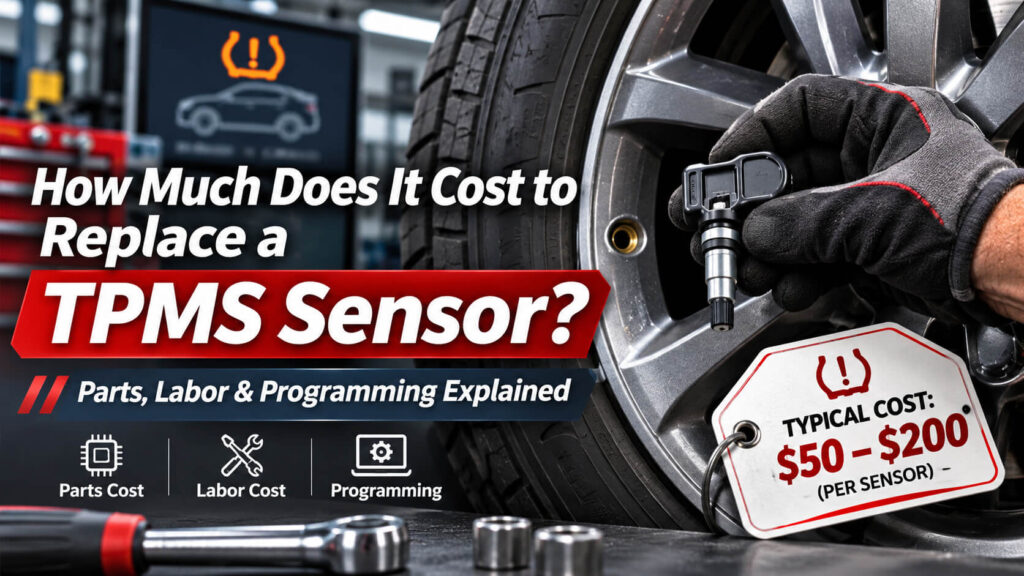
If your tire pressure warning light stays on even after inflating your tires, you may have a faulty Tire Pressure Monitoring System (TPMS) sensor. Naturally, one of your first questions is: How much does it cost to replace a TPMS sensor?
In the United States, replacing a TPMS sensor can cost approximately 100–350 or more per sensor, depending on your vehicle, sensor type, labor rates, and programming requirements. Some national repair estimates are higher: RepairPal estimates an average replacement cost of 240–299, while Kelley Blue Book lists an average of 314–368. These are estimates, not guaranteed local quotes.
The final price usually includes the replacement sensor, tire removal and installation, wheel balancing, and programming or relearning the new sensor so your vehicle can recognize it.
Before paying for a replacement, however, make sure the sensor is actually defective. A TPMS warning can also result from low tire pressure, a missing sensor signal, or a system relearn issue.
This guide explains TPMS sensor replacement costs, what affects the price, whether you need to replace one or all four sensors, and how to avoid unnecessary repair expenses.
What Is the Average Cost to Replace a TPMS Sensor?
The average TPMS sensor replacement cost depends on whether you are replacing one sensor or the entire set.
For budgeting purposes, the following are useful U.S. planning ranges. Actual estimates vary by vehicle and repair facility.
| Replacement expense | Estimated cost |
| Aftermarket TPMS sensor | 30–100 |
| OEM TPMS sensor | 50–180+ |
| Installation labor | 50–120 |
| Programming or relearning | 0–100+ |
| Valve stem service kit | 5–20 |
| Typical installed replacement | 100–350+ per sensor |
| Replacing all four sensors | 400–1,000+ |
These are indicative budgeting ranges, not a single national price survey. Some shops bundle installation and programming, while others charge separately.
Published repair estimates provide another useful reference. RepairPal’s September 2026 estimate puts replacement at 240–299, with 164–187 allocated to parts and 77–112 to labor. Kelley Blue Book’s estimate is 314–368.
The difference between these estimates shows why you should compare written quotes and check exactly what each shop includes.
How Much Does It Cost to Replace All Four TPMS Sensors?
Replacing all four TPMS sensors can cost approximately 400–1,000 or more, depending on the vehicle and parts selected.
If your vehicle has original sensors that are five to ten years old, replacing all four during the same service appointment may make financial sense.
TPMS sensors typically contain sealed batteries. When one sensor reaches the end of its battery life, the others may be approaching the same point.
Replacing the entire set can help you avoid paying for separate tire dismounting, installation, and programming appointments later.
However, you do not automatically need to replace all four sensors when one fails. Ask the technician to test each sensor and explain its condition before approving additional replacements.
What Factors Affect TPMS Sensor Replacement Cost?
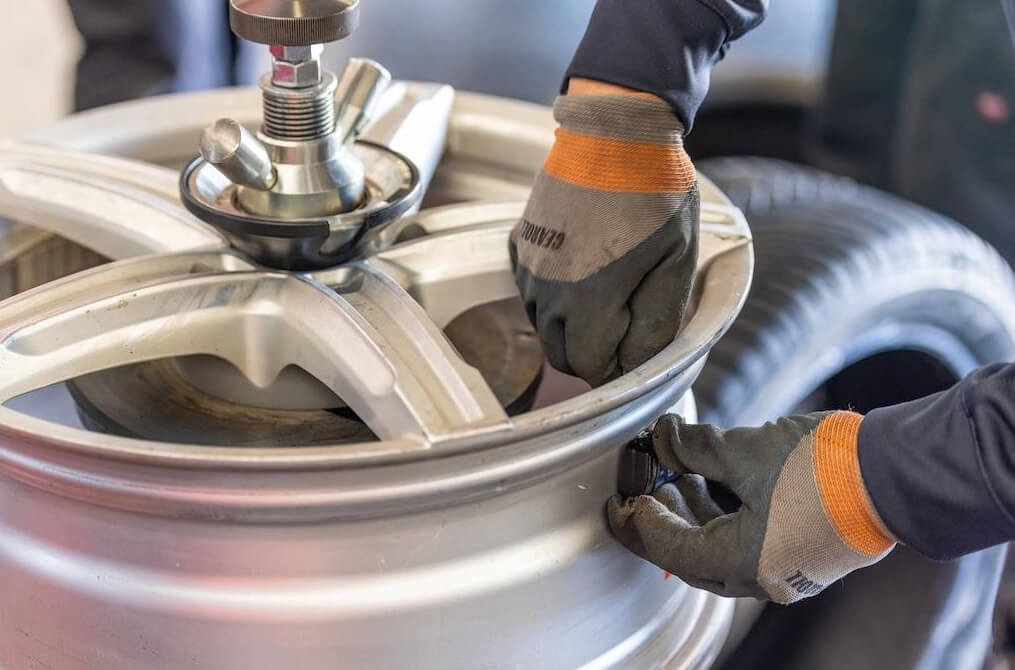
Several factors determine the final tire pressure sensor replacement cost. Understanding them can help you evaluate repair quotes and avoid paying for services your vehicle does not need.
1. OEM vs. Aftermarket TPMS Sensors
One of the biggest pricing differences comes from the type of replacement sensor.
OEM sensors are manufactured for or supplied through the vehicle’s original equipment manufacturer. They are designed to meet the vehicle’s specific compatibility requirements.
Aftermarket sensors are produced by independent manufacturers. Many are designed to work with multiple vehicle makes and models, although compatibility and programming requirements must be checked.
| Sensor type | Typical parts price | Main consideration |
| OEM sensor | 50–180+ | Vehicle-specific compatibility |
| Aftermarket sensor | 30–100 | Lower purchase price, compatibility varies |
| Programmable universal sensor | 35–120 | May require configuration before installation |
A cheaper sensor is not automatically a better deal. Confirm that the replacement supports your vehicle’s frequency, protocol, and sensor identification requirements.
2. Vehicle Make and Model
Your vehicle’s make, model, and year can significantly affect the replacement price.
For example:
- Mainstream sedans and compact cars may use relatively affordable replacement sensors.
- Pickup trucks and SUVs may require different sensor designs or additional programming.
- Luxury vehicles may use more expensive OEM components.
- Some newer vehicles require specialized diagnostic equipment or vehicle-specific relearn procedures.
Before purchasing a sensor, provide the repair shop with your VIN (Vehicle Identification Number). This helps identify the correct replacement component.
3. Labor and Tire Installation
Replacing a direct TPMS sensor is not usually as simple as removing an external valve cap.
The sensor is generally mounted inside the wheel, attached to or integrated with the valve stem.
A technician may need to:
- Remove the wheel from the vehicle.
- Deflate the tire.
- Break the tire bead and access the sensor.
- Remove the faulty sensor.
- Install the replacement sensor and service hardware.
- Reinstall and inflate the tire.
- Balance the wheel.
- Perform the necessary TPMS relearn or programming procedure.
Labor charges vary depending on the shop’s hourly rate, wheel design, tire type, and complexity of the job.
4. TPMS Programming and Relearning
Installing a new sensor does not always mean the job is finished.
Some vehicles need to learn the replacement sensor’s identification number before the TPMS system can display accurate tire pressure readings.
Depending on the vehicle, the process may involve:
- Automatic sensor relearning.
- A manual relearn procedure.
- A TPMS diagnostic tool.
- An OBD-II programming tool.
- A manufacturer-specific diagnostic procedure.
Some vehicles complete relearning automatically after driving under specified conditions. Others require specialized equipment.
This is why it is important to ask whether programming is included in your replacement quote.
5. Additional Parts and Service Charges
A TPMS sensor replacement may also involve small additional components.
For example, the technician may recommend replacing:
- Valve stem seals.
- Valve cores.
- Retaining nuts.
- Rubber grommets.
- Valve stem caps.
These components help maintain a proper seal and prevent air leaks.
Ask for an itemized estimate so you can distinguish necessary replacement parts from optional services.
Does Your TPMS Sensor Actually Need Replacement?
Before spending money on a new sensor, determine whether the TPMS sensor is genuinely faulty.
A tire pressure warning light does not always mean the sensor has failed. Sometimes, the problem is simply low tire pressure or a system that needs to relearn the sensor positions.
There are two main types of tire pressure monitoring systems:
Direct TPMS
A direct TPMS uses individual pressure sensors installed inside the wheels to measure tire pressure.
These sensors transmit information wirelessly to the vehicle’s computer, which displays pressure readings or activates a warning when tire pressure drops.
If a sensor’s internal battery fails, its electronics become damaged, or it stops transmitting, replacement may be necessary.
Indirect TPMS
An indirect TPMS does not use a separate pressure sensor inside every wheel.
Instead, it uses wheel-speed information from the anti-lock braking system (ABS) to identify differences that may indicate an underinflated tire.
This distinction matters because an indirect TPMS may require recalibration rather than physical sensor replacement.
The National Highway Traffic Safety Administration (NHTSA) explains the differences between direct and indirect TPMS technology.
What Are the Signs of a Bad TPMS Sensor?
A faulty tire pressure sensor can cause several noticeable problems.
Here are common symptoms to watch for:
TPMS Warning Light Stays On
If the tire pressure warning light remains illuminated after you have checked and corrected your tire pressure, a faulty sensor may be responsible.
However, confirm that all tires are properly inflated before assuming the sensor has failed.
TPMS Light Flashes and Then Stays On
A flashing TPMS warning light that later stays illuminated often indicates a problem with the monitoring system rather than simply low tire pressure.
Possible causes include:
- A dead sensor battery.
- A damaged sensor.
- A missing or incompatible sensor.
- A sensor that has not been properly programmed.
- A TPMS receiver or communication fault.
The exact warning behavior depends on the vehicle, so check the owner’s manual.
Incorrect Tire Pressure Readings
If your dashboard displays an incorrect pressure reading or shows dashes instead of a numerical value, the system may not be receiving reliable information from that wheel.
A TPMS scan tool can help identify whether the sensor is transmitting and whether its battery or communication status indicates a problem.
One Tire Does Not Display a Pressure Reading
If three tires display normal readings but the fourth does not, the missing sensor signal may indicate a problem with that wheel’s sensor.
However, a technician should also check for programming issues, receiver problems, and other possible causes.
How Much Does It Cost to Diagnose a TPMS Problem?
TPMS diagnosis can range from a free preliminary check to a paid diagnostic appointment.
A repair shop may use a specialized TPMS tool to activate each sensor and check its identification number, pressure reading, and transmission status.
| Diagnostic service | Indicative cost |
| Basic tire pressure inspection | Often free |
| TPMS sensor scan | 0–50 |
| Advanced TPMS diagnosis | 50–150+ |
| Sensor relearn only | 0–100+ |
These are general budgeting estimates, not standardized national rates.
A proper diagnosis is worth considering before buying replacement parts.
For example, if the sensor is working but the vehicle has not completed the required relearn procedure, replacing the sensor may not solve the warning light problem.
Is It Better to Replace One TPMS Sensor or All Four?
You do not necessarily need to replace all four TPMS sensors when one fails.
The right decision depends on sensor condition, battery age, repair costs, and how much work is involved in accessing the wheels.
| Situation | Recommended approach |
| One sensor has failed and others test normally | Replace the faulty sensor |
| All original sensors are approaching the end of their service life | Consider replacing the complete set |
| Several sensors have failed | Compare the cost of replacing all affected sensors |
| A sensor is working but not communicating after tire rotation | Check relearning before replacement |
| A sensor is physically damaged | Replace the damaged sensor |
When Should You Replace All Four?
Replacing all four sensors may be worthwhile when:
- The vehicle has high mileage.
- All four original sensors are several years old.
- Multiple sensors are reporting low battery status.
- You are already replacing all four tires.
- The combined labor cost makes a complete replacement more economical.
When Should You Replace Only One?
Replacing a single sensor makes more sense when the other three sensors are functioning normally and have sufficient remaining battery life.
Ask the technician to scan all four sensors before making the decision.
This helps prevent unnecessary spending while ensuring the TPMS system continues to function correctly.
Can You Drive With a Bad TPMS Sensor?
Generally, you can drive a vehicle with a failed TPMS sensor, but doing so means you may not receive accurate tire pressure warnings.
A functioning TPMS helps alert drivers when tire pressure becomes dangerously low. Without reliable sensor information, you may not know that a tire is losing pressure until handling or tire performance is affected.
Low tire pressure can contribute to:
- Reduced fuel efficiency.
- Increased tire wear.
- Poor vehicle handling.
- Longer stopping distances in certain conditions.
- Tire overheating and potential failure.
Before driving, manually check all four tires using a reliable tire pressure gauge.
Inflate them to the pressure specified on the driver’s door-jamb placard, not the maximum pressure printed on the tire sidewall.
If a tire is visibly damaged, losing air rapidly, or severely underinflated, do not continue driving on it. Arrange appropriate tire service.
How Long Does It Take to Replace a TPMS Sensor?
Replacing one TPMS sensor generally takes approximately 30–60 minutes of shop time, although the total appointment may take longer.
The time depends on:
- How easily the tire can be removed and remounted.
- The type of wheel and sensor.
- Whether the replacement sensor needs programming.
- Whether the vehicle requires a special relearn procedure.
- Whether additional repairs are necessary.
Replacing all four sensors may take longer, particularly if each wheel needs individual programming or additional service.
If you are already purchasing new tires, ask whether the shop can replace the sensors during the same appointment.
How Can You Save Money on TPMS Sensor Replacement?
A faulty TPMS sensor does not have to become an unnecessarily expensive repair.
Here are practical ways to manage the cost.
Compare OEM and Aftermarket Options
Ask your repair shop whether a compatible aftermarket sensor is available.
A quality aftermarket sensor may offer the functionality you need at a lower parts price.
However, confirm vehicle compatibility before purchasing.
Replace Sensors During a Tire Change
One of the easiest ways to reduce labor costs is to replace a faulty sensor while the tire is already removed.
The technician may be able to complete both services during the same appointment, avoiding duplicated tire removal work.
Get an Itemized Estimate
Ask the repair facility to separate the following costs:
- Sensor price.
- Installation labor.
- Tire mounting and balancing.
- Programming or relearning.
- Additional valve hardware.
- Diagnostic charges.
This makes it easier to compare repair quotes accurately.
Test All Four Sensors Before Replacing Anything
Do not assume that every sensor needs replacement because the TPMS warning light is illuminated.
A diagnostic scan can identify the actual problem and prevent unnecessary parts purchases.
Avoid Buying the Cheapest Incompatible Sensor
A sensor that does not communicate correctly with your vehicle can create additional expenses.
Confirm the correct frequency, protocol, vehicle compatibility, and programming requirements before purchasing.
Does Collision Damage Affect TPMS Sensors?
Yes. Although TPMS problems are commonly associated with aging sensor batteries, physical damage can also affect the system.
A collision, curb impact, or severe pothole strike may damage a wheel, valve stem, or TPMS sensor.
In some cases, the impact may also affect suspension or other nearby components.
If your TPMS warning light appears after an accident, it is worth having the wheel and tire assembly inspected rather than immediately assuming the sensor battery has failed.
At Cat City Auto Body, vehicle owners can explore professional collision repair services when their vehicles have sustained accident-related damage.
Other relevant services include:
- Bumper and fender repair for visible collision damage.
- Frame straightening for qualifying structural damage.
- Dent repair for damaged body panels.
- Insurance claim assistance for navigating covered collision repairs.
Important: TPMS sensor replacement and tire service should be handled by a qualified tire or mechanical repair facility. Cat City Auto Body’s listed services focus on auto body and collision repair.
Frequently Asked Questions
Replacing one TPMS sensor typically costs around 100–350 or more, including parts, labor, and programming. The exact price depends on your vehicle, sensor type, and local shop rates.
Replacing all four TPMS sensors generally costs around 400–1,000 or more. The price depends on whether you choose OEM or aftermarket sensors and whether programming and installation are included.
Yes, but it can be challenging. The sensor is usually mounted inside the wheel, so the tire must be partially dismounted. You may also need a specialized TPMS programming tool. Professional installation is generally recommended.
Most TPMS sensor batteries last approximately five to ten years, depending on the sensor design, driving conditions, and usage. Because many sensors have sealed batteries, the entire sensor usually needs replacement when its battery dies.
Most factory-installed TPMS sensors use sealed batteries that are not designed for routine replacement. In these cases, the complete sensor assembly must be replaced. Some aftermarket designs may offer different battery arrangements.
Most factory-installed TPMS sensors use sealed batteries that are not designed for routine replacement. In these cases, the complete sensor assembly must be replaced. Some aftermarket designs may offer different battery arrangements.
Some vehicles automatically relearn sensor information after installation and driving under specified conditions. Others require a manual reset or specialized programming tool. Follow your vehicle manufacturer’s relearn procedure.
The warning light may remain on if the new sensor has not been programmed, the vehicle has not completed its relearn procedure, or another sensor or system component has failed. A diagnostic scan can help identify the cause.
Low tire pressure does not normally damage a TPMS sensor directly. However, driving on an underinflated tire can cause tire damage and overheating. The TPMS sensor is designed to warn you about pressure loss, not prevent every type of tire failure.
Final Thoughts: Is Replacing a TPMS Sensor Worth the Cost?
Replacing a faulty TPMS sensor is generally worth the expense because it restores an important vehicle safety feature.
While the typical replacement cost can range from approximately $100 to $350 or more per sensor, the actual price depends on your vehicle, replacement parts, labor, and programming requirements.
Before approving the repair, make sure the technician has tested the sensor, checked the tire pressure, and confirmed that replacement is necessary.
If your TPMS warning appeared after a collision or wheel impact, consider having the affected areas inspected to identify any related damage.
For accident-related bodywork, contact Cat City Auto Body to learn about available collision repair services in Cathedral City, California.