
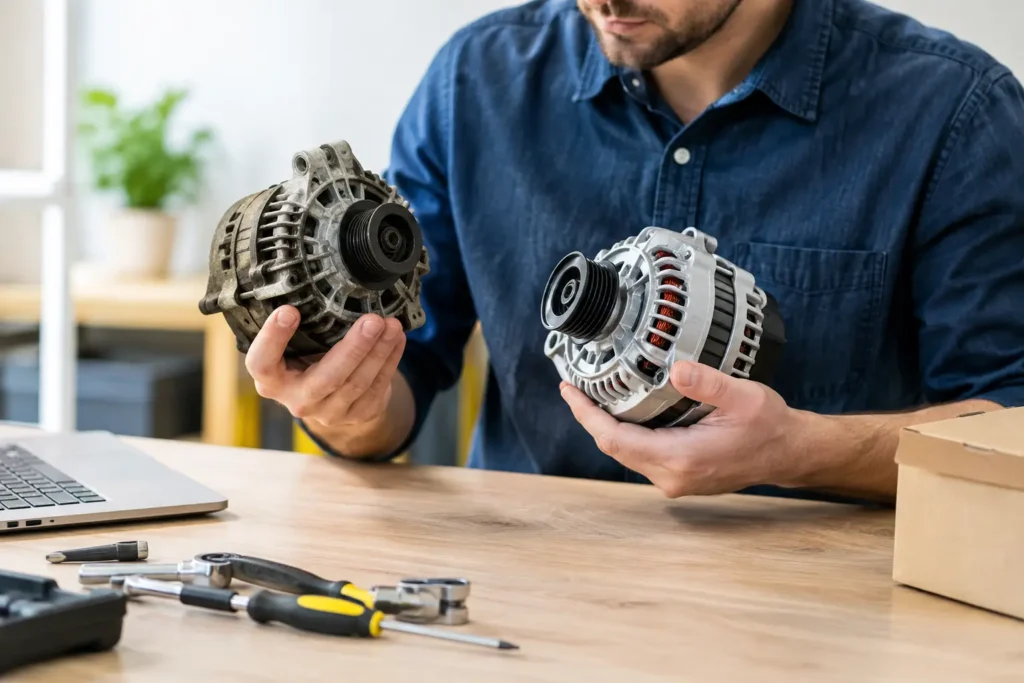
A damaged bumper, headlight, door, or fender can make one decision feel much bigger than it appears: what part should go back on your vehicle? This guide to selecting replacement parts explains what those choices mean after a collision, where cost differences come from, and why the right answer depends on your vehicle, the damage, and the repair needed to restore safe operation.
The lowest-priced part is not always the best value. At the same time, the most expensive option is not automatically necessary for every repair. A trusted collision repair shop should explain the available parts, show how each choice affects fit and function, and provide a detailed estimate before work begins.
Start With Safety, Not Just Appearance
Modern vehicles are built with far more than painted panels. Bumpers can contain impact absorbers, sensors, cameras, radar units, wiring, brackets, and energy-management components. A grille, mirror, windshield, or headlight may also support driver-assistance features that need correct placement and calibration after repair.
That is why replacement-part decisions should begin with the role the part plays. Cosmetic items, such as some trim pieces, may allow more flexibility. Parts tied to crash performance, steering, suspension, lighting, airbags, sensor systems, or structural integrity deserve a closer review. The goal is to return the vehicle to its pre-accident condition without taking shortcuts that could affect occupant protection or reliable operation.
Even a panel that seems simple can affect the finished repair. If a fender does not fit correctly, gaps around the hood and door may be uneven. If a bumper cover does not align properly, it can interfere with parking sensors or create wind noise. Proper fit also matters when it is time to refinish the vehicle, since a clean paint match depends on accurate panel preparation and alignment.
Understanding Your Replacement-Part Options
Most collision estimates use one of several common part categories. Knowing the language helps you ask informed questions and understand what is included in the repair plan.
Original Equipment Manufacturer Parts
OEM parts are produced by or for the vehicle manufacturer and are designed for a specific make, model, trim level, and production range. They are generally the closest match to the original component in fit, materials, and intended function.
OEM parts are often a strong choice for newer vehicles, leased vehicles, luxury models, vehicles with advanced safety technology, and repairs involving critical components. They may also help preserve manufacturer-specific details, such as mounting points, body lines, weather seals, and electrical connections.
The trade-off is cost. OEM parts can be more expensive than alternatives, and availability may vary. A repair facility should also verify that the part number matches your vehicle identification number and equipment package. Two vehicles that look alike can use different headlights, bumper reinforcements, or sensor brackets.
Aftermarket Parts
Aftermarket parts are made by companies other than the original manufacturer. Quality varies widely by manufacturer and by the type of component. Some aftermarket collision parts are designed to meet recognized fit and quality standards, while others may have more noticeable differences in material thickness, mounting accuracy, or finish.
A quality aftermarket part can be a reasonable option for certain non-structural repairs, especially when it provides good fit and helps control the cost of the repair. However, it should never be selected simply because it is cheaper. The part must be appropriate for the repair, compatible with the vehicle’s equipment, and inspected during installation.
Ask your repair professional whether the part has a recognized certification, whether it has been used successfully on similar vehicles, and what happens if it does not fit correctly. A responsible shop will stand behind the repair rather than force a poor-fitting part onto the vehicle.
Recycled Original Parts
Recycled, or used, OEM parts are taken from another vehicle. They can be an excellent option when a matching part is in good condition, especially for items such as doors, wheels, interior components, or certain mechanical assemblies. In some cases, a recycled panel in the correct factory color can reduce refinishing time, though its condition must still be evaluated carefully.
The benefit is that the part was originally built for that vehicle manufacturer. The limitation is availability. A recycled part may have wear, hidden damage, corrosion, or a finish that does not match once viewed in natural light. It may also need to be transferred with brackets, sensors, or trim from the original vehicle.
A reputable shop inspects recycled parts before installation and does not assume that a part is usable merely because it came from the same model year. If its condition compromises the repair, the shop should discuss another option with you and the insurer.
Reconditioned Parts
Reconditioned parts have been restored to usable condition. These are common for items such as wheels, certain lighting assemblies, and some mechanical components. Whether they are appropriate depends on who performed the reconditioning, what was repaired, and whether the part can meet the vehicle’s functional requirements.
For safety-related systems, the repair process must follow manufacturer procedures. A reconditioned component that looks acceptable from the outside may not be suitable if its internal condition cannot be verified.
Match the Part to the Vehicle and the Damage
A practical guide to selecting replacement parts should account for your vehicle’s age, value, ownership plans, and technology. A ten-year-old commuter vehicle with minor fender damage may have different repair needs than a nearly new SUV with adaptive cruise control and a camera behind the windshield.
Consider how long you plan to keep the vehicle. If you are preparing to return a lease or want to protect resale value, OEM parts may make particular sense. If you own an older vehicle and are managing repair costs, a high-quality alternative may be appropriate for a non-critical exterior component. The decision is not about choosing one category every time. It is about choosing the right component for that specific repair.
Vehicle technology should weigh heavily in the conversation. Many newer vehicles require scanning, diagnostics, and calibration after parts are installed. A front bumper repair can involve radar alignment. A windshield replacement can require camera calibration. A side mirror may contain blind-spot monitoring equipment. The part itself, its placement, and the final calibration all work together.
Review the Estimate Before Authorizing Repairs
A clear estimate should identify the parts being used and whether they are OEM, aftermarket, recycled, or reconditioned. It should also show related operations that are easy to overlook, including refinishing, corrosion protection, scanning, calibration, blending adjacent panels, and replacement of one-time-use clips or fasteners.
Do not hesitate to ask why a particular part was selected. Useful questions include whether it affects safety systems, whether there is an OEM option, whether the part carries a warranty, and whether additional work may be required once the vehicle is disassembled. Collision damage is sometimes hidden behind the visible impact area, so supplements to the original estimate can be necessary.
If an insurance company is involved, the estimate may reflect the terms of your policy and the parts it authorizes. Your repair shop can help explain the estimate and communicate with the insurer, but the final repair plan should still focus on proper procedures and safe, quality results. Never feel pressured to approve a part choice you do not understand.
Fit, Finish, and Warranty Matter After Installation
Selecting the part is only one half of the job. Installation quality determines whether that part performs as intended. A professional collision repair includes checking panel gaps, attaching all required hardware, protecting repaired metal from corrosion, refinishing to match surrounding panels, and confirming that warning lights or safety-system faults are addressed.
Before picking up your vehicle, walk around it with the repair advisor. Look at paint color in daylight when possible, check that doors, hood, and trunk open smoothly, and make sure exterior lights, cameras, sensors, and power features operate correctly. Ask about the shop’s repair warranty and any separate warranty that applies to the replacement part.
For Coachella Valley drivers, heat and sun exposure add another reason to insist on sound materials and professional refinishing. A part that fits poorly or a finish that is not properly prepared can become more noticeable over time under intense desert conditions.
CatCity Auto Body helps Cathedral City and surrounding Coachella Valley drivers understand their repair options with detailed estimates, certified repair practices, and clear communication throughout the process. The right part is the one that supports a safe repair, fits correctly, and gives you confidence every time you get back behind the wheel.