
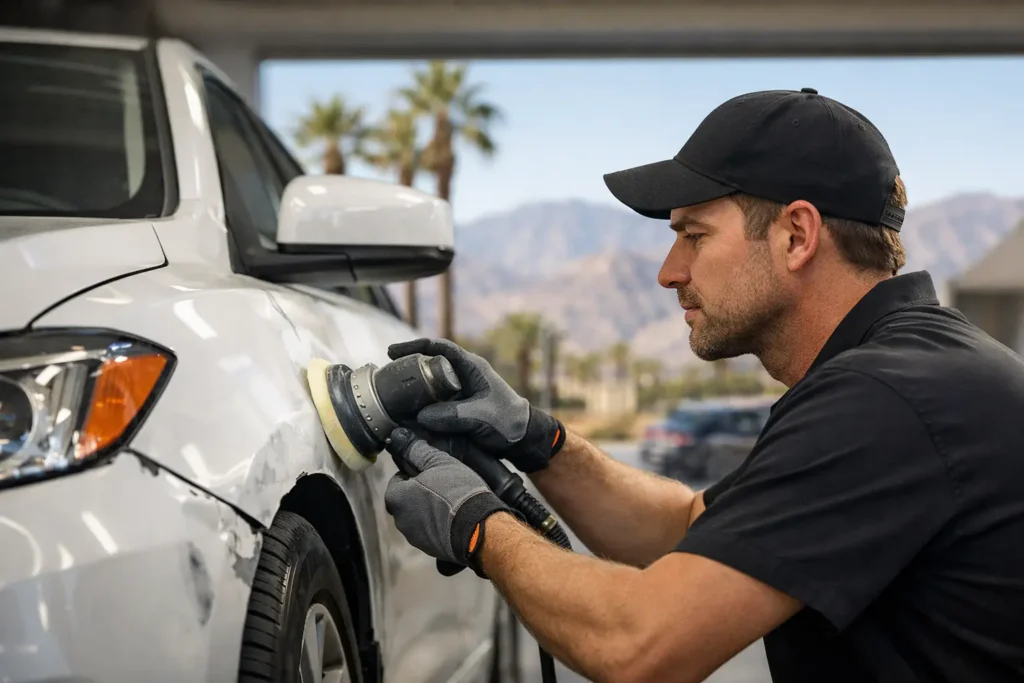
A bent fender can look like a minor inconvenience after a parking lot scrape or low-speed collision. But fender repair Coachella Valley drivers need is often about more than restoring a clean appearance. The fender sits close to wheel, tire, bumper, headlight, and door components. Damage in this area can affect panel alignment, create rubbing or rattling, expose bare metal to corrosion, or hide damage that is not obvious from the outside.
For drivers in Cathedral City, Palm Springs, Palm Desert, Rancho Mirage, and surrounding communities, the right next step is a careful inspection. A qualified collision repair shop can determine whether the panel can be repaired, whether replacement is safer or more cost-effective, and whether the impact affected adjacent parts of the vehicle.
When Fender Damage Needs Professional Attention
A shallow dent without cracked paint may appear simple, but the location and shape of the damage matter. Modern fenders are designed to fit precisely with the hood, bumper cover, headlight, door, and wheel opening. Even a small impact can shift mounting points or leave a gap that becomes noticeable once the vehicle is moving.
Professional evaluation is especially worthwhile when the fender is creased, folded near an edge, pushed into the tire, or separated from the bumper or headlight. You should also schedule an inspection if the wheel rubs while turning, a door catches near the fender, warning lights appear, or the paint is chipped down to metal. These signs can point to damage beyond the visible dent.
After an accident, it is tempting to judge repair needs by how well the car still drives. That is not always a reliable test. A vehicle may drive normally while a damaged bracket, inner liner, mounting tab, or alignment issue remains unnoticed. Addressing those details early helps prevent a small repair from turning into additional wear and expense.
Fender Repair in Coachella Valley: Repair or Replace?
The decision to repair or replace a fender depends on the material, severity of the impact, repair time, parts availability, and the condition of surrounding components. There is no one answer that fits every vehicle or every accident.
Repair is often a good option when the panel has a manageable dent, limited stretching, and no major damage near mounting edges. Skilled technicians can reshape metal, restore the surface, and prepare it for refinishing. Preserving the original panel can be cost-effective when it can be restored to proper condition without compromising fit or finish.
Replacement may be the better choice when a fender is badly crushed, torn, heavily rusted, or distorted along the wheel opening or attachment points. Replacement can also make sense when repair labor would exceed the cost of a quality replacement panel. The important factor is not choosing the fastest-looking option. It is choosing the option that restores safe clearances, panel fit, and a finish that matches the rest of the vehicle.
Some vehicles use aluminum or specialized materials that require different repair methods than traditional steel. Newer vehicles may also have sensors, cameras, radar components, or lighting systems near the damaged area. Those features can affect both the repair plan and the final quality-control process.
What a Quality Fender Repair Process Looks Like
A dependable repair starts with a detailed estimate, not a guess based on a quick glance. The technician should inspect the fender and the areas around it, including the bumper, headlight, hood, door edge, wheel liner, brackets, and wheel opening. If the collision involved a stronger impact, the inspection may also include suspension and structural components.
Once the damage is documented, the shop can explain the recommended repair, expected parts and labor, and whether insurance approval is needed. A clear estimate gives you a practical understanding of what is being repaired and why. It also gives the repair facility an opportunity to identify hidden damage before work progresses too far.
If repair is appropriate, the damaged area is carefully reshaped and finished to restore the panel contour. If replacement is necessary, the new panel is test-fitted before refinishing so gaps and body lines can be checked. Proper alignment matters because a fender that looks acceptable from a few feet away can still have uneven spacing around the hood, bumper, or door.
Paint preparation is equally important. The repaired or replacement panel must be primed, color-matched, painted, and cleared with attention to the vehicle’s existing finish. Color matching can be influenced by paint age, sun exposure, prior repairs, and the original factory color. In the intense desert sun, slight differences can be easier to notice, which is why careful paint work and final inspection matter.
Before the vehicle is returned, the shop should verify that panels are secure, lights function correctly, the wheel has proper clearance, and repaired areas meet quality expectations. A proper repair is not just about making the dent disappear. It is about returning the vehicle to pre-accident condition as closely as possible.
Why Desert Conditions Can Make Fender Repairs More Urgent
Coachella Valley vehicles face conditions that can be hard on damaged body panels. Heat, blowing sand, road dust, and frequent sun exposure can worsen a chipped or exposed area over time. If the paint is broken, moisture and contaminants can reach the metal underneath. Corrosion may not happen overnight in a dry climate, but once the protective finish is compromised, delaying repairs can make refinishing more involved.
A loose fender liner or damaged splash shield also deserves attention. These parts help keep road debris away from areas behind the wheel. In dusty conditions, a missing or loose liner can allow debris to collect where it does not belong or create noise while driving.
The practical concern is visibility as well. If a fender impact has shifted a headlight or caused a gap around a lamp assembly, nighttime driving safety can be affected. A thorough inspection helps identify those related concerns rather than treating the fender as an isolated cosmetic issue.
Working Through an Insurance Claim Without Added Stress
Fender damage is commonly part of an insurance claim, particularly when it involves another vehicle, a fixed object, or a larger collision. You have the right to understand the estimate and ask questions about the proposed repairs. A trusted local collision shop can document visible damage, communicate with the insurer, and explain the repair plan in plain language.
Insurance estimates may be written before all damage is visible. Once the fender, bumper, or inner components are removed, additional damage can sometimes be discovered. In that situation, the repair facility submits a supplement to the insurer for review. This is a normal part of collision repair, not a sign that the shop is changing direction without reason.
Ask about rental vehicle assistance, repair-status updates, expected timing, and how deductible payment will be handled. Clear communication helps you plan around work, family obligations, medical appointments, and daily transportation needs while your vehicle is in the shop.
Choosing a Coachella Valley Fender Repair Shop
The lowest estimate is not always the best value, especially if it leaves questions about paint quality, panel fit, or hidden damage. Look for a shop with experienced technicians, recognized training, proper repair equipment, and a willingness to walk you through the estimate. I-CAR and ASE credentials are useful indicators that a facility invests in ongoing technical knowledge.
It also helps to choose a repair partner that treats a smaller fender repair with the same care given to a major collision. At CatCity Auto Body, that means inspecting the full affected area, providing a transparent free estimate, coordinating with insurance when needed, and keeping the process focused on safety, quality, and convenience.
If your fender is dented, scraped, loose, or rubbing near the wheel, do not wait for the damage to become more complicated. Request a professional estimate, bring your insurance information if you have it, and ask the questions that help you feel confident about the road ahead.